Back in ancient times, people noticed the bright lights that appeared from time to time in the sky, its long tail sometimes covering a significant part of the sky. The ancient Greeks gave them a name - comets.
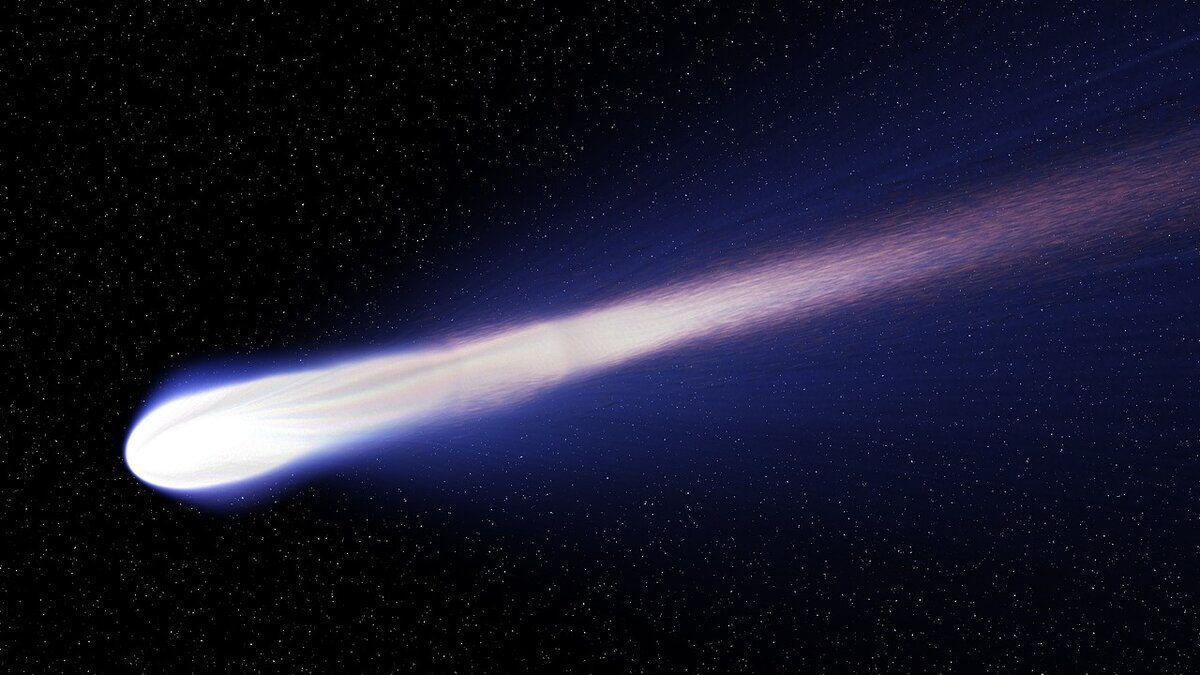
Comet in Greek means "hairy", "shaggy". Bright comets excited the imagination of poets and writers, artists and ordinary people. In ancient times they were attributed mystical properties, called precursors of wars and other disasters. But as we now know, comets fit into the classic family of objects of the solar system and have nothing to do with various earthly problems. There have always been so many disasters on our planet. Between us, much more than the comets observed in the sky.
Most comets travel around the Sun in elongated elliptical orbits and in the most distant point of orbit, the conspiracy, they sometimes travel hundreds of astronomical units far beyond the orbit of Neptune from the center of our planetary system. Comets, on the other hand, circulating around our luminaire along the orbits with a small swirl distance, and consequently, a short period of circulation (less than two hundred years) are called short-periodic comets. For example, the Enke 2P comet has a circulation period around the Sun of only 3.3 years. Due to this short circulation period, this comet has been observed by astronomers already in 63 returns to the perihelion. In a scam, it is removed only four astronomical units from the Sun (just beyond the asteroid belt), and in the perihelion is approaching 0.3 a.u.
The core of any comet consists of an ice mixture in which frozen particles of dust (meteoric substance) are present. When approaching the Sun, the nucleus evaporates gas that carries dust particles with it. Together they form a coma (also known as a comet's head) and an extended comet tail. Coma sizes reach several tens to hundreds of thousands of kilometers, while the length of the tails can be a million - ten million kilometers. In fact, despite such significant sizes, comets are rather sparse objects - for example, stars can be seen through the comet tails. The core of the comet from which these flows of gas and dust flow out is only a few or ten kilometers across. Thus, the total mass of the comet is almost a billion times smaller than the Earth's mass - it is one of the smallest bodies of the solar system.
The name of the comet is given to the founders of the comet or the sky views with which it was discovered. Initially, the comet is assigned a temporary species designation - C/2001 A1 (LINEAR). Here 2001 is the year of discovery, A (Latin) is the number of the opening crescent (first half of January), and the number 1 is the first comet opened during this period (from 1 to 15 January). In brackets, the name of the comet opener (or several of them - up to three) or the name of the sky view with which the comet is opened is put. Here it is the LINEAR sky view. If a new comet is periodic (with a circulation period of less than 200 years), the letter P, e.g. P/2001 H5 (NEAT), is added at the beginning of the designation. If a periodic comet was observed in the second or more appearance, it is assigned a constant number. This is what it looks like, for example, 19 P/Borelly. 19 is the number in the periodic comet catalog, P indicates that it is a periodic comet, Borelli is the name of the observer who opened the comet.
The frequency of comet appearances in the sky is as follows: bright, memorable comets are quite rare. Thus, comets are brighter than the zero value on average once every ten or even more years. Comets are brighter than the third magnitude, once every three to five years. Up to the sixth size per year, there are from one to three comets. Comet available to small amateur devices in a year can be up to ten or more. Well, and for more powerful astronomical devices we are talking about dozens of comets per year.
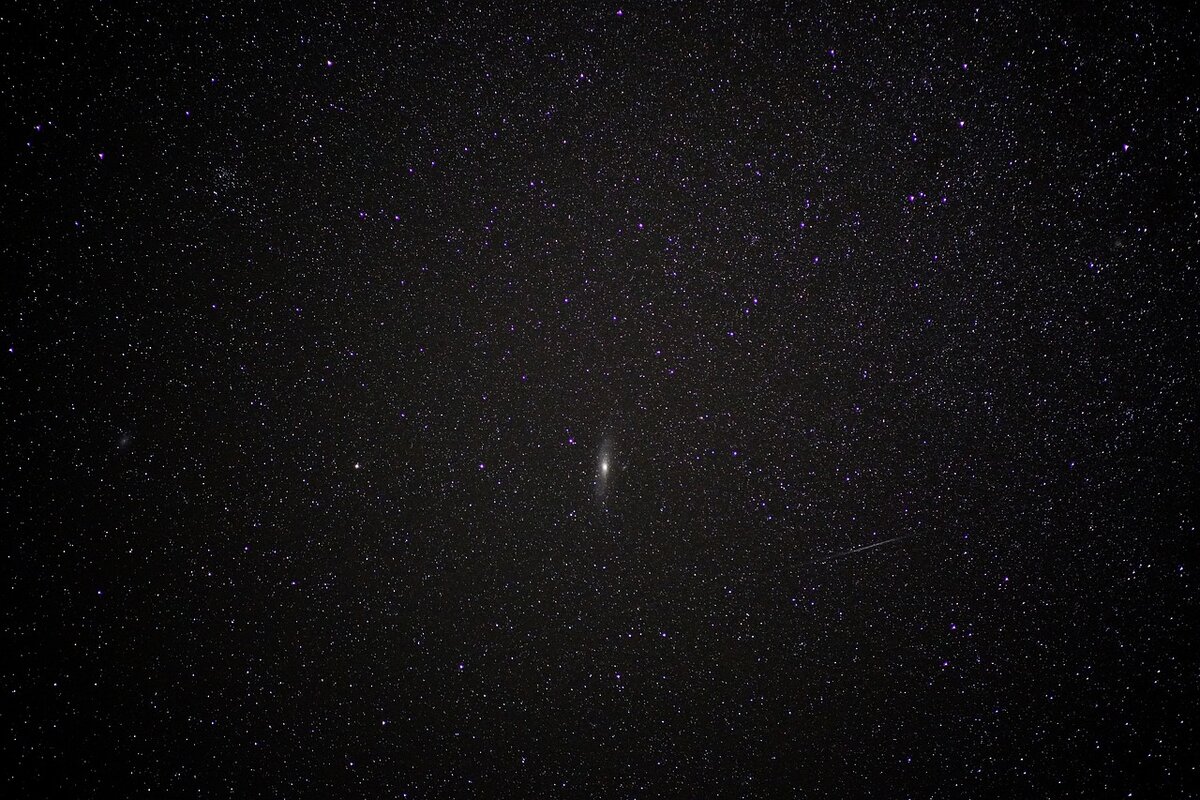
Usually for an observer comets slowly shift day by day among the stars and for a couple of months or three have time to pass two or three constellations.
If the comet passes relatively close to the Earth (geocentric distance is small), then, accordingly, the movement of the stars against the background becomes noticeable within an hour or so, and during the period of visibility in small instruments comet has time to overcome a few constellations and is visible sometimes for six months, and bright comets up to a year.