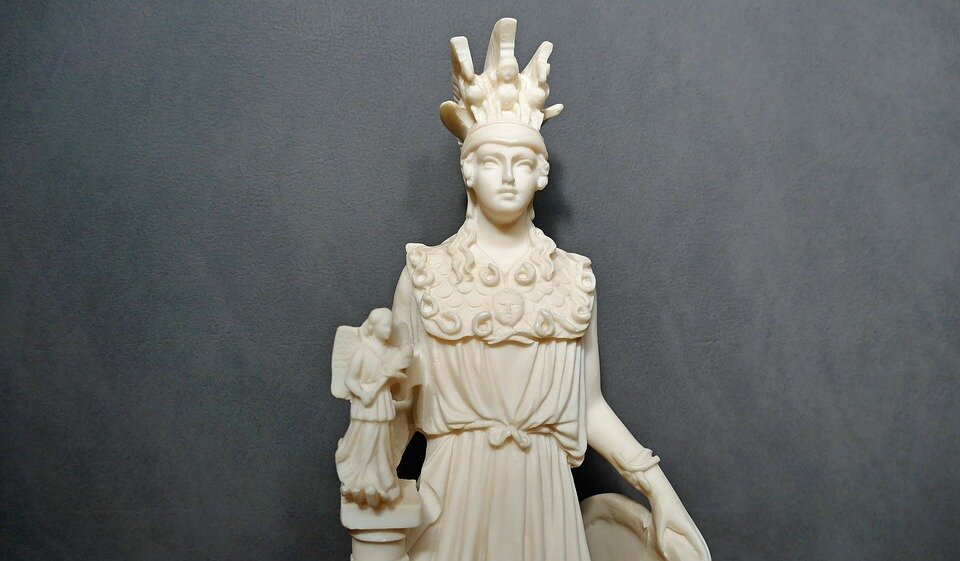
Alabaster by Greek alahastros, but no reliable translation. There is an assumption that the mineral is named after the city of Alabastron, located in Egypt. Other names of Alabaster and its subspecies are: alabaster, alabaster, luster, alabaster and Roman pearls. It is believed that the origin of the name has its roots in elegant small pear-shaped vessels for perfume, rubbing and incense (alabaster), which in ancient Greece were made of gypsum rock.
Alabaster is a representative of gypsum and is its variety. The color of the mineral is usually white, but greenish and pink shades are possible, there is a silky shine.
Alabaster's hardness is insignificant only 2.0 - 2.2 on the Mohs scale, density 2.30 - 2.33 g/cm3, has a certain opacity with a translucency along the edges. This property of Alabaster is skillfully applied by masters in the art stone-cutting industry at its processing.
Alabaster's natural deposits can be found in Germany (Thuringia), on the shores of the Persian Gulf, in England (Derbshir), in France, Italy and the United States (Colorado).
Decorations from alabaster and its prices:
Alabaster is considered to be a soft mineral together with such minerals as alabastros, selenite, agalmatolite and gagat. The last stage of processing is carried out by a wax for giving to a finished product of shine.
The most valuable Alabaster of peach shades. Statuettes carved from a mineral of this color become translucent and give the impression that they glow from the inside.
Due to the low durability of Alabaster, only one type of jewelry is made in the jewelry business - beads.
The history of the use of alabaster:
Pliny began to write the poetic history of alabaster extraction and application. The famous Jewish historian told about Alabaster mineral extracted in the Egyptian Alabaster and Syrian Damascus. From white translucent stone in that time household capacities and fixtures were carved.
Small vessels for white mineral oil were the most successful. That's why the name of the stone was transferred to them and attached to them. Alabaster in ancient times was called a spacious bottle with a narrow neck.
A small alabaster, made in the times of Artaxerxes (as reported by the carved inscription on the side of the vessel), was found in the Urals. A thousand years older than the Ural discovery of the ruins of the Knossos Palace of Crete. Here the natural alabaster was used as a finishing material for the offices.
High narrow neck vases from the alabaster are kept in the Pushkin Museum in Moscow. Carved three thousand years before the new era, they amaze the imagination with their subtlety and artistic expressiveness.
The desire to use white stone to sharpen candlesticks and oil lamps is explained by the physical properties of alabaster. Incorrect light of a dim flame forces translucent or translucent material to play with shadows, to come to life. In the epoch of information hunger of the past epochs alabaster lamps arranged the whole performance of home theater of shadows...
The magic of stone:
In Ancient Egypt, Alabaster was the material from which ritual objects were made. For the tombs of Pharaoh from Alabaster were carved objects and things similar to those that served the Pharaohs in life and were very expensive for them.
Alabaster is considered a talisman for those who would like to avoid anger and discontent of their superiors. He is able to tell how to act correctly at any given moment, freely removes negative energy from its owner.
It is commonly believed that if your favorite product from Alabaster broke or worse lost, it means that the talisman saved the owner and took away from him some trouble, so do not be upset.
Therapeutic properties of alabaster:
Ancient healers used Alabaster in the fight against diseases such as kidney, stomach, liver, pancreas and thyroid gland. The manuscripts that have come down to us since then describe how to apply a mineral to the affected areas of the body and tie it up with natural tissues. It was recommended to wear a stone in this form until the disease itself retreats. Znakhari have long used pieces of Alabaster to strengthen the healing power of the drug, for this purpose they are simply put in a bowl with a medicinal drink.
In ancient Rome, alabaster balls were used for massage, which were then called Roman pearls.
Alabaster is recommended by astrologers to people born under the signs of Air and Water. For those who were born under the signs of Earth and Fire, Alabaster is a simple ordinary decoration.
Interesting fact:
On the Mongolian border with Tuva rises a massif with a peak called "Star", which is a landmark for air navigation. The breed of which it consists of (a variety of Alabaster - agalm.