The second myth. Pyramids have built slaves
In the fifth grade of the Soviet and post-Soviet schools, we were all told that the pyramids had built thousands and even millions of powerless and oppressed slaves. This myth is a very persistent but very local one, which existed only in the Soviet Union. It was invented by the personal order of comrade Stalin in the late 1930s to confirm the theory of Marx formations. In 1938 slavery in ancient Egypt was mentioned in the "Brief Course of the History of the All-Union Communist Party (Bolsheviks)", and there were no alternative opinions left.
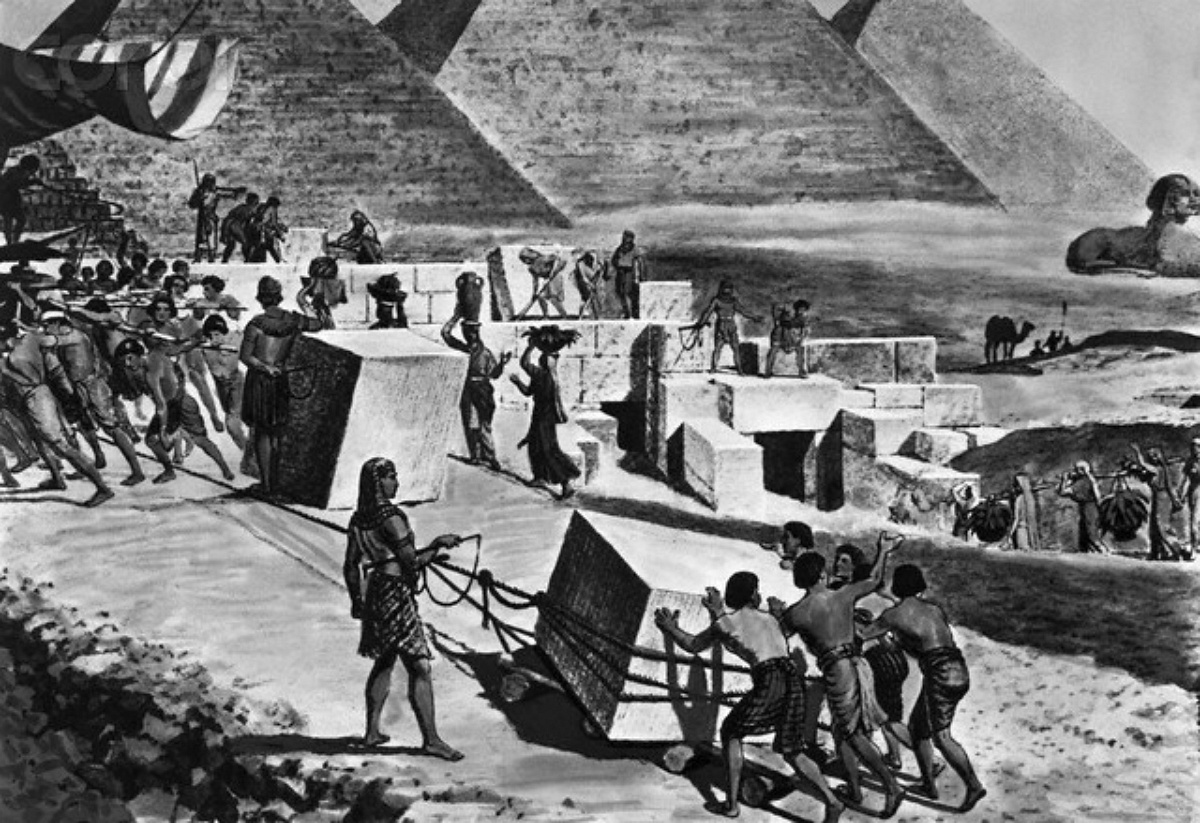
The pyramids were built by free citizens of Egypt, the so-called "Hemu nisut", "royal people". In free time from agricultural works. Almost the entire population of the country belonged to this social stratum, they worked in royal, temple and large private estates - and then they were fed from the treasury (i.e. received a kind of salary). Or they worked on their own land and then they fed themselves. Due to the peculiarities of the Egyptian climate, land cultivation takes very little time, and the rest of the time to pay farmers' "salary" seems to be for nothing. Therefore, they were transferred to the construction of irrigation facilities or royal tombs. Or something else. By the way, judging by the garbage found at the Kheops pyramid in the ancient settlement of builders, "royal people" also ate in a royal way.
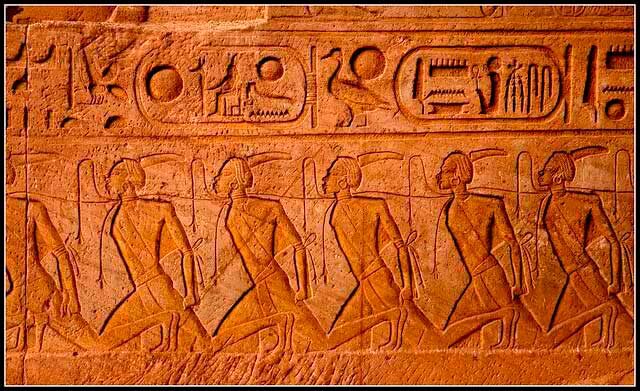
In fact, slavery in Egypt, of course, existed. But not at all on such a giant scale, as we used to think. For example, one of the inscriptions of Tutmos III mentions that he brought about three hundred slaves from the war. Three hundred. And Tutmos III is one of the greatest conquerors of human history in general. If such a modest number of enslaved enemies were recorded in the annals as a huge achievement, what thousands and millions of slaves can we talk about? Another example is the nobleman, whose farm worked several hundred "khemu", boasted that he bought a slave. And this is despite the fact that slaves cost not so much - for example, there is a text in which a woman named Iri-Nofret buys a young Syrian girl for the equivalent of about 400 grams of silver. So slavery was simply very little spread.
And after one and a half thousand years, in the era of the New Kingdom, the builders of the royal tombs, in general, became one of the most respected people in Egypt. They lived in a special settlement near the royal necropolis and did not hesitate to organize strikes if they stopped to arrange remuneration for work. Agree, it is strange to expect such a slave.
ROYAL NAME
Royal nameIn novels about ancient Egypt, even written by professional Egyptologists ("Ward" by Georg Ebers, for example), the heroes usually call the king as we are accustomed to the history books. Ramses II, for example, or Pepi I.
In fact, this naming is modern, introduced only for the convenience of scientists. Each king had a total of five names - personal, throne, chorus, gold and "the name of two masters", that is, the goddesses of Upper and Lower Egypt. Thus, some of the names of Tutmos III were actually Chorus Kanechet-Haime-White, the Chorus in the Gold of Joser-hau, the Two Mistresses of Wah-bearing, the king and king of Menheperra, son of Ra Tutmos. And his subjects spoke of him as His Majesty Menheperra. And this throne name was practically unique and did not need to be numbered.
The third myth. The curse of the Pharaohs
The vast majority of films about mummies and Egyptologists, from the classic "Mummy" of 1932 to the recently released "Pyramid", shot approximately the same scenario. Archaeologists come to excavations in Egypt and accidentally find an unknown tomb of the pharaoh or, at the worst, a priest (by the way, this plot is just more or less plausible). In the tomb lies a fat mummy, which after a while suddenly comes to life and begins to kill stupid people who disturbed her peace. Usually, there are still traps involved in the process, with which any self-respecting tomb is pushed to the top. In the end, the mummy is either shot/burned/something else destroyed physically, or disrupted by the ancient Egyptian sorcery and put back in the coffin (often before the second series).
It should be noted that one of the mummies of the pharaohs is still alive. A little bit. It was in the thirties of the XX century and was the mummy of Ramses II, one of the most famous Egyptian kings. The mummy was exhibited in the Cairo museum, and one beautiful summer evening it suddenly threw its hand in front of the visitors and even, they say, broke the glass.