The following can be used to track children's ability to think in the following way. First of all, the lack of recognition of words is manifested in the wrong word formation, that is, in the lack of understanding of the norms of language and in the inability to use these norms. If in any coherent text a person allows at least one disagreement in the management (for example, incorrect case ending), it means a complete misunderstanding of the TOTAL text. An example is from a school essay (Znamya magazine, 1962): "Othella has become angry and strangled Desdemona. Children intuitively feel this "trap" and begin to "hide" the endings they are not sure of.
The speech becomes rather inaudible. This is already a signal of the need for intervention. And then - the children intuitively feel the inability of their speech, and therefore shut up completely. It is difficult to "get" them out of this state already. But it is possible: however, it requires professional intervention with the help of the same technology. Of course, if children have motivation, the creation of which also requires special efforts.
If a pupil, a student, or any person in general, discovers (including with the help of a specialist) a lack of understanding of educational material or life realities, the first step, of course, is to read the relevant texts aloud. The next step is to speak out loud about what you have read or observed. A typical example is the need for students to prepare their homework aloud. And this should be the norm: mathematicians and theoretical physicists of a serious level work only aloud. However, like other professionals in the field of intellectual activity. This is the only way to hear for yourself what you mean by reading this or that material. And, accordingly, to understand what you are thinking and talking about. And the last step is to talk to a person on a regular basis, while keeping to the tactful requirement to build a speech from full sentences in accordance with the norms of the language. Simple "statements" and answers point to serious problems in terms of the intellectual state of the speaker.
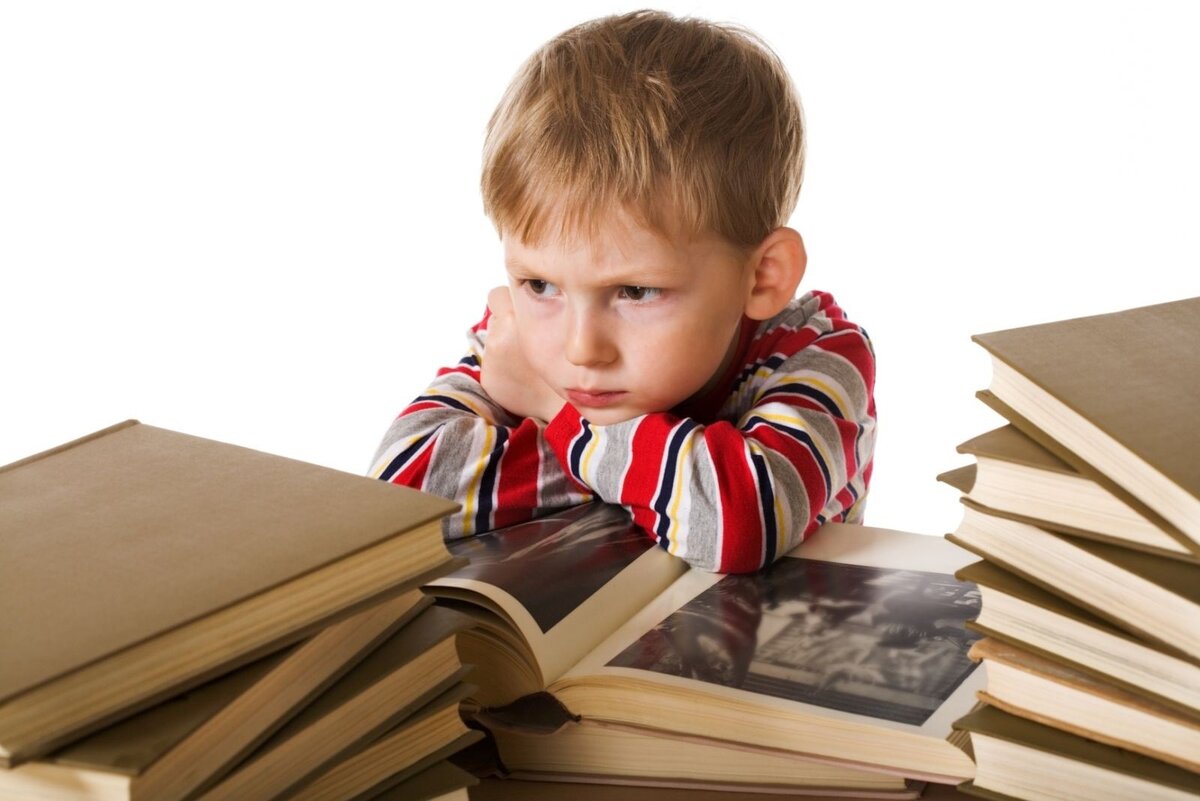
From everything that has been said here, it follows that a child can in principle be motivated in relation to reading only if the conceptual content of his speech, that is, if he understands what he says and what he says. Or reads. But this is a technical condition. The essence of the condition lies in the fact that the voluntary interested reading in any source - textbook, book, article (in paper or electronic version) - can lead only to the presence of interest in the subject. Interest is a form of manifestation of cognitive need, which consists in turning a person's attention to possible important phenomena for his or her existence. The trouble of our time is that children have practically no cognitive interests aimed at the development of ideas about it corresponding to the real world. Therefore, they do not read. They have nothing to read about. Well, and then there is nothing. So first it is necessary to arouse the child's interest in the real life in its diversity. This does not mean the formation of musical skills of doubtful need, especially - not related to the development of further professional destiny. Not sports or physical training. All this is not related to the knowledge of the world and this should be done UP of general education.
Yulia Lipnitskaya is amazing and causes an explosion of emotion in the audience. But she is so sorry! She does not see the world in this age so important for personal development. She has no practice of his knowledge. And, most likely, she will not. The world will pass by her insanely difficult, full but so narrow world during her life. She may never know about the existence and essence of this vast world. But this is Yulia Lipnitskaya, a miracle which, at the cost of her life for us, reveals the unknown facets of the world. And what - all the people whom parents give to the sections and music schools, and who are lazily engaged there to the detriment of general education and knowledge of the world, are at the professional and human level of Julia? No, the world will pass by them without giving anything not only to them, but also to anyone else.
So let's think about developing cognitive interests of our children. Then, naturally, wanting to expand their understanding of the subjects of these interests, they will have to start reading. There is no other way. Let them read few books. But they will read it qualitatively. I have a good acquaintance who read only two books - "Beekeeping" and "Tax Code". I read it for real. He needed it, he was interested in it. This is now a very serious and quite successful rural entrepreneur.
And as far as early learning to read is concerned, this is extremely harmful. Showing off before each other in a certain space, parents compete in the supposedly early development of their children. Learning to read before children have their own interest in the process, which is not supported by real cognitive interests, leads to confusion in young heads. Reading is perceived in such cases by children as a certain, perhaps temporarily fascinating, fidgeting with the sign systems as such, not related to the realities of the world around them and the inner world of man. Over time, the interest in such systems, which are disconnected from the pressing problems of children in their perception, necessarily fades. Moreover, it leads to disappointment in these activities. And, so cheerfully beginning to read, the child begins to feel disgust at this process.
So, there is nothing strange about why children do not read nowadays. Because of adults' misunderstanding of the processes involved. Because of carelessness, disinterestedness, unreasonable ambitions, and even just stupidity of parents. Because of unprofessionalism, or even the failure of teachers. Children themselves are still young and do not understand all the charms and benefits of reading. And all the horror of breaking the fate of illiteracy in the absence of the ability to read.
It is quite clear what to do (and what not to do) to make children read. So why not do it?