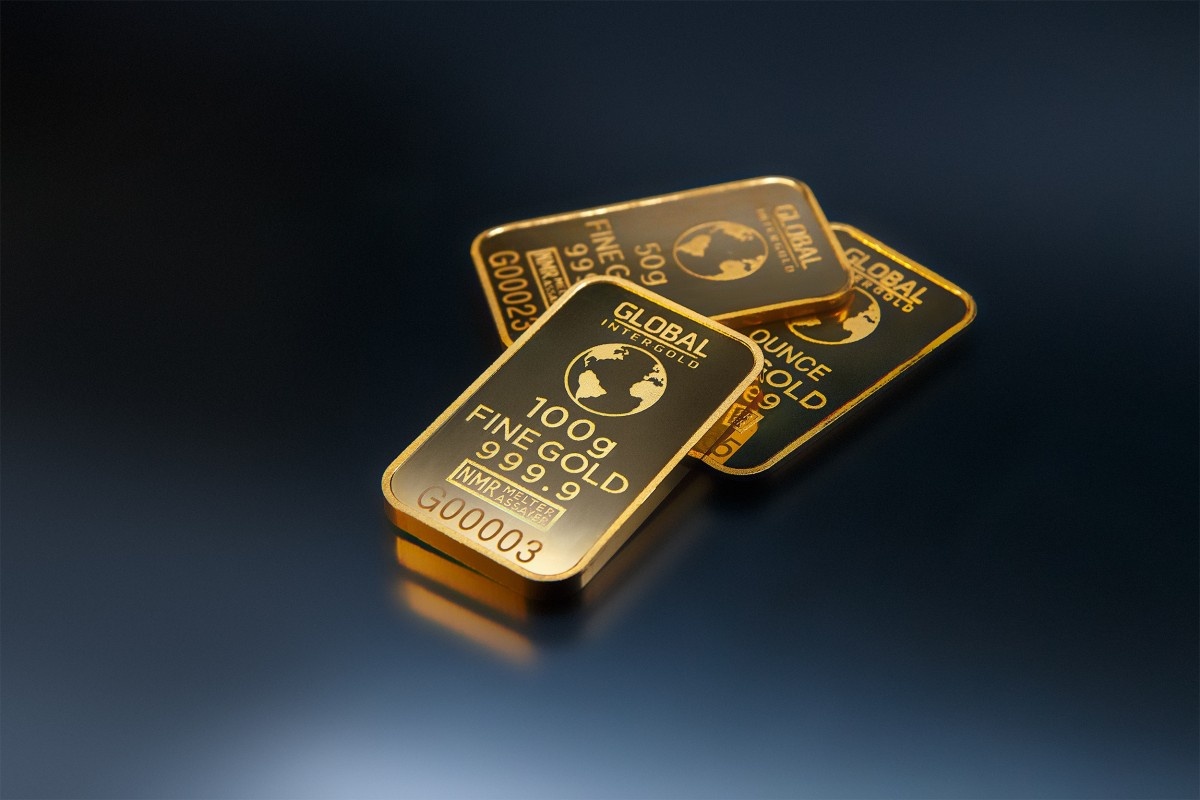
Gold as a form of money
In Russia, up to the end of the reign of Dmitry Donskoy, silver in bullion (hryvnia) and foreign coins (until the half of the 8th century) were the most liquid means of exchange. - Roman dynasties, in the VIII-X centuries. - Oriental dirhams, mainly Arabian, with XI - Western European coins) and fur values. Gradually, precious metals - gold and silver - became an absolutely liquid means of exchange. Why did they become money? Gold and silver became money because they possessed a set of qualities that allowed them to perform the role of an absolutely liquid means of exchange better than other goods. Somehow:
1) persistence;
2) Portability (i.e. high value in a small volume);
3) Economic separability (i.e., the gold bar divided by two equal parts by weight, means that the value of each half of the bar has been exactly halved). Neither cattle, nor furs, nor diamonds, etc. have this property;
4) relative rarity of gold in nature.
Gold as money left a noticeable, sometimes bloody trace in the history of mankind. Even the disease caused by this metal - the "gold rush" - is known. However, with the development of a market economy, the possibilities of using natural money were limited. More and more money was needed to serve the expanding economic ties. There was a lack of gold, which in turn held back the development of trade. The "gold standard" was replaced by symbolic money, the cost of production of which was much lower than its purchasing power as money (paper money, exchange coins). They are also called cost marks, substitutes for natural (real money).
Supply and demand for money
The appearance of credit money is associated with the development of credit relations, when the purchase and sale are carried out on credit, with the installment payment. Credit money is both in the form of properly executed papers (banknotes, cheques, bills of exchange) and in the form of appropriate entries in the accounts. Credit money, being purely symbolic money, requires a state guarantee for its effective functioning. Such a guarantee is provided through the existence of state laws regulating the rules of issue and circulation of promissory notes and banknotes, as well as rules and procedures for deposit operations, which provide, inter alia, for liability for violation of these laws, rules, and procedures.
The State issues money as a legitimate means of payment in the economy. The supply of money (money supply) is ensured by the Central Bank of the country in coordination with the government. Then modern money is the maternity money, which the government declares mandatory for acceptance in exchange and as a legal way of payment of debts. People (the population of the country), in turn, recognize the "pieces of paper" as the ability to play a role in the economy because they trust the government. This trust relies on the assumption that the state will not abuse its monopoly right to emit money and will preserve its rare good. Therefore, textbooks on economic theory sometimes say that the modern monetary system is fiduciary in nature. The topic of money evolution considered in the course work does not allow us to consider the issue of money supply and demand in more detail. However, it should be noted that the population has a demand for money because it performs important functions. It is thanks to these functions that they are valued.
Money, in the modern sense of the word, has gone a long way from the primitive communal system to the present day. They are a direct expression of economic relations between people. In the 20th century, the role of gold as money is gradually being exhausted, and it is being replaced by credit money from the monetary world. The issue of credit money is carried out by the Central Bank, and the guarantor of the money is the state. Over time, the role of money in the life of society has not diminished. On the contrary, new, more convenient types of money appear, the circulation of which reduces the transaction costs of economic agents. The development of money is closely related to the development of economic relations.