The icebergs of space
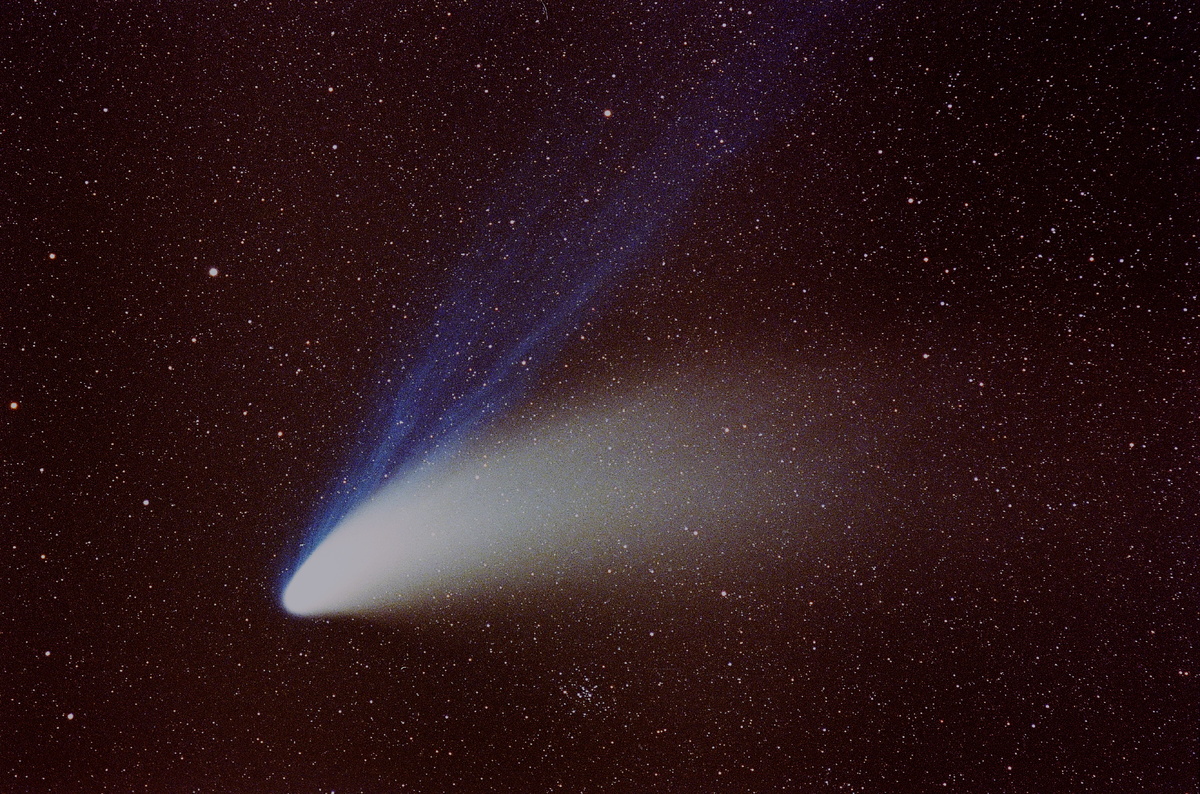
The total mass of asteroids in the orbit of Neptune does not exceed one-thousandth of the mass of the Earth. But the supply of comets in the cloud of Orthus is several times heavier than our planet. These "space icebergs", consisting of water, carbon dioxide, methane, and nitrogen ice, are quite large. The diameter of the Hale Bopp comet, which appeared in 1995, reached forty kilometers.
Comet falls are not uncommon. Jupiter survived two collisions with them in just fifteen years. In 1994, the Shoemaker-Levy comet fell on the gas giant, which was torn to twenty parts by gravity. Explosions with a capacity of up to six thousand gigatons, throwing sultans of gas to a height of three thousand kilometers, lasted six days. In 2009, Jupiter absorbed a smaller comet without such impressive special effects.
Interception.
But here the asteroid is noticed, its orbit is precisely calculated, and it is established that the probability of collision is high. The question is what to do now.
Fantasists offer two methods of protection against the threat from space. In the movie "Meteor" (1979), the asteroid Orpheus is struck by a salvo of ballistic missiles. In Armageddon (1998), a 20-kilometer-long body of astronauts landed on the threatening Earth and detonates it from the inside with a thermonuclear charge. In "Collision with the abyss" (1998), an eleven-kilometer comet is trying to destroy both a giant mine and a cloud of missiles.
In reality, a gentle landing on a cosmic body isn't that easy. The spacecraft delivering deminers must move relative to the Earth with the same speed as the asteroid to be destroyed, and this speed can reach up to 72 km/s. This is too much for modern manned ships.
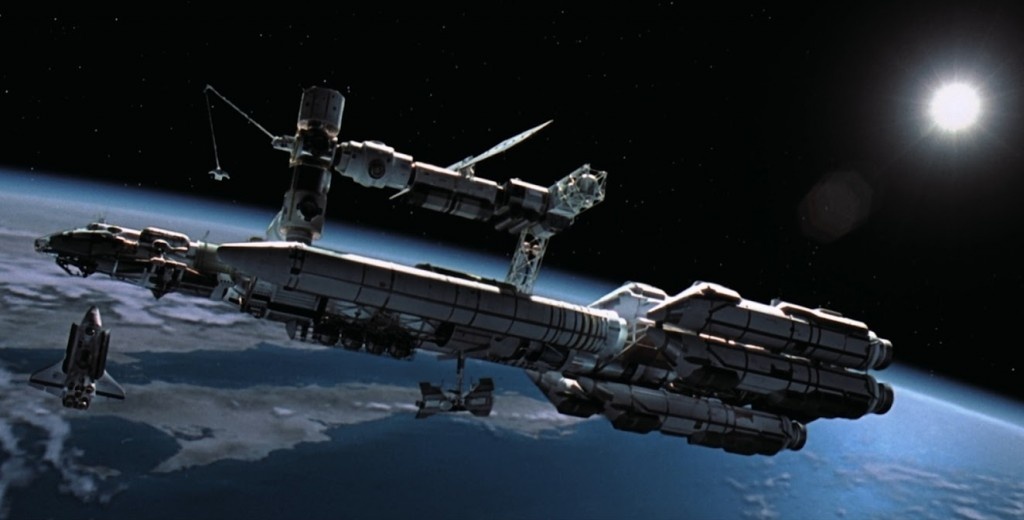
It will not be possible to hit an asteroid and conventional ballistic missiles designed to destroy stationary targets on the surface of the Earth. Even special anti-missile missiles are designed to intercept warheads that fly very slowly by space standards - at a speed of only 6.5-8 km/s. Moreover, the distance per kilometer is enough to intercept a missile.
But an asteroid cannot be destroyed by radiation and electromagnetic pulse, and the shock wave does not spread in the void. Crack or deflect aside the stone mountain can only be a direct hit. And this is a nontrivial task. Existing fuses are not designed to trigger a projectile impact at such giant speeds.
We're gonna have to work on the rockets. But the task of intercepting bodies detected several months and even days before the collision is quite solvable. In addition to the space control service, including ground and orbital telescopes, it will be necessary to create interceptor bases on the basis of strategic nuclear forces of great powers. Such spacecraft will need to be able to reach a second space speed and be ready to launch at all times.
Maybe we shouldn't blow it up.
There may also be "soft" methods of antimeteoric defense, without colorful explosions and collisions. For example, it is possible to use the Yarkovsky effect - gradual acceleration of small bodies due to the re-emission of heat received from the Sun. If a cloud of white dye is sprayed on an asteroid's path, the asteroid's surface ability to reflect increases, and this will lead to a change in orbit.
You can control the movement of a small body by placing an ion motor on its surface. But to do this, it is necessary to deliver thousands of tons of fuel from the Earth to the asteroid and mount bulky equipment on site. Change the asteroid's orbit can "solar sail", but it will also require the landing of astronauts to install it. The pull will still be small and will not affect very soon.
The most elegant, effective, but requiring good luck and extremely complex calculations method will be "billiards" - a ram of a large body smaller, the orbit of which is much easier to change. Even a hundred-meter asteroid in a counter collision will turn a ten-kilometer mountain into crushed stone or guaranteed to deflect to the side even larger projectile. But a suitable "ball" capable of being in the right place at the right time after a nuclear kick will need to be found in advance.
Unfortunately, all "soft" methods are very costly and slow, and the consequences are unpredictable. Rejecting an asteroid is not as difficult as calculating whether it will affect the probability of its collision with the Earth. Therefore, the destruction of the "enemy" remains the most reasonable option. Most likely, we will have to intercept bodies with a diameter from tens to hundreds of meters.
Armageddon
The effect of the shelling depends on the size, speed and type of body coming to Earth. If the speed is high and the mass is not too high, there is a chance that the explosion will lead to a blow. The breed that makes up the asteroid will also play a role. A warhead capable of spraying a 500-meter block of chondrite can hold an olivine monolith only half its diameter, and an iron-nickel ingot - no more than a hundred meters across.
A body the size of the Chelyabinsk and even Tunguska meteoroids is likely to turn a thermonuclear charge into dust. A bigger problem will be the approaching body with a diameter of over a kilometer. It would seem that what could be easier? Launch two or three missiles at a big target, and so on to the victorious end. But it is extremely difficult to organize simultaneous bombardment by several missiles. After the first explosion, the target will deflect and be wrapped in a veil of small fragments.
To be continued...