Lichenes are lichens.
Parmelian - Parmeliaceae.
Folk name: Icelandic lichen.
Used parts: the whole plant.
Pharmacy name: Icelandic moss - Cetrariae lichen (formerly: Lichen islandicus).
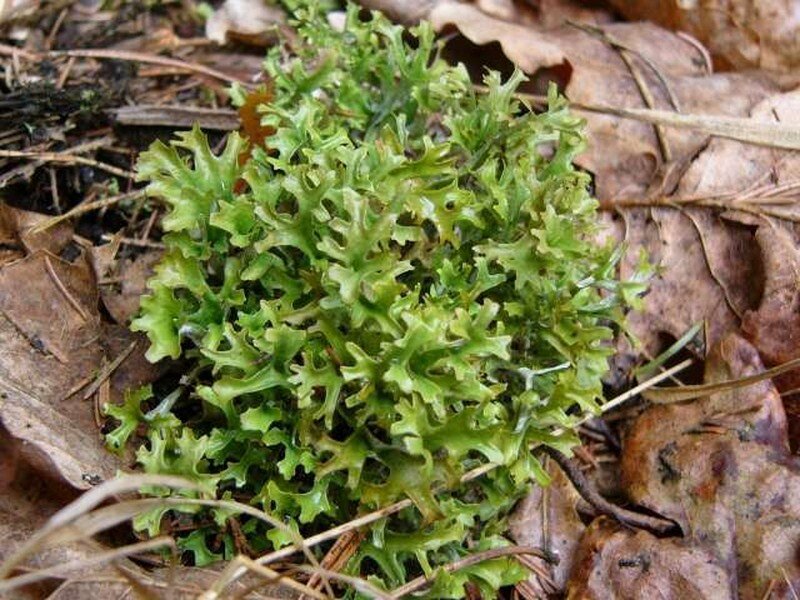
Botanical description. First of all, it should be said that the name "Icelandic moss" is incorrect from the point of view of botany, as we are dealing here not with moss, but with lichen. It reaches a height of 4-12 cm and is a sprawled bush with a forked, leafy layer reminiscent of deer horns. Some branches have a width of 5-20 mm, but they are usually curved and grooved. Their upper side is colored from olive to brownish-green, the lower side from whitish-green to light brownish, often with white spots. This is one of the most common terrestrial lichens of wastelands and forests, which can be found in sunny, dry areas of the forest - from plains to highlands.
Harvesting and harvesting. At the end of summer and in autumn, the whole plant is harvested, dried in the air, sliced into various teas or processed into medicines. When drying, it is important not to keep the plant in the light for too long. This has a negative effect on the valuable components of lichen.
The active ingredients. First of all, it is necessary to name the slime - up to 70%. This is followed by organic acids, which have a weak antibacterial effect. Here it is worth mentioning sodium saponification, for which the bactericidal action against the causative agent of tuberculosis is established. One should not forget about the presence of iodine, enzymes, vitamins (A, B1, B12) and volatile odorous substances. The immune system is supposed to be stimulated.
Healing effect and application. As a mucous membrane, Icelandic moss soothes irritations, as its mucus envelops and soothes inflamed oral, pharynx, stomach and intestinal mucous membranes. This is the basis for its use in the form of tea against coughing, as a means of rinsing the mouth and throat in diseases of the gums and inflamed tonsils and for the treatment of wounds. Bitterness tones the stomach and intestines, which activates digestion and awakens appetite. Components that have an antibacterial effect, increase the effect. Sometimes they could hardly ensure the effectiveness of tea, but the totality of all active ingredients makes this medicinal plant a valuable medicine, which, unfortunately, too rarely used. Icelandic moss tea is effective for coughing (including whooping coughing), gastrointestinal diseases, loss of appetite and exhaustion after infectious diseases. The German Public Health Service only uses catarrh irritation in the upper respiratory tract.
Tea from Icelandic moss: 2 teaspoons with a top of lichen, pour 1/4 liters of cold water, slowly heated to boil and immediately drain. Drink 2-3 times a day for 1 cup. When coughing can be sweetened with honey (diabetics do not sweeten!).
My special advice. For patients with chronic bronchitis, suffering from "dusty lung" or emphysema of the lungs, I recommend to drink 1 cup of tea in the early morning from a mixture of mother-and-mother and Icelandic moss in equal parts. This has been found to make it easier to spit out and relieve coughing (cooking as described above). The presence of bitterness in both drugs also significantly improves overall health.
Tea mixture with whooping cough (thyme and Icelandic moss in equal parts): 1 tablespoon without the top of the mixture is poured in 1/4 litre of boiling water, given to infuse for 5 minutes and then filtered. Drink 2-3 times a day for 1 cup.
Use in homeopathy. Cetraria - a homeopathic remedy made of Icelandic moss - is prepared as an infusion of air-dried lichen layer on 60% alcohol. This initial infusion is used for normal and asphyxiant coughing, loss of appetite and chronic gastrointestinal diseases with long-lasting diarrhea. Unfortunately, modern homeopathy somewhat neglects this healing plant. Recent information is absent due to lack of interest in it, and in the relevant literature it is mentioned only in passing.
Application in folk medicine. This valuable drug is used in folk medicine only since the XVII century. The indications are lung diseases, mainly asthma, lung tuberculosis and whooping cough. In addition, Icelandic moss tea is also given against acne and other diseases of "unclean skin". Since eels, despite all modern medicines, are difficult to cure, it makes sense to try to use this medicine. But only it should be taken long enough and regularly, 3 cups of tea a day.
Side effects. The composition of the active ingredients eliminates the possibility of undesirable side effects.
Note. After the catastrophe with the reactor in Chernobyl it is hardly possible to get non-radioactive Icelandic moss. It is possible to replace my recipes with mallow flowers. It should also be borne in mind that lichens grow very slowly (per year