Theoretical problems in the assessment of the economic system in the USSR are considered by many Russian authors.
For example, R.M. Nureyev, a well-known economist, writes, describing the economic system of the USSR: "...command economy is described as a system dominated by public (state) ownership of means of production, collective economic decision-making, centralized management of the economy through state planning".
A well-known Russian economist G.S. Vechkanov, characterizing the economic system of the USSR, singles out a centrally managed system as one of the types of socio-economic systems. Such a socialist system is based on public ownership of the means of production, which, in turn, acts in the form of state property, as well as the property of enterprises and cooperatives. Private labor activity is allowed.
A careful analysis of the political and economic foundations of the economic system in the USSR in the context of K. Marx's views will allow us to determine the essence, characteristics and effectiveness of the communist system.
The analysis of relations between the categories and concepts of the socialist economy in comparison with the capitalist economy, considered by Marx, should begin with the most significant is the category of exchange.
Exchange as one of the defining political economy categories explaining the essence of economic relations of the society based on private property loses its methodological value without reflecting the nature of economic relations in the society where private property disappears. In particular, Marx writes: "In a society based on the principles of collectivism, on the common ownership of means of production, producers do not exchange their products.
It should be noted that "exchange" in Marxism is a specific concept with an absolutely precise meaning: it is an exclusive value exchange of goods and, no more than that. Although, for example, in a primitive community society or in the future, communism is dominated by a direct, not exchange-mediated consumption by everyone produced by everyone, however, according to Marx, this is not the exchange that is inherent to the economic formation.
So what is this exchange, and what is the role of exchange in the Soviet economy?
The fact that Soviet enterprises did not exchange their goods is quite obvious. They supplied them to each other and to trade according to plan, and prices did not in fact reflect the cost of goods and therefore differed decisively from the world prices and, often, did not correlate well with the cost of their production.
Another more complex issue is that of the political economy category of "labour". The literature on the Soviet economic system writes about the exchange in this area as a matter of course: a person does a certain job and receives money for it, with which he buys the things he needs. It is assumed that there is an exchange of labor for money, money for things. However, in the capitalist system, an employee does not sell the fruits of his labor, as it was during the domination of craft production, but his ability to work for a certain period of time. The worker does not actually dispose of the produced product - it is the capitalist who disposes of it. Moreover, any product is created by everything. In a socialist society where there is public ownership of the means of production, "producers do not exchange their products". (Marx) as well as factories in the USSR did not exchange their products, but delivered them to each other as planned.
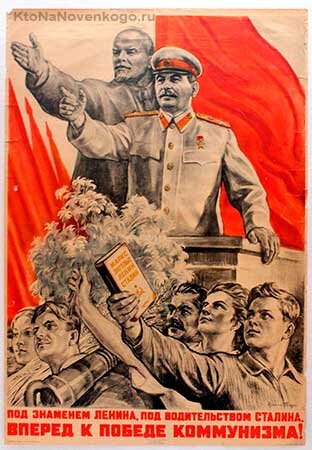
It is important that the same was true for a special commodity - the labor force. By selling it, the worker sells his ability to work. But as a commodity, it appears only in capitalist society, where the labor force has value, so it can be exchanged just like any other commodity. The capitalist buys (exchanges) this commodity for others and uses it as he sees fit. And only labor generates value, but how much of her labor has given rise to, should not worry the worker, because for the time of work his labor does not belong to him - he belongs to the capitalist. A worker, on the other hand, makes an exchange by selling his ability to work.
In communist society, even at an early stage, despite its apparent similarity, the political economy is quite different. Labor in such a society is not a commodity.
Marx writes: "as little labor spent on the production of products is manifested here as the value of these products, as a kind of inherent material property, because now, in contrast to capitalist society, individual labor no longer exists in a roundabout way, but directly exists as an integral part of the total labor".
Therefore, the worker does not exchange his ability to work for other goods according to the price (as an expression of value) of labor force. The right to work itself strongly contradicts the principle of selling the ability to work as a commodity. At the same time, the cost of goods is the labor force in the Soviet Union