West Asia is probably the first place where people learned to write, although the Egyptians learned to write very soon afterward.
The Sumerians were the first to write in Mesopotamia around 3000 B.C. The Sumerians and all other people in Mesopotamia until 1000 B.C. to write signs called cuneiform writing. In cuneiform writing, each symbol denotes a syllable of a word (consonant plus vowel). Of course, for different denominations of syllables, it is necessary to have many different signs, much more than there are letters in modern alphabets. A large number of characters made it very difficult to study writing, and therefore only a small number of people were able to write. Most women at the time could not write in principle, although some women probably knew how to do so.
Since the invention of paper has not yet taken place, people have used what was very much clay, so most of the writing is left on clay tablets. To write on the plates, a special stylus with a triangular tip was made of reeds, so the whole cuneiform writing is a triangular mark in the clay.
The very first letter that archaeologists have managed to find is the trading accounts and lists of things presented to the temples. Later people of this period began to write poems and stories. One of the earliest stories is the Gilgamesh epic, which also contains a story about the Flood. It is possible that the epic was written around 2500 BC. During the development of the Akkadian Empire, around 2000 B.C., hymns dedicated to the gods were found by one of the priestesses of N-hedou-Ana (Enkhedouan), who was the daughter of Sargon, King of Akkad and Sumer, founder of the entire Akkadian dynasty.
By 1700 B.C. in Babylon, the first written code of laws in history, the Hammurabi Code, was written in cuneiform form.
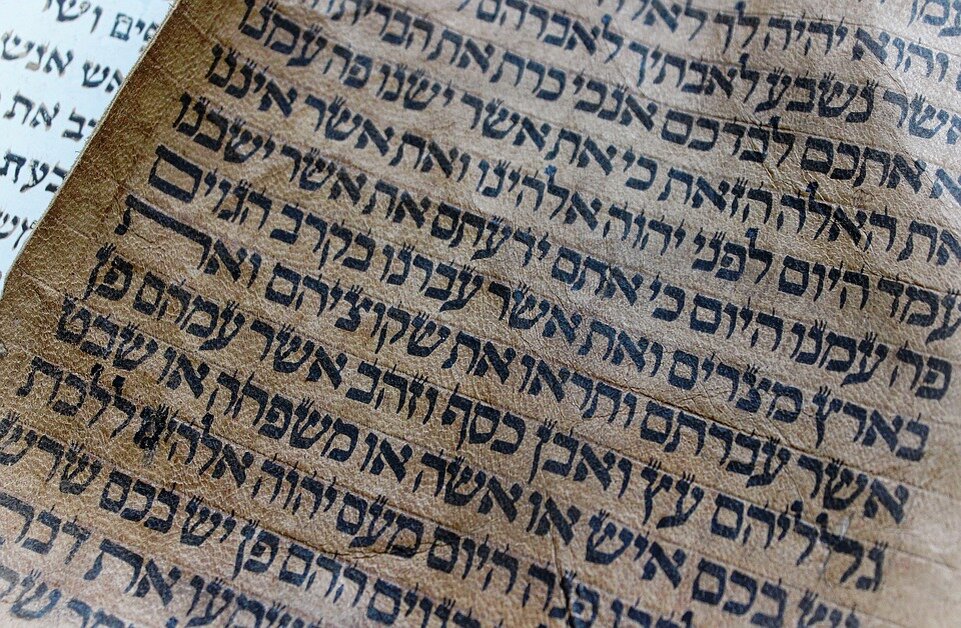
Around 1800 B.C., people invented a new type of writing - the alphabet. The alphabet has a certain number of symbols, which are mixed in different combinations to create different sounds, and therefore simplify the system of teaching reading and writing, in comparison with cuneiform or hieroglyphics. This has led to a kind of linguistic revolution and has enabled us to learn to read and write not only to professionals but also to ordinary traders.
There is reason to believe that the alphabet was invented in northern Egypt by Canaanites (who later created Phoenicianism) or by Jews who traded and worked in turquoise mines in that area. They were familiar with the Egyptian hieroglyphs, but could not read them, so they came up with a simplified form in the form of an alphabet.
Around 1800 BC, some people from Canaan (present-day Israel and Lebanon) went to northern Egypt to trade and work in the turquoise mines in Serabit. They built a large temple for the Egyptian goddess Hathor, whom they called Ms. Baalat (the female form of Baal, which means God) so that they could sacrifice and pray there. These Canaanites did not know how to read or write, but when they saw the Egyptian hieroglyphics, they became interested in creating their language. They used simple versions of Egyptian hieroglyphs to indicate the sounds of their native language, Aramaic.
Canaan miners from Serabit called the first letter "Alp", which means "bull" in Aramaic. The symbol was similar to the head of an ox with small horns. Today we turn it upside down, forming the letter A (Hebrew or Greek alpha). They called the second symbol "Bet", which means "home" in Aramaic. It was like a drawing of a house. In English, it is the letter B (beta in Hebrew, beta in Greek).
Modern Hebrew and Arabic alphabets come from this original Semitic alphabet. People across West Asia soon realized the advantages of the alphabet over cuneiform writing, and by about 1000 BC, many Semites had begun the transition to the alphabet. Soon there was a cultural exchange through Phoenician merchants with Greeks who also invented their alphabet in about 750 BC. However, the Assyrian Empire continued to use cuneiform writing until the 600s BC.
All important monuments, official letters, and records were made with the help of cuneiform writing.