This is a long-awaited continuation of the last article!
Link to Part 1: https://zen.yandex.ru/media/id/5d7424488600e100add15417/stress-during-study-causes-and-warnings-part-1-5d926c82028d6800aece3ca0
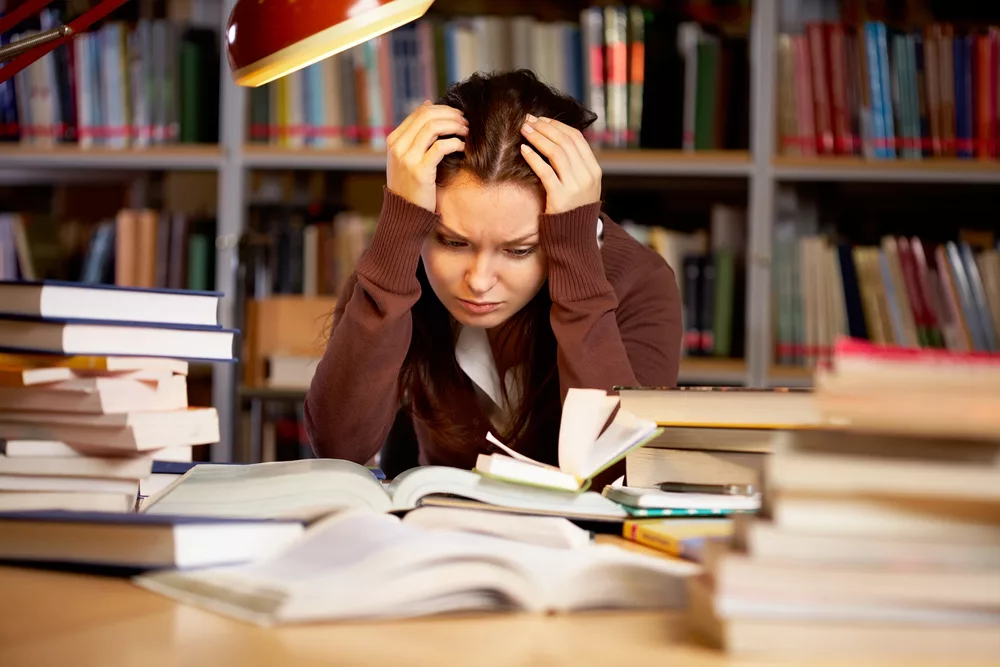
Stages and symptoms of stress
It is easy enough to notice the appearance of stress - you just need to catch the changes in their condition, and they can be of three types, based on the stage of stress:
- The stage of anxiety.
In response to stressors, the human psyche reacts with anxiety. Anxiety serves as a signal to the body to mobilize protective potential. This stage is very easy to notice.
- Resistance stage.
The body gets into a state that allows it to cope with stress on its own. As a rule, this stage does not cause anxiety in a person, especially if he succeeds in solving the problem.
- The stage of exhaustion.
Stress reaches it if the stress factor continues for a long time. The body's reserves are depleted, it becomes more and more difficult to cope with stress, and ultimately, stress completely suppresses the person. Like the first stage, the third stage is very easy to notice.
Detailed stages were described in his works by the Canadian researcher Hans Sellier in the middle of the 20th century, but even today this information remains relevant. If the state begins to correspond to one of these stages, it is worth considering whether you are dealing with stress. And you can be sure of this, if you pay attention to the symptoms.
Separately, we wrote about the symptoms of stress in the article "Stress and psychology: how they are related", so that we will not repeat, but simply recall that under the influence of stress in the first place the human nervous system experiences stress.
The common signs of stress are
- a loss of strength;
- apathy;
- poor appetite;
- Sleep disturbance;
- irritability;
- Temptation;
- headaches;
- Distraction;
- Decrease in concentration;
- Decrease in information assimilation;
- Memory impairment.
All this has a very bad effect only on the student's health, but also on his progress, because it affects absolutely all the systems of the body, and as a consequence, there are changes in all spheres of life.
Consequences of stress at school
Due to stress, the student does not perceive and memorize information well, is reluctant to attend classes, prepares for exams ineffectively, and his overall performance falls. If a student neglects a healthy lifestyle, drinks a lot of coffee and caffeinated beverages, eats badly, has little rest, etc., the situation becomes worse, which affects the physiological level.
It increases the load on the heart, increases the blood pressure, and impairs the vegetative system. In the case of prolonged stress vegetative homeostasis is disturbed, over time, blood vessels are destroyed, weakens the immune system, which increases the risk of disease.
In addition, we can highlight the decrease in self-esteem, mood and wellbeing. This can lead to bad habits and addictions, such as cigarettes, alcohol, medications and drugs. This is how a person tries to cope with difficult circumstances.
Repeated scientific research shows that even after the stressful factors stop working, it takes time for the body and psyche to recover and return to normal. And this is another good reason why it is impossible to allow either development, or, moreover, the exacerbation of stress.
How to deal with stress at school
The extent to which a student's stress tolerance is developed is crucial both for the learning process and for the life of the person entering the adult world. Naturally, it is almost impossible to influence the conditions accompanying learning, and therefore it is much more effective not to "fight with the system", but to look for ways to normalize the mental state.
The most effective methods of dealing with stress at school include modification of behavior, i.e., revision and change of one's attitude to what is happening, getting rid of anxiety about what is not possible to influence, and mastering the ways to exit the negative. And for this purpose, psychologists recommend several methods:
Keeping a diary. It has long been proven that it is very useful to put on paper experiences, thoughts and emotions. This allows you to get rid of the negative and relieve the psyche. It is also useful to analyze the records to understand the reasons for your condition and to find ways to solve problems.
Sports activities. Physical and mental wellbeing is much better because of physical activity. Training, exercise, jogging and other such activities are opportunities to release excess energy and to calm down, distract and think about something. Of course, sports also make your health better.
Emotional relaxation. Often stress causes negative emotions, and they, as already noted, should be spilled out. If sport is not an option for some reason, you can beat a pouffe, break a plate, shout into a pillow, break something that is not pathetic. In a quiet state, a person is not so subject to stress, and such techniques - a great way to achieve peace of mind.
Change of activity. When a day off is given, it should not be conducted in the same way as a weekday. It is best to radically change the environment and employment. You can go camping and spend the night in a tent, skiing or organizing a barbecue at a friend's cottage. The more "unusual" days you have in life, the better for your body and psyche.
In fact, there are many more ways to deal with stress at school, and if we talk objectively, they are no different from the ways to deal with stress at work and in everyday life. But there are also special situations that require a more specific approach. One such situation is the upcoming exam.
Even a little stress on the eve of the exam is a hindrance to concentration on preparation. The best way to avoid this is to eliminate stress factors in advance or try to adapt to them. In addition to this, you should not miss lectures, study the material of this or that program in time, and perform all the work assigned by the teachers. Although in some cases it does not help, because there are very emotional people who experience stress, even if they are fully prepared for the exam.
Such students may be advised to look for tranquilizers. But, firstly, there should be no contraindications, and secondly, it is necessary to consult with a doctor - only a specialist will be able to choose the appropriate drug.
However, it is realistic to do without pharmaceuticals. Calm down on the threshold of an important event is well helped by "grandmother" means, such as soothing charges and infusions from motherwort, chamomile, mint, valeriana. However, they should be drunk at least a couple of weeks before the exam, as the effect here is cumulative. No infusion will be effective if you drink it an hour before the event.
At this point, the first chapter ends. You will see the continuation of this article very soon!