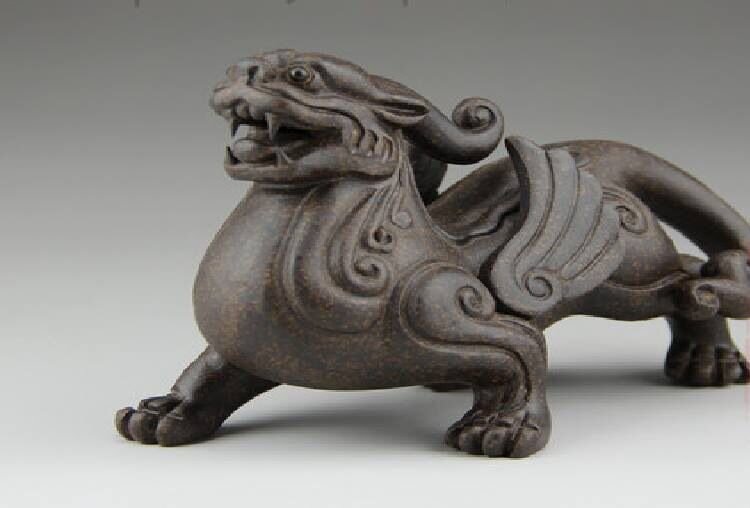
The history of Chinese art has a long history. Unlike Europe, where art styles are always changing, Chinese art has maintained an amazing continuity for centuries. The works of the Ming Dynasty can also see the influence of the Tang Dynasty. A painting by the Qing Dynasty is very similar to that of a Song Dynasty. One reason is China's respect for tradition. The artist's first priority is not to innovate, but to copy the old works as realistic as possible - this is not considered plagiarism, but to some extent innovation. Another: related books
Introduction
The religious and philosophical ideas widely spread in China are also constantly affecting artistic creation. Without the existence of Taoism, Chinese painting, Tang poetry will not be like this. These themes are often about living in harmony with nature. It is the painting technique that also reveals the influence of Taoist yin and yang theory. Some of them are between the dialectical conversion of the false and the real, and some are in the wet and dry pen.
Between the comparison of skills. In Chinese artworks, there are always characters of Taoist myths and legends. In contrast, the influence of Buddhism is not so great, especially considering the fact that Buddhism continues to be Chineseized as practice progresses. After the 16th century, with the arrival of Western missionaries, there were images of the West.
For economic reasons, the carrier of Chinese art is limited to the court and the college. In addition to this, there are also some lonely artists who create in the countryside and the mountains. This is often the case of some scholars and detained officials who are dissatisfied with the current state of society and thus escaping from reality. This is often the case when the dynasty is replaced, for example, at the beginning of the Ming and Qing Dynasties, when the Manchu invasion.
The influence of Chinese art can be observed throughout the East Asian cultural circle. Especially in areas that have been under Chinese rules, such as North Korea, Vietnam, or places were Chinese immigrants, such as Singapore, Malaysia, and Indonesia. Japanese art can't escape the influence of the central empire. In some areas, Japanese followers even surpassed their pioneers, such as the lacquer craftsmanship that reached its peak in Japan. Since the 16th century, Chinese handicrafts, especially porcelain, have been exported to Europe in large quantities, which has also affected European art. Fine art in Taiwan and Chinese immigrants can be considered as part of Chinese art.
Before and after the Han Dynasty
The eggshell high-handle cup of Longshan culture unearthed in the 1976 Zicheng ruins of Shandong Province
The stone tools of the Paleolithic Age have been able to be polished, carved, and drilled, conforming to the metric, equilibrium, and other forms of the American law, beginning with rhythm and rhythm of lines.
In the Yangshao culture of the Neolithic Age, the early forms of Chinese art can be found, and this form has been extended.
Continued to the 6th century BC. As early as the Hongshan culture period, the dragon-shaped and other decorative works of jade carvings have been unearthed. It can be found from the Banpo site that there is already pottery in the Yangshao period. Early ceramics did not have a painted pattern, but there were knurling. There are many patterns of fish or human faces that are drawn in a symmetrical form.
The pottery of the Neolithic Age has evolved from geometric ornamentation to animal and plant patterns, among which the pottery patterns of Yangshao culture and Majiayao culture are the most vivid. In addition to painted pottery, portraits and animal pottery with independent aesthetic values also appeared.
The imaginative and decorative bronzes in the Shang, Zhou and Chunqiu periods were the hallmarks of the artistic achievements of this period. At present, China has discovered that the earliest paintings were the dragon and phoenix pictures unearthed from the Tomb of Chu in Changsha and the "Yulong Map" in the Warring States Period.
The Han Dynasty paintings are almost non-existent. The most complete paintings of the Mawangdui Han Tomb depict the earth and underground life of the tomb master. Shandong Feicheng Xiaotang Temple and Jiaxiang Wuliang Temple stone carvings still exist, which can be seen from the powerful painting style features of the Han Dynasty.
The Warring States and the Qin and Han Dynasties, represented by the terracotta warriors and horses of the Qin Shihuang Mausoleum and the stone carvings of Huo's disease, have made outstanding achievements in sculpture. There are many kinds of paintings, such as paintings, murals, portrait stones, and portrait bricks. Yu Li formed Chinese calligraphy art.
To be continued https://zen.yandex.ru/profile/editor/id/5d70bb0e1e8e3f00ae96cd71/5d92a8733d873600b11d9e00/edit