There are legends about the origin of sugar. Here is one of them.
When the soldiers of Alexander of Macedon came to India, sugar extracted from cane was already known there. At historians of the Macedonian army there are mentions of an unknown white solid product of sweet taste. This product was obtained from a special Indian cane, which "gives honey without bees."
The name “cane honey” in Sanskrit sounded like “sarkara” or “sakkara”. The root of this word subsequently entered into all European languages. However, in Europe, sugar appeared much later - during the first crusades. The first crusaders learned about honey without bees obtained from high reeds when they arrived in Arab countries.
Sugarcane plantations first appeared in the European Mediterranean: in France, in Portugal, in Spain, on the islands of Rhodes, Crete, Cyprus, Sicily. However, in large volumes it was still purchased in the East, and from there it was imported to Europe at fabulously high prices. Brazil, then owned by Portugal, and Java, the possession of the Netherlands, also produced a rich sugarcane crop.
After the discovery of America, sugar began to be imported from plantations of the Caribbean islands. Since sugar was a very rare and expensive product, there were fierce wars between countries.
In Russia, cane sugar has been known since the 12th century, and in the 16th century sugar appeared on the royal table. The first sugar factory was built in St. Petersburg in 1718 by order of Peter I.
In 1741, the German chemist Andreas Markgraf, on behalf of Frederick the Great, dissatisfied with the prices of imported sugar and interruptions in its supply, conducted a study of some plants for the content of sugar in them. He found crystals of sugar in the roots of beets. But before the industrial production of beet sugar was still far away. Only many years later, Markgraf’s student, Franz-Karl Arhad, managed to develop a beet variety suitable for producing sugar in the right quantities.
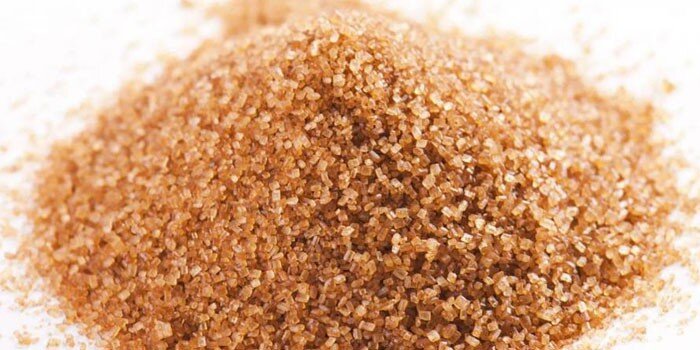
Since interruptions occurred with Indian cane sugar during the Napoleonic Wars, factories began to open in Europe at the end of the 13th century, where sugar was produced from processed beets. A century later, at the end of the nineteenth century, sugar became a public pleasure. Beet white sugar almost replaced the cane, brown.
Now most countries use beet sugar, and only in Cuba, Brazil, certain provinces of India and in some other countries sugar is still extracted from cane. Nutritionists consider it a much more useful sweetness than refined sugar.