The mysterious, powerful, disturbing - our unconscious cannot but arouse curiosity. Does it really exist? Why does it serve us? And can we make contact with it? Let's try to deal with myths and answer some questions.
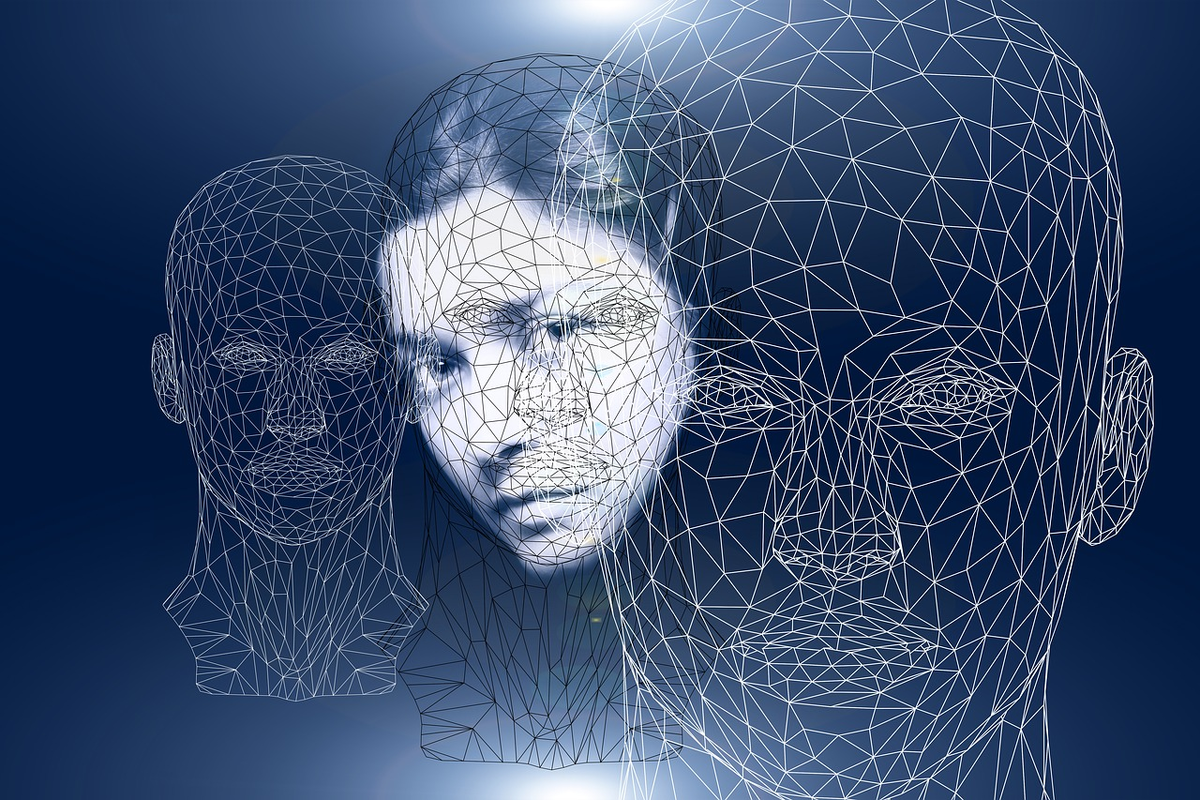
The idea that each of us has the unconscious is hardly surprising today. We are used to noting "Freudian reservations" or, having forgotten the keys to the house twice in a row, we are looking for a hidden meaning in this. And when each time we fail in love, we deeply notice that he probably unconsciously does not want to bind himself to obligations. We attribute the unconscious will as if it were some kind of living in us, but a separate person ... But do we know what it really is?
Where is it hiding?
The achievements of neurobiology confirm the reality of the unconscious," says neuropsychologist Boris Zirulnik. - And analytical theories allow us to better understand what we are seeing. Many psychophysiologists try to confirm (or refute) Freud's ideas. However, Freud himself was very clear on this point: Our mental topics has nothing to do with anatomy. It refers to the areas of the mental apparatus, regardless of their location in the body, and not to anatomical localizations.
The center of the unconscious as such, obviously, does not exist. Three brain zones are involved in unconscious processes: limbic structures (the kingdom of emotions), associative cortical zones, where links between ideas, words and things are formed, and sensory areas. Observations allow us to better understand why our internal mental conflicts are often expressed somatically (physically painful). It turns out that the brain processes words and physical sensations in the same way: for example, insult is perceived as a slap in the face. This analogy explains why, after the shock we have experienced, we can behave relatively calmly, without giving in to despair or fear... but we suddenly have stomach aches or migraines.

Our body memory?
Research shows that the unconscious is not only in the head. It is a very complex system, which covers both the psyche and the body. Since the late 1980s, the notion of the cognitive unconscious has been formed. As Boris Tsyiryulnik explains, this is a purely bodily memory, without any secret desires or shameful thoughts. It is thanks to the cognitive unconscious that we perform all sorts of daily activities: brushing our teeth, leaving our homes, sitting in the subway, dialing the intercom code without even remembering the numbers, automatically, without thinking. This bodily unconsciousness also explains why many children who are victims of abuse, without wishing to do so, grow up to be adults who also abuse children. They have simply mastered the violence in their own bodies ...
Well, if we really want to understand our emotions, our true desires, to get out of the enchanted circle of failures and to reveal our potential, without trying to listen to our unconscious and understand it.
Bonus: Freud's life cases
In previous years, when I visited patients at home even more often than now, it was not uncommon for me to come to a door I should have knocked or rang, and I took out the key to my own apartment from my pocket in order to hide it again, almost with shame. When I compared the patients who had it with me, I had to admit that it was a mistake to take out the key instead of making a phone call, which meant a certain praise for the house where it had happened. It was like thinking here I feel at home because it only happened where I loved a sick man.
In one house where I stand at the second floor door for six years in a row at a certain time, waiting to be opened, I happened to climb twice the floor above for a long time, "to climb too high". For the first time, I was having an ambitious dream, dreaming that I was "rising above and beyond" ... . Another time I went too far, also "in the mind"; when I got to the bottom of it, came back and tried to grab my fantasy, I found that I was angry about the (imaginary) criticism of my essays, where I was blamed for "going too far" all the time, a blame that I could communicate with an expression that was not particularly respectful: "I ascended too high.
Thank you for reading!