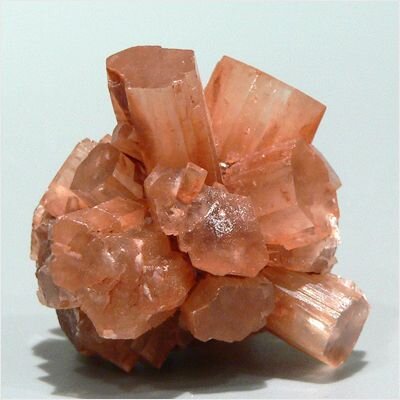
Abelsonite is a rare organogenic mineral of pink-violet, purple, reddish-brown color (organic nickel porphyrin). A synonym is abelsonite.
The stone is an organometallic compound: nickel 8-desmethyldeoxofilloerythroetioporphyrin, probably a reaction product involving chlorophyll. In 1969, it was discovered within the Green River Formation in Utah (USA) in the cores of oil-drilled wells, in the form of masses of up to 3 mm located in narrow cracks, formed by small plate elongated crystals composed of significantly predominant orthoclase, analcime, dolomite, quartz , pyrite and more precisely not diagnosed K-Fe-mica mineral. a product of reactions involving chlorophyll.
Description
Abelsonite is translucent and pinkish-violet, dark grayish-violet, pale purplish-red or reddish-brown. The mineral is found in the form of thin slats or plates or small aggregates up to 1 cm (0.39 in). The mineral is soluble in benzene and acetone and insoluble in water, dilute hydrochloric acid and dilute nitric acid.
Deposit and formation
The mineral is known only from Parachute Stream flowing into the Green River. It has been known from the Wynta Basin in Utah since its discovery and from the Pisance Basin in Colorado since 1985. Abelsonite is found in association with albite, analcime, dolomite, mica, orthoclase, pyrite and quartz.
Abelsonite is a secondary mineral that forms in fractures, protrusions, and layers of shale. It seems that the mineral is formed from the diagenesis of chlorophyll, probably chlorophyll a, which was transported in the form of an aqueous solution into a favorable geological environment.
In 2003, abelsonite was first fully synthesized.
Since 1989, abelsonite has been the only known geoporphyrin with a crystalline structure. Most geoporphyrins are found as a series of homologs covering a wide range of carbon numbers. Porphyrin containing abelsonite is common, but it usually does not occur in isolation from other porphyrins.
The mineral is deoxyophylloerythroetioporphyrin (DPEP), with nickel occupying the center of the porphyrin ring. Most of the mineral consists of porphyrin C31 with small amounts of the C30 nonisomer. The mineral crystallizes in triclinic syngony.
Story
The mineral was first noted in 1969 in a primary sample made by Western Oil Shale Corporation in Winta, Utah. It was described in 1975 in the journal Geological Society of American Abstracts with Programs. The mineral was named after Philip H. Abelson (1913–2004), a long time editor of Science, for his contribution to organic geochemistry.
Model specimens are kept at the Museum of Natural History in London and the National Museum of Natural History in Washington, DC.
CRYSTALLOGRAPHIC PROPERTIES
Syngonia Triklinnaya
Cell parameters a = 8.44Å, b = 11.12Å, c = 7.28Å
α = 90.88 °, β = 113.75 °, γ = 79.57 °
The ratio a: b: c = 0.759: 1: 0.655
Unit cell volume V 613.79 ų (calculated by unit cell parameters)
PHYSICAL PROPERTIES
The color of the mineral is pink-purple, reddish brown
Trait color pink
Gloss diamond, semi-metallic
Cleavage is very imperfect according to {101}
Hardness (Mohs scale) 2 - 3
Density (measured) 1.33 - 1.48 g / cm3
Density (estimated) 1.45 g / cm3
Radioactivity (GRapi) 0
Molecular Weight of 519.31
The origin of the name In honor of Philip H. Abelson, President of the Carnegie Institute, one of the founders of organic chemistry.
IMA status approved 1975
Year of discovery 1978
Application
Despite the low hardness of abelsonite, this does not prevent it from being used as an insert in jewelry. Often you can find earrings, rings, pendants, beads and gem bracelets.
The frame for a stone, as a rule, is selected in tone of its shade. This is usually silver - pure or blackened. But the mineral also looks harmonious in combination with medical alloys or even skin.
It is worth noting that the cost of abelsonite is not high, but the presence in the decoration of a precious metal increases its price as a whole.
Who is suitable for zodiac abelsonite
This is not to say that abelsonite categorically refers to a particular zodiac sign. Given the energy of the mineral, he will find harmony with absolutely any person, regardless of which element protects him.