When there is something material or living of great value, it is necessary to learn how to preserve and protect it. This is not only true of cultural objects, works of art and popular traditions. It also happens in nature. Just as certain patron saint festivals can be the cultural heritage of an area, there are also different types of ecosystems that are natural heritage. Luckily, Spain has a large expanse of land with a natural heritage of high ecological value (one of the largest in Europe). This does not mean that the rest of the world does not have this valuable territory.
In this article, we are going to show you what makes an ecosystem natural heritage and the importance of its proper management and protection.
What is natural heritage?
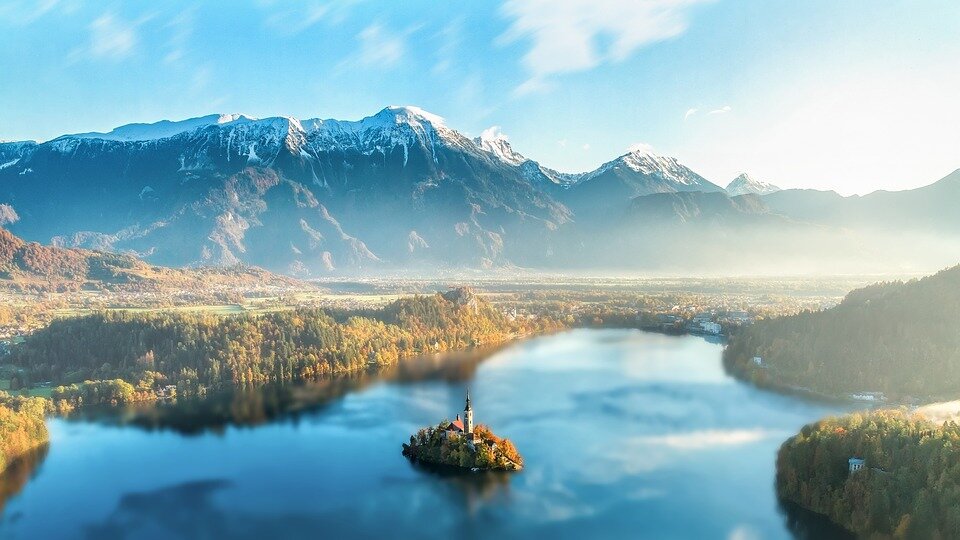
Natural heritage is an ecosystem that offers beautiful landscapes, is home to a large number of species that need them to live and, in general, a place that can contribute much to society from different aspects. Through the tourist and economic aspect, many well-preserved places attract people from all over the world to visit. This generates the economy of natural tourism. On the other hand, it also provides a lot of information from a scientific point of view.
It is a set of natural goods that are located in the territory of a country. Normally, this heritage is protected with different categories of protection depending on its value and current state of conservation. For example, the best-known category is that of the natural park. It is a natural area where the impact of the human being is the least possible and tries to conserve all the intrinsic characteristics of nature, limiting any activity that could damage the ecological balance.
These protection measures are not intended to privatize nature, but to enjoy the heritage while at the same time environmental education activities can be carried out to educate the youngest to have conservation values.
All over the world, these protective measures have had acceptable success. There are more than 100,000 protected wilderness areas on the planet. Fortunately, in Spain, we have great biodiversity and a large amount of protected land. Even with this, the number and surface area of protected areas has increased considerably in recent years as a result of the creation of the Natura 2000 Network. The aim of this network of protected natural areas is to create a common policy for establishing criteria for the protection of natural areas at the Community level.
Categories and system of protection
According to the Natura 2000 Network approved by the European Union, wilderness areas are divided into two main categories:
ZEPA: special protection area for birds.
SCI: Sites of Community Importance.
Despite what can be said or criticized about Spain, we have a network of protected Natural Spaces of the largest in Europe. This means that we have different ecosystems, landscapes, and species that makeup Spain's natural heritage.
Spain's natural heritage extends throughout the Pyrenees, the whole of the north of the peninsula, the Canary Islands and Menorca. We also have irreplaceable parts of great ecological value such as the Garajonay National Park or the Doñana National Park in Andalusia.
There are different categories of protection in Spain. We have a natural reserve, natural park, natural spot, natural monument, biosphere reserve, concerted natural reserve, periurban park, etc.. Each category has special characteristics and a different protection regime according to what you are trying to conserve. It is not the same to conserve an area close to a city than a natural space such as Doñana. The permitted activities and the law are hardened when the ecological value is higher.
Right now, in Spain, the natural reserve is the maximum degree of protection, given that not even the human being can enter it. Normally, they are places of small extension of land, fenced, where only scientists can enter with permission to carry out research about the flora and fauna that lives in these areas.
Categories and protection regime
According to the Natura 2000 Network approved by the European Union, wilderness areas are divided into two main categories:
ZEPA: special protection area for birds.
SCI: Sites of Community Importance.
Despite what can be said or criticized about Spain, we have a network of protected Natural Spaces of the largest in Europe. This means that we have different ecosystems, landscapes, and species that makeup Spain's natural heritage.
Spain's natural heritage extends throughout the Pyrenees, the whole of the north of the peninsula, the Canary Islands and Menorca. We also have irreplaceable parts of great ecological value such as the Garajonay National Park or the Doñana National Park in Andalusia.
There are different categories of protection in Spain. We have a natural reserve, natural park, natural spot, natural monument, biosphere reserve, concerted natural reserve, periurban park, etc.. Each category has special characteristics and a different protection regime according to what you are trying to conserve. It is not the same to conserve an area close to a city than a natural space such as Doñana. The permitted activities and the law are hardened when the ecological value is higher.
Right now, in Spain, the natural reserve is the maximum degree of protection, given that not even the human being can enter it. Normally, they are places of small extension of land, fenced, where only scientists can enter with permission to carry out research about the flora and fauna that lives in these areas.
Examples of natural heritage in Spain
Let's list some of the most notable and well-known examples of Spanish natural heritage.
Garajonay National Park
It is located in the center of the island of La Gomera, in the Canary Islands. It preserves one of the most important of the whole European Union. It is the magical laurel forest. It also stands out for all its great diversity of plant formations, geological monuments and the great number of endemic species that it shelters. Let us remember that an endemic species is one that only develops in one place and does not live in another.
Teide National Park
It stands out mainly for the beauty of its landscapes. It is one of the most beautiful in the world. The park has a great biological richness with a high percentage of endemic plant species of the area. Despite what is thought, there is a large amount of invertebrate fauna, including ocelot.
The highest point in Spain is Teide, a volcano. It is the third-largest volcano in the world, at 3,718 meters high. This national park is part of the World Heritage List in the category of natural property.
As you can see, natural heritage is of great importance to society. Not only does it preserve nature and its functionality, but it also attracts tourism and fosters the economy of all areas of greatest value.