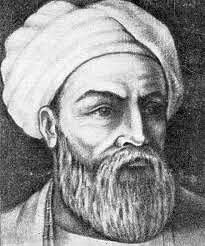
The famous Arab traveler of the XIV century Ibn Battut left us curious news about his visit to the capital of the Khan of the Golden Horde of Uzbekistan and about the trip of the Khan's wife, the Byzantine princess, to her father Emperor Andronic III, to Constantinople.
From the Asian city of Sinopa Ibn Battuta came to Korsun; from here he drove to Kafu (Feodosia) on a local cart (arba), which belonged to the possessions of Uzbekistan. Then he has visited the city of Crimea and from here has gone on Black Sea and Don steppes to capital of the Kipchak empire (Golden Horde), the Sarai. In the steppes of Ibn Battuta he saw numerous herds of all kinds of cattle, especially sheep, which were grazing without supervision, protected only by the severity of the Tatar laws against theft. According to these laws, the stealer of the cattle had to turn it around with the addition of his nine pieces of the same value; if it turned out to be untenable, he gave up his own children; if he did not have children, then he himself was put to death.
After many days of travel," says Ibn Battuta, "I arrived in Azak (Azov), a small town on the seashore. There is an emir in it, staged by Sultan Mohammed Uzbek Khan; he has honoured us with his hospitality. From here we drove to Majar, a significant, beautiful city. Tatar women in those regions are highly respected, especially the widows of the nobles and khans. The women are godly, as well as generous in their alms and other good deeds. They walk without blankets with their faces completely open (obviously, the Muslim harem life has not yet had time to put its seal on the Kipchak Tatars).
From Majar Ibn Battuta went to the Khan's headquarters, which was then in the area known as Bish Tag (Beshtau) or Pyatigorye. The traveler and his companions arrived at the place where the khan had just settled down with his court. Ibn Battuta arrived at this camp called "Urdu" (Horde) on the first day of the month of Ramadan (May 6, 1334). Here he saw a moving city with its streets, mosques and kitchens, the smoke from which rose as they moved. But when the sign was given to stop, all this happened still. Sultan Muhammad Uzbek, according to Ibn Battuta, was very powerful and had extensive power, including over the infidels (i.e. not Muslims). He belonged to seven great kings of the world, including the rulers of the West (Morocco), Egypt and Syria, both Iraqis (Persia), Kipchak, Turkestan, India and China.
Ibn Battuta gives a description of the Khan's ceremony, reminiscent of Plano Carpini's news about Batye. According to Ibn Battuta, Muhammad Uzbek had the custom of sitting under the so-called "golden tent" every Friday after prayer, which is very richly decorated: in the middle of it was set a high throne (his own bed), upholstered with gilded silver sheets with expensive stones. Khan was seated on the throne; his four wives sat next to him, two on the right and two on the left. His two sons stood beside the throne, also one on the right side and one on the left; his daughter sat in front of the throne. When any of these wives came in, the Uzbek stood up and took her by the hand and took her back to her place. Ibn Battuta also notices here that the women were without any veil. Then came the great emirs, for whom the seats on the left and right side of the throne were prepared. In front of the khan stood the princes, his nephews, and other relatives. Closer to the door, but facing the throne, the sons of the emirs were placed, followed by other military officials. Everyone who came in bowed to the khan and then took his place. After evening prayer the main wife or khansha came back to herself; the others followed her, each accompanied by their beautiful slaves. According to Ibn Battuta, Taitugly, the eldest and most beloved wife of Uzbekistan, was a stinginess. It was the same Taidula of our chronicles that was treated by Metropolitan Alexei.
Khan received Ibn Battuta very favourably; then he sent him a gift of rams, a horse, a leather vessel with his favorite Tatar beverage, i.e. with koumiss. Ibn Battuta paid special attention to the honor with which the Khan's wives were surrounded. Each of them had its own room, its own special staff of servants and maids; a detachment of Tartar horsemen drove in front of her kibbitka, followed by beautiful mamelukas. According to the custom of Tatar courtesy, the Arab guest visited the main khan's wives before receiving the khan's welcome.
With the will of Uzbekistan, Ibn Battuta traveled north to Bulgar to satisfy his curiosity, which was particularly affected by the stories of former Arab travelers (such as Ibn Fodlan) about the extreme brevity of the nights at this time of year. Indeed, according to Ibn Battuta, as soon as he finished evening prayer at sunset, he was to begin morning prayer before sunrise. In Bulgar, he had heard of a country of darkness lying beyond the perfect desert, 40 days away, where he could only ride on dogs. Traders usually go to this country and change their goods to the natives for expensive furs. Of course, we were talking about trade with the very ladies