Observations are fundamental dimensions of astronomy as a science. They are compared with data and theories obtained in laboratories by astrophysicists and other physicists to verify proven predictions.
Astronomers are in a unique position among scientists because they cannot conduct experiments directly on the subjects of their research. Astronomers must wait for photons (and now other forms of non-electromagnetic radiation) to pass through the universe to Earth and for humans to see them with one of the devices.
The key to discovery is the presence of an appropriate telescope at the appropriate location to witness these photons and the history of their occurrence.
Throughout much of human history, astronomical observations have been made outside of what can be seen with the eyes.
Some basic knowledge, such as telescopes for fundamental astronomy or for personal observation, will be covered in this article.
The uniqueness of a tool for observing celestial objects
For many years, telescopes have been used to observe celestial objects. These remote object monitors have changed our understanding and knowledge of objects in the universe. Scientists and engineers are conducting new developments based on the measurement of wavelengths coming from celestial objects, with improved technology to create many types of telescopes.
There are various types of telescopes available, ranging from Veber's domestically produced optical instruments to the most sophisticated X-ray instruments for the Aeronautics and Space Administration (NASA), the European Space Agency (ESA) or the Russian Federal Space Agency (Roscosmos). The different stages of the stars can be studied in detail using these instruments, which are used for specific purposes.
This article will deal with the question of what kind of telescopes are available, as well as the function and purpose of these telescopes for the analysis of signals from our universe.
Types of telescopes
Wavelengths or electromagnetic radiation are different from objects in the universe. For this reason, instruments for monitoring remote objects are classified according to their design. They are available in optical, X-ray, infrared and radio telescopes.
Optical
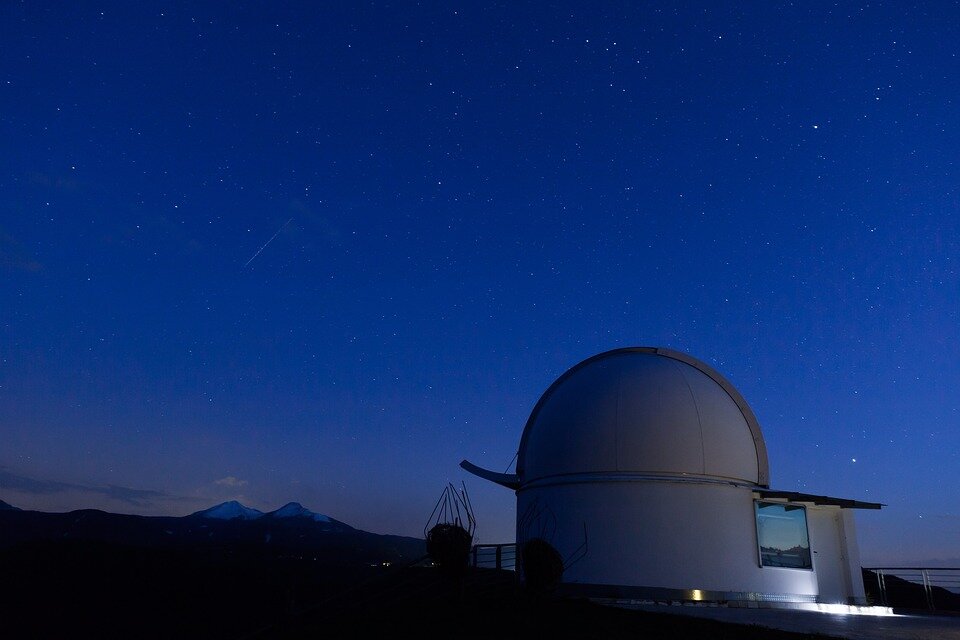
Optical telescopes are the most common, as they are mainly used to observe distant objects with visible electromagnetic spectrum of visible light. Since visible light can be observed from the Earth, most optical telescopes can be placed on the ground.
Some atmospheric distortions may result in observations not being accurate for professionals.
X-ray
Radiation from remote objects and shorter wavelengths is detected by X-ray telescopes located on spacecraft. Their location on spacecraft is due to the fact that the atmosphere is opaque and therefore blocks any gamma rays, X-rays, and ultraviolet light can only be used in space, so there are no X-ray telescopes located on the ground.
Radio telescopes
Other common types of telescopes that can be installed on Earth are radio telescopes that are used for radio astronomy. Since they can receive radio waves from the universe, the antennas are open and relatively large. Because the atmosphere does not block radio waves, a radio telescope does not need to be placed above the Earth's atmosphere. A radio telescope can be used to observe objects such as quasars. To determine the cosmological red shift, quasars and galaxies can be studied using spectroscopy. This helps to display the structure of the universe because the red shift is proportional to distance.
Optical and radio telescopes are often located in mountains or outside the city limits, as electromagnetic and light pollution from cities can affect the result of observations.
So, for example, in order not to affect the observation of radio telescopes used in the mountainous areas of New Mexico, the United States has built many radio telescopes, which are mainly used to observe the protoplanetary discs around young stars and black holes. This universe observation system has been specifically designed outside of cities to avoid the influence of many astronomical objects during observation.
Telescopes on satellites
Scientists used ground telescopes to see the visible light and radio waves from the star.
Scientists use telescopic satellites to study the universe at all wavelengths without blurring or darkening the Earth's atmosphere.
Many objects at different stages of development in the universe emit electromagnetic waves, so different types of telescopes can provide images of these objects. Scientists can study radio waves from young stars to see the birth of stars or the death of stars when X-ray machines are used, because these stars often emit X-rays. Terrestrial complexes in this range distort images, and it is impossible to study large-scale images of galaxies.
The Hubble Space Observatory since 1991 has been another typical example that can study the sky in depth to identify galaxies in their early stages of evolution. It can collect more accurate and detailed images without the absence of atmospheric distortion.
Another example is the NASA Chandra Space Observatory since 1999. The Chandra satellite observatory has produced a map of the hot gas in galaxy clusters and studies of black holes throughout the universe.
The Chandra Observatory provided a detailed study of the X-ray sky. These data are used to study dark energy and dark matter. Since dark energy and matter do not emit any radiation, the observation devices can only partially help in the study, because they cannot directly observe the darker parts of the universe. To study these objects, scientists have built a number of new detectors. The study of dark energy and dark matter may be possible by combining these new detectors with telescopes.
Conclusions
Different types of telescopes have been developed to observe stars at different wavelengths across the universe. Telescopes have different functional applications in astronomy, although some objects such as dark energy and dark matter cannot be directly observed. New technologies in the future will create better devices and tools for scientists to discover unknown objects in our universe.
Thus, we present a summary of what telescopes are for research and discovery in the universe for present and future generations.