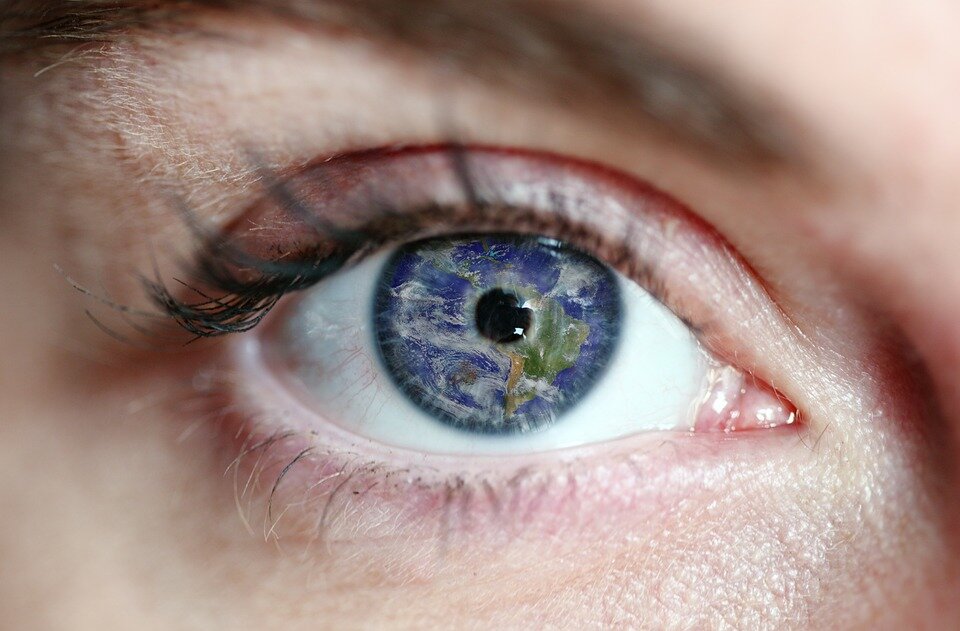
Not so long ago, the term "super predator" emerged among biologists and environmentalists. It refers, surprisingly enough, to a person. It is people who have become the most terrible predators on Earth.
We're afraid of wolves, but if you compare a man to a wolf, the comparison is probably not in our favor. The objects of wolf hunting are about twenty other species of animals, and human beings have hundreds of thousands. Wolves hunt sick, old and weak animals, they destroy about 10 percent, improving the population. People, on the contrary, prefer large and healthy animals, reducing the population by half or more.
But this is not the only thing that limits people's influence on nature. Thousands of articles and scientific papers have already been written about environmental pollution, thousands of species exterminated as a result of economic activity, inordinately greedy, irrational disturbance of the ecosystem. Under the influence of man, the very course of evolution is disturbed. Species of fish and animals, which are objects of industrial catching or permitted hunting, have been studied. The facts are disappointing.
For example, for about 20 years scientists have been observing Atlantic cod near the northern coast of Canada. They found that fish had a lower age at which to reproduce. Previously, cod started to breed at the age of six, but now at the age of five. It would seem that it is not scary. But in fact, younger individuals give less viable offspring, they are smaller. Smaller fish find it easier to slip through fishing nets, survive more often and pass on their genes to offspring. Thus, commercial fishing for codfish has led to degradation in just two decades and may well contribute to the extinction of the species. This is not only true for Atlantic cod.
A team of scientists led by Chris Darimont of the University of California, Santa Cruz, conducted a study to determine the extent of human influence on evolution. They used the research materials of 34 scientific works on 29 species of different animals in more than 40 ecosystems, which are the objects of large-scale hunting and industrial trapping. A further 20 species of animals and fish under study develop naturally without being affected by human activity, and 25 species that are affected by human activity in one way or another.
Everything is interconnected in nature. All living beings, animals, birds, plants, microorganisms, climate variability and climate change affect each other to a greater or lesser extent, forcing them to change. But only a person can influence so much that these changes occur in a critically short period of time.
After studying all the data and meta-analysis, scientists came to shocking conclusions. It turned out that species that are under significant pressure from humans have a rate of evolution that is three times faster than the natural process and half as fast as those that are less exposed to humans! And that's not all. The changes caused by such accelerated evolution are usually negative in nature. Most often, it results in individuals becoming 20 percent smaller than their predecessors, and their reproductive age decreases by 25 percent.
Conservation organizations are doing a great deal of work, but often their efforts are not the most positive. In the study, scientists have found many of these facts.
In the Canadian province of Albert, there are strict restrictions on the firing of snow sheep, strongholds and other people. Animals should not be smaller than certain sizes. It would seem that this should contribute to the conservation of the stock, saving it from the extermination of young animals. In fact, over the past 30 years, the weight of animals and the size of their horns have decreased by an average of 20 percent.
Will nature be able to roll back if hunting is completely prohibited? Even scientists are not able to answer this question. Shredding the species leads to the fact that the ability of animals to reproduce is reduced and the replenishment of the population is slower. The offspring of small animals are less resistant to environmental influences and die more often. So, for several more decades, this species may well be on the verge of extinction. The most dangerous thing about these situations is the relationship between species of the same ecosystem. Following one thing, more and more species are being drawn into the chain, leading to changes in the entire ecosystem.
In the past, only global disasters have led to such consequences. Now, the number one enemy of nature is the "super predator" of man.