Digitalis
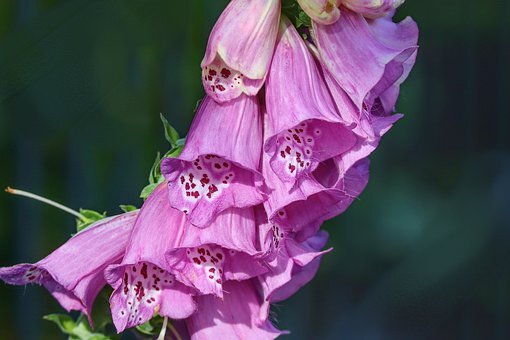
Large perennial or two-year-old plants of the plantains family, chanterelles are recognizable by the stems covered with flowers in bells. The so-called Notre Dame gloves are available in 22 different sizes and colors. Although their flowers and leaves are toxic, the foxglove is used in cardiovascular procedures.
Scientific name: Digitalis
Family: Plantaginaceae
Varieties: big flower foxglove, purple foxglove, yellow foxglove
Flower color: white flowers, yellow flowers, pink flowers, purple flowers
Plantation: a plantation in September, plantation in October, a plantation in May, a plantation in June
Exposure: Sun, Partial Shadow
Soil type: rich in humus
Usage: in mass
Flowering: Flowering in May, blooming in June, blooming in July, blooming in August, blooming in September
Leaves: Resilient
Disease, pests: slugs, oidium, mildew
Watering: Moderate
Durability: every two years, multi-year
Height: 60-180 cm
Therapeutic properties: Toxic plant in contact with the body
The digital name comes from Latin numerals, which means "finger" because you can enter the entire finger into the hollow of its colors. It also brought him the nickname "gloves of Our Lady".
Factory digital
The chanterelle loves shaded gardens, but it also supports sunny situations if you are north of the Loire. Plant your chanterelles 20-30 cm apart depending on the variety.
Its soil should be well-drained, rich in humus and slightly acidic, especially for the digital variety of purple. To make sure that its substrate is well adapted to its needs, you can mix its soil with a small amount of heather soil for acidity. You can also add river sand to provide good drainage if your soil is too heavy.
In spring, during its flowering, you can add some organic compost, which you will distribute on its basis to bring it the necessary humus.
The best time to plant chanterelles is in autumn, as this allows them to take root long before the hot season. You can still graft them in in the spring, making sure that the soil does not dry out.
Most of the digitals are two years old and bloom in the second year after sowing. However, its flowers, which turn into seed-filled capsules, are naturally resurrected. This can even become aggressive over the years.
Maintain digital
To get a second flowering, you can cut off the flower stem of the foxglove when it dries. If you want it to return naturally next year, you can leave dry flowers on the ground or scatter seeds in a capsule.
Some foxgloves can measure more than 2 meters and are therefore afraid of being too ventilated. If you live in a dusty environment, it can be useful to stutter or place them near a wall or hedge.
Wet your foliage as little as possible during watering, because foxglove is particularly susceptible to fungal diseases such as powdery dew or powdery dew, which are highly susceptible to too much moisture.
Multiply the foxglove
Semi, a very simple multiplication method for a foxglove. You can sow from May to September or just after the first flowering of the foxglove stand. This will just make leaves in the first year and then will have the first flowers next year.
Sow on scratched and damp soil, cover with a light rake, then water with fine rain. As soon as young seedlings appear, cut them at a distance of 20-30 cm from each other.
Еdelweiss
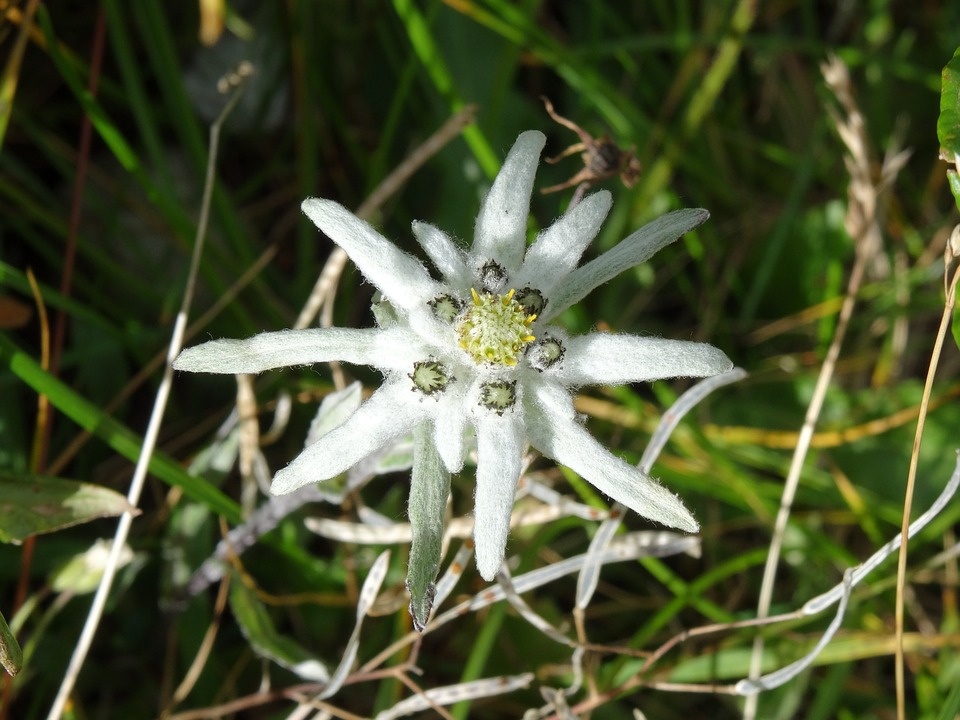
Sometimes called the "silver star" because of its shape and origin, Edelweiss is primarily a perennial plant in the mountains. Its woolly flowers and silver leaves can be seen in the wild, mainly in the Alps, Pyrenees or the Carpathians.
Although it grows perfectly at an altitude of 2000-3000 meters, it also grows in flat gardens, such as pots or mountain climbing. Belonging to the family of Composite Colors, Edelweiss is available in 35 species.
Scientific name: Leontodium alpinum
Family: Composite
Color of flowers: white flowers
Landing: Landing in March, landing in April
Shutter speed: Sun
Soil type: Poor, Dry, Limestone
Usage: in rockaria, in a bank, in a gardener
Flowering: Flowering in May, blooming in June, blooming in July, blooming in August, blooming in September
Leaves: Kaduk
Disease, pests: Snails, Slugs, Tlie
Watering: Moderate
Longevity: Long-term
Height: 15-20 cm
Edelweiss, also known as the "silver star" or "glacier stars" is a flower of mountains. Originally from Siberia, it was imported during the Quaternary Ice Age. His name Edelweiss comes from the German word "Edel", which means "noble" and "Weiss", which means white.
Edelweiss, found in the garden centers, is the same as in the high mountains, but its flower is less impressive than in the wild. Edelweiss has been grown in Switzerland for many years because of its antioxidant properties. It is used, in particular, in the production of anti-aging creams. Edelweiss also has anti-inflammatory properties. In France, it is now a protected species, and it is prohibited to collect it on the plains and in the alpine mountains. Edelweiss is edible and used in desserts.
Plant Edelweiss
Edelweiss landed in early spring from March to April and flowers from May to September. This is liked on stony and poor soils, too rich soil will tend to make it lose its character down the flower of Edelweiss. It will have a preference for slightly limestone land. To make your land well-drained, you can add gravel and river sand to your land. Water only in the case of heatwaves. Edelweiss loves sun exposure but will maintain a penumbra.
Maintain Edelweiss
Edelweiss requires a little care, his land must remain poor, so do not bring him fertilizer during flowering. On the other hand, you can remove flowers and dried leaves after flowering to stimulate the growth of the following.
At the end of summer, you can fold up outdated leaves, and do not leave faded leaves on the roots to protect them from frost, because Edelweiss grows naturally on top of the mountains and therefore has a very good stamina
Edelweiss especially attracts slugs and snails: to keep them away from your flowers, you can spread fern manure. Beer traps are also effective against gastropod attacks.
Multiply Edelweiss
To multiply your Edelweiss, you can proceed to the separation of the strain after flowering.
You can also collect seeds at the end of summer when the flowers are dry. Sow them in March and April under a cold frame.
- Place them in a sandy and damp base.
- Cover the seeds with a thin film of the substrate.
- Tram the ground.
- Water in the rain,
- Wait for the elevator.
- Transfer the seedlings to the ground in August, flowering will occur next spring.