He turned the key to the start and said in Russian, "Let's go!". For the East Germans, he is as legendary as Yuri Gagarin was in the USSR. This year on the 21st of September Sigmund Yen passed away at the age of 82.
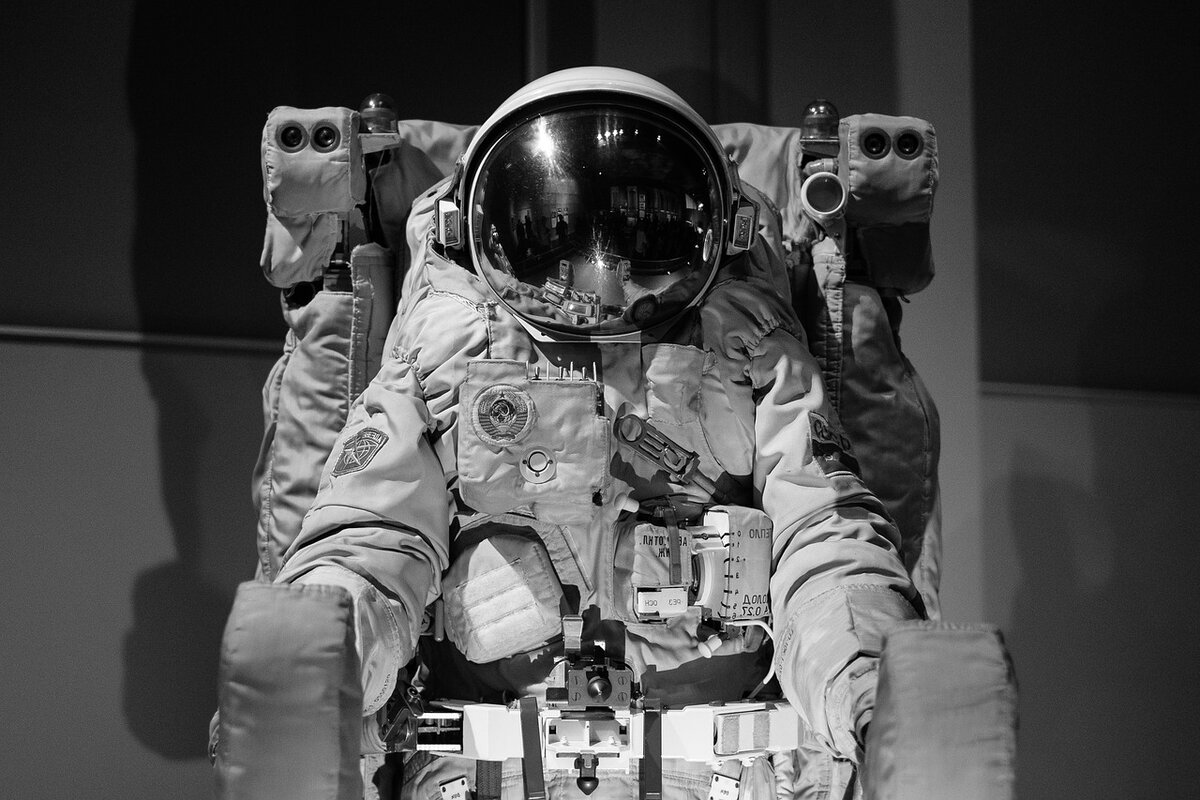
On August 26, 1978, Valery Bykovsky together with Soviet cosmonaut, he made an expedition to the Soyuz-6 orbital station. The flight lasted 7 days, 20 hours and 49 minutes and 4 seconds. Sigmund Ian was the first German to enter space. After that triumphant flight - he flew around the Earth 125 times - Sigmund Ian became a national hero in the GDR. With all the "attributes" he owes front page editions in the party Neues Deutschland, special editions on television, souvenirs on the shelves of shops and even a commemorative coin of ten marks. In West Germany, however, the name of the cosmonaut remained unknown for a long time.
Sigmund Ian was born on February 13, 1937, in the small town of Morgenreute-Rautenkrantz in East Germany's Saxony. At first, his life was no different from that of other ordinary citizens of the GDR. After school, he studied to be a printer, but by profession, he did not work for long. He was a pioneer and voluntarily joined the paramilitary police. And then he graduated from the military school and became a pilot and went to the Soviet Union - entered the Yuri Gagarin Air Force Academy in the village of Monino, Moscow region. And in the end, he became the first German to fly into space.
At first, there were twenty of them - those who had the chance to become the first German cosmonaut. Moscow demanded that fighter pilots be candidates. The list, as it became known later, was approved personally by Honecker. The only lucky one was chosen in several stages.
At the finish line, already in Russia, in Star City, there were only two of them left - the rival of Sigmund Jen was Eberhard Köllner, who also graduated from the Gagarin Air Force Academy. From the very beginning, it was clear that there was only one place in the ship for a German space explorer. As a result, the lot fell on Ian. Many years later, in an interview with Der Spiegel magazine, the cosmonaut said: "The last word belonged to the Russians, after all, we were going to fly their spacecraft. I did the best medical tests, including centrifuge tests. In orbit, I really did not suffer from the space disease that many astronauts experience in the first days of the flight.
On August 26, 1978, the crew of the Soviet Soyuz-31 spacecraft departed Baikonur for an expedition to the Soyuz-6 orbital station. In addition to the German citizen, Soviet cosmonauts Valery Bykovsky, Vladimir Kovalenko and Alexander Ivanchenkov were on board.
During the flight, Sigmund Ian conducted many experiments and took pictures of the Earth with the help of the MKF-6 multispectral camera. He was also dubbed "German Postal Officer in Space": with the help of special equipment, the astronaut extinguished a special postage stamp in the Universe.
Personal belongings were allowed to be taken into space strictly one kilogram. In the luggage of Jena, after a careful selection, was in memory of the native edges of the postcard overlooking the Saxon town of Markneukirchen, three books (Goethe's Faust, Brezhnev's Celina and the Communist Party Manifesto) and official souvenirs for colleagues from the Soviet Union - this required a protocol.
As a talisman, Ian put a figure of a sandman, the hero of a popular GDR children's television show. And the commander of the crew Vladimir Kovalenko had a Masha doll with him. Between the intervals between the performance of an important task, astronauts found time to play toys and arranged a sandman and a Soviet doll space wedding.
On September 3, 1978, Ian and Bykovsky landed in the capsule of a spacecraft in the Kazakh steppe. Relatively well, because the 41-year-old German still as a result of damaged the spine.
Before the fall of the Berlin Wall, Sigmund Jöhn was the head of the East German cosmonaut training centre. In 1983, he defended his doctoral thesis at the Central Institute of Earth Physics in Potsdam, which was based on the results of experiments conducted in space. The work on remote sensing of the Earth was classified for a long time. Shortly before the reunification of Germany, in 1990, Major General Yen was dismissed from the GDR National People's Army. Afterwards, he worked as a representative of the German Space Agency (DLR) and then of the European Space Agency (ESA) at the Russian Cosmonaut Training Center. He advised four German cosmonauts selected to participate in the flight to the Mir station. Among them was Ulf Merbold, the first West German astronaut and the second German to enter space. Contrary to all the laws of the regime, the hero of the GDR, Sigmund Ian, was very friendly with his class enemy. They are almost the same age (Ian is four years older than Merbold) and were born in the neighbourhood, forty kilometres from each other. Both grew up in East Germany, but Merbold had fled to West Germany before the Berlin Wall was built. Ian undoubtedly took risks both when he and his "western fellow countryman" flew privately and when he took care of Merbold's mother, who stayed in the German Democratic Republic.
To the halo of the national hero in due course added a whole arsenal of titles and awards: Hero of the German Democratic Republic, Hero of the Soviet Union, the Order of Karl Marx, the Order of Lenin. The name of the astronaut was even called an asteroid. But Sigmund Ian was not accustomed to his fame in his lifetime. He didn't like being in the spotlight, giving interviews and posing for photographers. He said it was harder to be a public figure than to conquer space.