The international scientific collaboration LIGO announced the discovery of gravitational waves.
The presented results of research and experiments are called historical because they confirm the "ripples of space-time" — one of the predictions of Einstein's general theory of relativity, which recently celebrated its 100th anniversary.
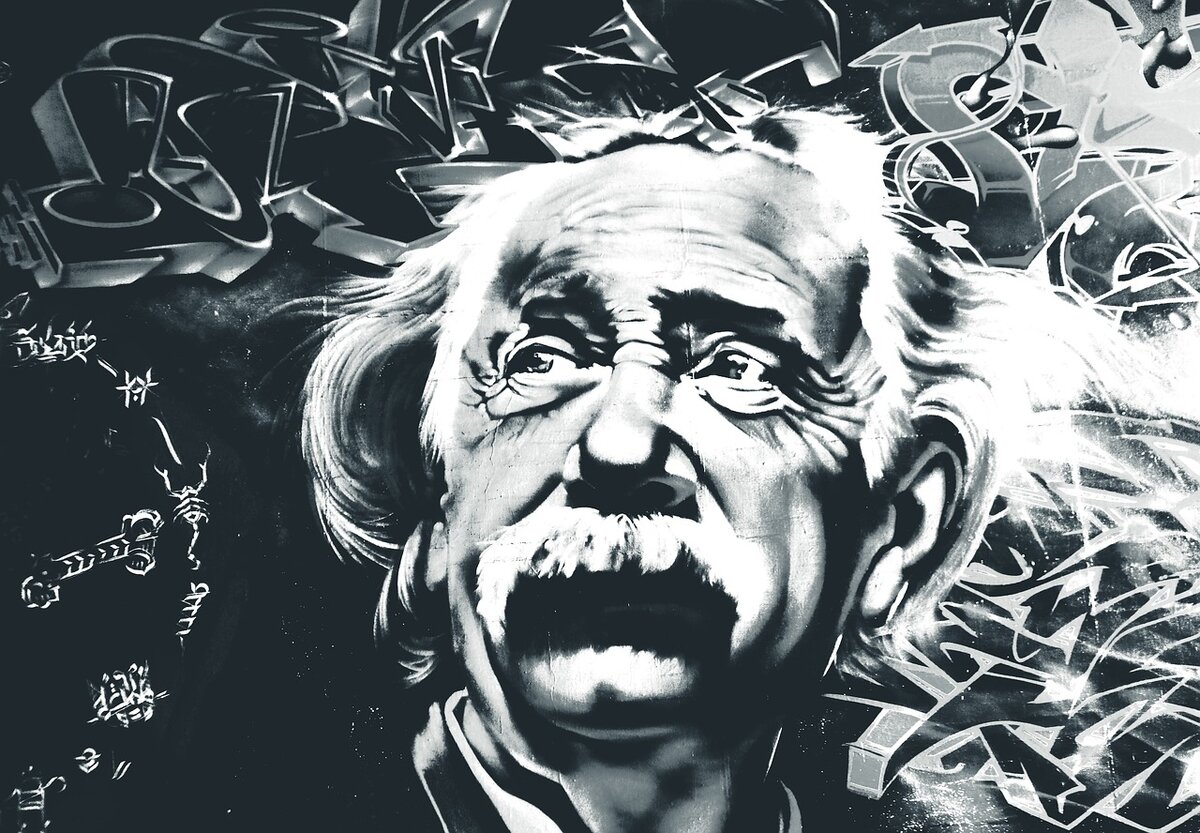
An international group of physicists announced the discovery of gravitational waves - distortions in space-time, the existence of which Albert Einstein predicted the existence of his general theory of relativity a hundred years ago. "We detected gravitational waves. We did it," David Reitze, a team leader and executive director of the LIGO project at the California Institute of Technology, commented on the event on February 11 at a press conference in Washington. The waves were recorded on September 2015 by two specialized detectors of the gravitational observatory in the states of Louisiana and Washington. Besides, scientists were able to convert the waves into sound and record.
According to the researchers, the collision of two black holes with masses approximately 30 times the mass of the Sun became the source of gravitational waves. The phenomenon occurred 1.3 billion light-years from Earth. After the rapprochement, the holes merged into one huge black hole and at that moment gravitational waves began to propagate in all directions at the speed of light. However, they gradually weakened, and by the time they approached the Earth they had faded so much that it was difficult to distinguish them from other vibrations on the planet. To catch gravitational waves, a laser-interferometric gravitational-wave observatory (LIGO - Laser Interferometer Gravitational-Wave Observatory) and two of its interferometers, highly sensitive detectors, which managed to record the minimum change in wavelengths and thereby help scientists make a breakthrough, were created.
Germany also took part in the international project: Institute for Gravitational Physics, Max Planck Society in Potsdam, University of Hanover Leibniz and the University of Hamburg. Together with the Hanover Laser Center, these research institutes have developed high-power laser systems for two LIGO detectors. Innovative engineering solutions were first tested and tested on the Anglo-German installation GEO 600 in the same Hanover. The Institute of Gravitational Physics also participated in the development of effective methods for data analysis and signal modelling. German Education Minister Johanna Wanka called the opening of the waves "the event of the century", adding that "this event opens a new window in the process of exploring the Universe, which may allow us to trace its development, starting with the Big Bang." In her opinion, this is a tremendous success for basic research, and German research groups made an important contribution to this discovery, which demonstrates how important Germany is as a research centre.
The long-awaited discovery confirms humanity's notion of gravity. Also, it gives scientists confidence in the existence of black holes, and also in the future will allow them to better understand mysterious objects like neutron stars and get an idea of the early period of the universe. The next step will be the transition to the so-called gravitational-wave astronomy - for the study of new astrophysical "events", the detectors will continue to operate normally, possibly with some technical improvements. It can also be assumed that the discovery will make an important contribution to research in the field of quantum gravity, and if successful, to the creation of a "theory of everything" that describes all types of physical interaction in unified terms and equations. That is why some experts already call the discovery of gravitational waves "an event of the Nobel scale."
Formulating his theory, Einstein proceeded from the fact that the very presence of matter deforms the surrounding space, and any major changes in massive bodies in space “shake” it like seismic waves, creating ripples. The hunt for experimental evidence of the existence of these waves began in the 1960s but for a long time, all attempts to detect them failed. The international LIGO project was proposed in 1992 by Kip Thorne, Ronald Drever from the California Institute of Technology and Rainer Weiss from the Massachusetts Institute of Technology. In 2002, the detector began work, but for ten years did not give any results, because of which it was decided to close it for modernization. In September 2015, the upgraded stations began work and soon showed their first successes. According to preliminary estimates, the total cost of the project amounted to about 620 million dollars.
Subscribe to my channel to keep abreast of exciting facts about our universe! :)