There is an opinion that the bubonic plague spreading in Europe was transmitted by flea bites. Today, many believe that fleas infected with Yersinia pestis, a plague bacteria, have arrived with sand lance - random passengers from the Far East.
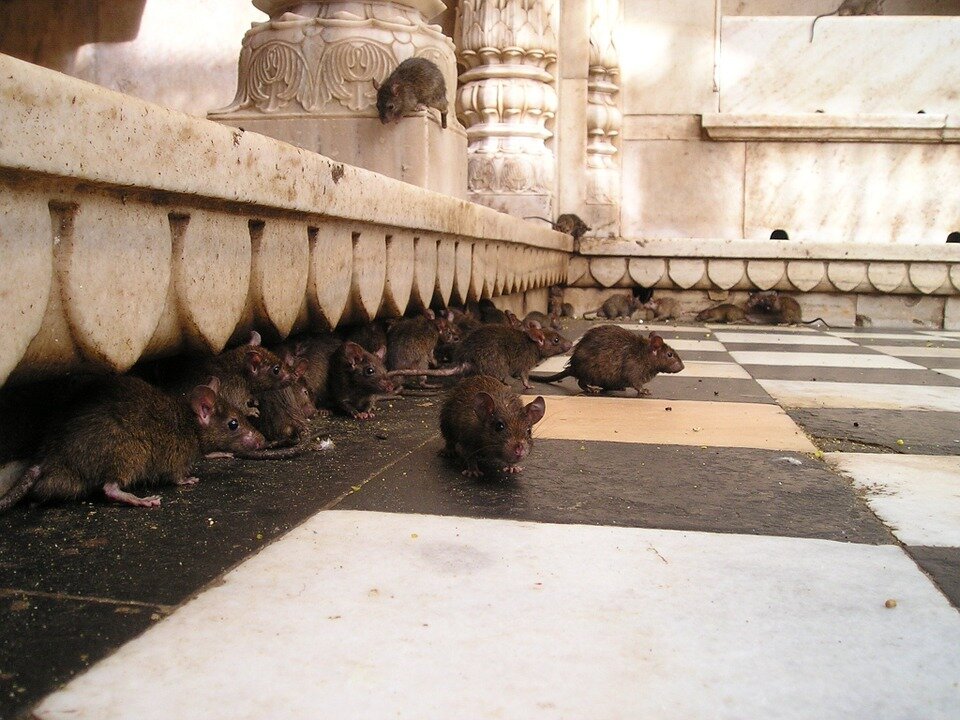
Once in Europe, the sand lance infected a strong and omnipresent population of European rats with its own fleas. Fleas, the vectors of the plague, were transported to cities with the rats, where they were parasitized on rats, people, and pets, killing them and returning to the rats. Rats might as well have accused people of infecting the rat population, which we know they did. The mechanism of infection transmission is explained by the fact that urban rats and people live close to each other - where people produce organic waste, rats appear. Although bubonic plague is associated with devastation and death, the mechanism of its spread in large cities is in fact strikingly fragile. To cause an epidemic, every link in the chain - a flea, a rat, a human being - must be ideally suited to the plague bacteria, otherwise, the chain will be broken. It is believed that this is what caused the plague to come once in several centuries, rather than travel around Europe all the time - and this is why it failed in Paris in 1668.
Paris' passion for Italian drinks in the late sixties and early seventies of the XVII century was so high that in 1676, Louis XIV reached an agreement with traders to join the lemonade business in the French production of strong alcohol, Mustard and vinegar, i.e. those industries that the French monarchy has been monitoring since 1394, when they established an association with the sage name Vinaigriers moutardiers sauciers distillates en eau-de-vie et esprit-de-vin buffetiers. It was the world's first manufacturer corporation. The company was suitable because it was the vinegar that had been the most effective means of protecting against the plague for centuries.
In the 17th century, people began to understand the mechanism of plague spread from person to person. Although it took centuries to understand the role of animal carriers of infection, measures were taken to protect against infected people. Doctors, apparently more concerned not with sympathy for the sick, but with their own health, wore long black coats and a long nose mask resembling a bird's beak, which was filled or soaked with vinegar and herbs that protected them from airborne pathogens. Thieves who took advantage of the turmoil to ruin empty houses used a mixture called vinaigre des quatre voleurs, or "vinegar of four robbers". It consisted of herbs, garlic and vinegar, and was taken in, splashed around, mouth and nose lubricated to avoid inhaling the deadly "miasm". This is a proven, healthy and convenient recipe for general protection against plague, which was reproduced in cookbooks and medical books until the twentieth century. If vinegar from four thieves had been used widely and everywhere, the plague epidemic might have escaped not only Paris but other cities as well.

Such means did not hit the target because of the vector: the central problem was fleas, not rats or poisonous fumes. Although the "vinegar of the four robbers" and the mask of the plague doctor reduced the risk of infection from person to person, protected against flea bites and limited contact with infected saliva, this was not enough to fully cope with the situation. And I believe that in the summer of 1668, a plague epidemic in Paris was prevented by lemons.
to be continued in the next part