Almost everything that the wolf does with strength and fatigue, the fox produces cunning and often with better success. She is extremely concerned about her safety and, if necessary, and even more so in extreme cases, she hopes for her head more than for the speed of running, despite the fact that she is extremely light and agile in her movements and far surpasses the wolf in it.
Shelters and food
A fox with children usually lives in a hole, which is seldom cooked by herself, dug in the ground under large stones, roots of large trees, or lives in crevices and caves of cliffs.
In addition to the main cave, where it mainly lives in a hole, it makes several side relations with the cave or the main cave.
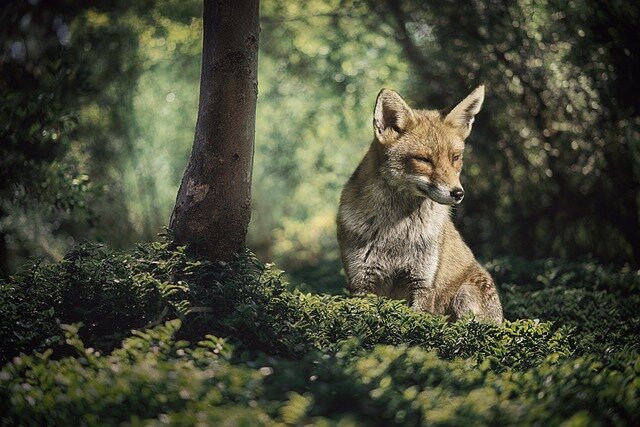
These relationships have a special purpose: they hide the excess of life supplies, they spend fresh air in the main basin during the strong summer heat, when it is stuffy in the hole at all.
The main goal in the relationship is that the fox, in case of extremes, when the main mouth of the hole or hole is captured, can be saved by those relations, which have a message with the day surface.
That's why in the summer for the freshness of the air all the relations are in the fox hole are closed off, while in winter almost all are shut off from the inside by moss and earth, for warmth and left only one, having a message with the surface of the earth, which, it should be noted, in the big cold, too, is shut by something from the inside, but not tightly, like the others.
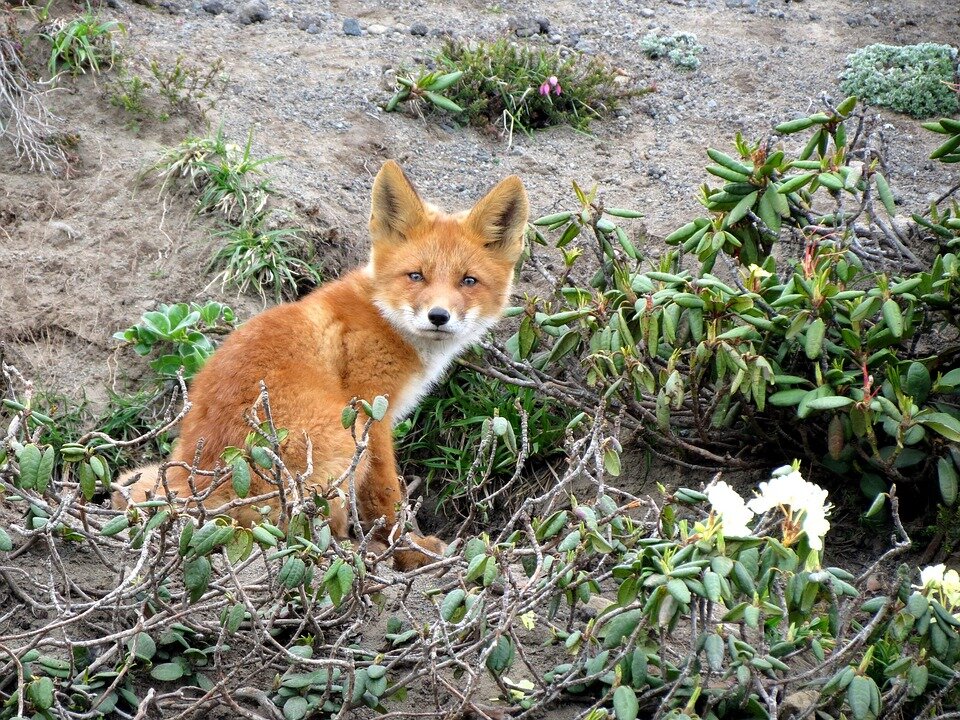
Cliffs and stony placers are favorite places
of the fox's residence. There is a purpose here, that the fox in case of danger can more likely escape from the enemy, jumping on rocks and slabs of cliffs or boulders of scattering, to be hidden in crevices and cavities between slabs and rocks, besides, in such places lives a set of other small animals: mice of different breeds, chipmunks, ermines and so on, It is a good idea to guard them, hiding in the voids, and catch them for breakfast.
https://cdn.pixabay.com/photo/2016/07/25/16/41/fox-1540833__340.jpgFinally, in summer, many species of birds make their nests in the placers and cliffs, and the fox is a big hunter to eggs and young birds. She exterminates young hares in the multitude, which she catches on the lair, and old guards on the trails, and only oblique, not feeling an ambush, will approach the hidden fox, as the last rush rushes at him, catches and devours.
A wounded rabbit is almost always a treasure of a fox, unless it is caught in the teeth of a wolf or some predatory bird. The fox also catches young goats, in Siberian, the Anjigan, in spring, when they are still young, and eats them with a great appetite; however, it is a dish that would not be refused by any gastronome.
The fox rarely prepares its own burrow. For this she is extremely lazy and uses cunning where she does not take the strength to use someone else's account in this regard.
The fox sometimes deliberately settles down with its life near the villages, taking advantage of the fact that it often gets caught in the teeth of poultry, to which it is a big hunter. Especially in the wooded areas there is only a chicken, turkey or yard duck to step away from the village and be a little late, as a fox, noticing the departure careless, not seeing the danger to themselves, immediately quietly sneak up on her and quietly drag away the unfortunate cornflake.
About the senses and young foxes
The fox, like a wolf, is gifted with feelings of sight and smell to the highest degree, but the hearing is weaker than the first. The wolf, except for the terrible mournful wailing does not make any sounds; the fox, on the contrary, can bark and bark at different manners.
She is able to change the sounds of her voice when she is persecuted, using a special expression of desire and the actual cry of pain, which is not heard from her in other circumstances, except when she has a broken leg.
The other smaller wounds cannot get any squeal out of her, she, like a wolf, can be killed to death without making the slightest sound, but she defends herself bravely to the last drop of blood.
She is cunning and evil, biting so hard that she can't open her mouth when she bites someone to protect herself, why she has to turn him around with iron or sticks.
A fox in general is very similar to an average courtyard dog (especially a Siberian mongrel breed) of yellow and red color; only its head is a little bit different: its face is sharper and longer than a dog's one, its ears are shorter, its eyes are more deepened in the skull, its tail is longer and incomparably fluffier than a dog's.
The dog does not have as much disgust for the fox as he does for the wolf, and he looks for it much more willingly than for the last one. Even a young dog often succumb to a cunning fox: having caught up with it, it starts to play with it, but does not pressurize - which the wolf will never do.
It is strange that the stench that is always heard from the fox does not arouse the dogs' disgust.
Young foxes, in their first age, that is, when they have not yet formed, when their long tails have not blossomed and milk eyes, as called hunters, did not have time to ignite the phosphorus shine from which they shine.
to be continued in the next part