Science doesn't standstill. Scientists have learned how to restore sight even to those who have not seen before the operation. How - read in my text.
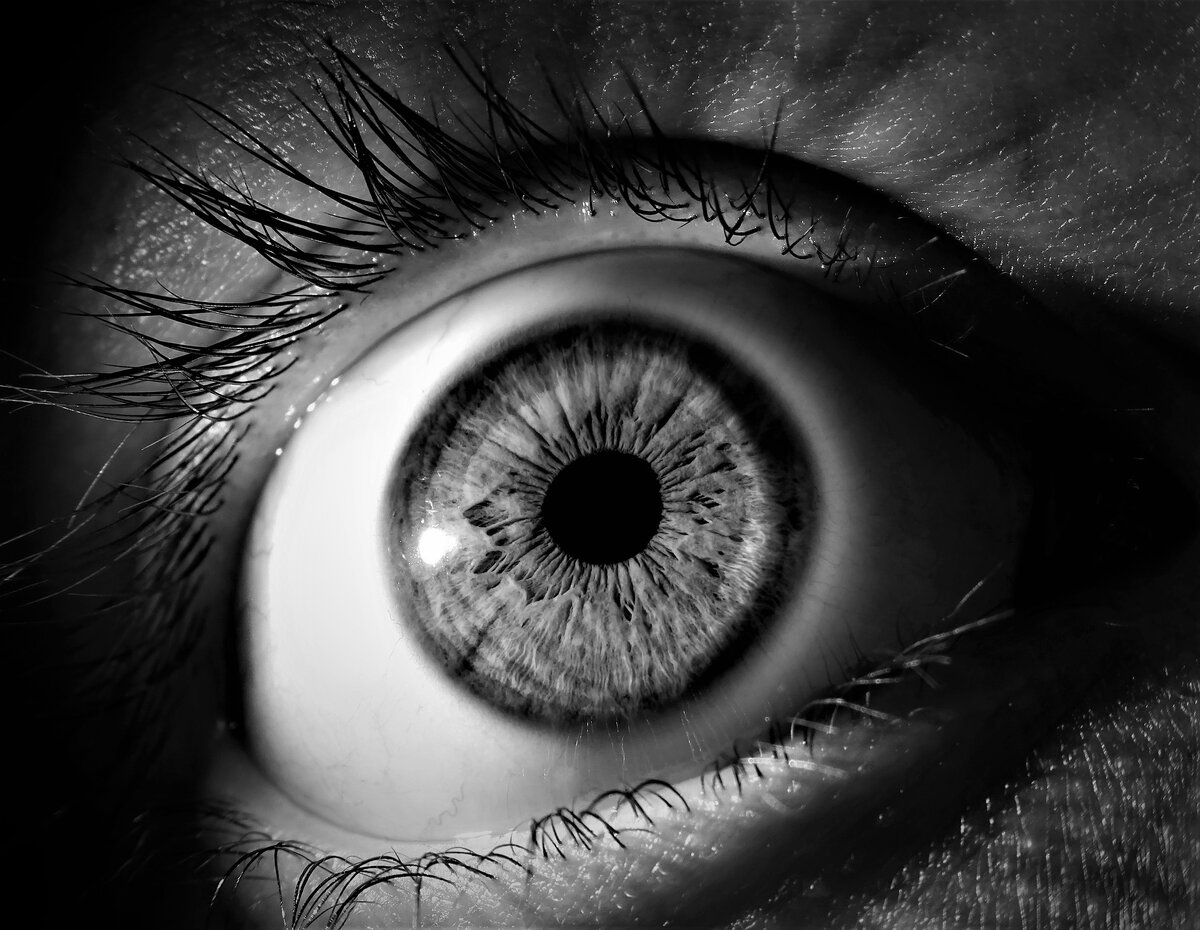
Unfortunately, with age, and some people even in young years, for various reasons, there are problems with vision. But how would I like to keep good eyesight until the very old age? Alas, not everybody can do it. But science is not in place. Scientists are developing methods of treatment of eye diseases, which, I believe, will be applied in due course everywhere. And doing something in front of your eyes tomorrow, what seems to be fantastic today, will be as easy as checking your eyesight now. I want to tell you today about the developments of Japanese and American specialists. One concerns tissues that have been grown from induced stem cells. Induced cells are cells that have been reprogrammed on a genetic level. The Japanese, they are good. Research into the possibility of obtaining cells of any type from conventional stem cells has been going on for a long time. Chemical action on stem cells can also produce corneal cells.
A Japanese man received the Nobel Prize for his research
In 2012, Japanese scientist Shinji Yamanaka was awarded the Nobel Prize for his research in the field of stem cells. Physiology and Medicine Award. Following this success, both Japanese society and the government began to pay attention to the topic of stem cells. Accordingly, research has continued and has since moved away from the laboratory. Initially, tissues grown from induced cells with the permission of the Ministry of Health were transplanted as an experiment to people with spinal and even retinal diseases. And so it came to the cornea.
Before the operation, the woman did not see
A woman in her 40s didn't see anything before the surgery because she was seriously ill. In mid-summer, she underwent surgery on her left eye. The operation was performed by specialists from Osaka University. Already in September, it was reported that the patient feels well. And the most important thing is that her eyesight recovers. Can you imagine how happy it is not to see and suddenly see the white light! But we must assume that it is not the only one in the world with such a disease.
Regenerative medicine is the future, but what about malignant tumors?
University experts believe that in five years such operations will become commonplace. And they plan to carry out several more such operations soon. One of them will be performed on a patient with thinning cornea. The thinning of the cornea leads to the fact that a person's vision gradually becomes cloudy. For example, I wouldn't want to see everything in the fog. So there is no doubt that reprogrammed stem cells are the future. But, as some experts believe, and it seems to me, and not only experts, transplanting artificially obtained cells can threaten the development of malignant tumors. Will our organism forgive such interference in its life activity? Won't he respond to it with more serious troubles, for which, unfortunately, the drugs have not yet been invented...
The Americans are also not so bent on sewing
Research for the treatment of eye diseases is also carried out in America, and more specifically, in search of a solution to repair the damaged retina. The experiments there are still carried out on mice. The essence of the American method is that scientists block cellular proteins. There are several blockages - they are cascading. On such researches of scientists, the fish of Danio-rerio has guided. These fishes have a retina capable of recovering. This is facilitated by special cells that are in the retina of this fish. They are called the cells of Mueller. Just these cells and turn into neurons of the retina.
Mammals also have these cells, but...
Mammals have Mueller's cells, too. But somehow they don't turn into retinal neurons. American scientists have decided to find out what prevents it. I won't describe in detail what they did in the cells, what proteins they blocked. To be more precise, they even brought out mice with disabled proteins, which were required to be disabled for experience.
What happened in the end
As a result of their experiments, American scientists have concluded that, in time, they can force retinal cells to change their specialization in mammals, for which the experiments on mice will continue.