What could be better than a bottle of ice cider in the summer? Just a cider box. When overboard +30, this drink does not become pampering or whim, but simply a means of salvation. So it's time to learn more about cider.
Who is mister cider?
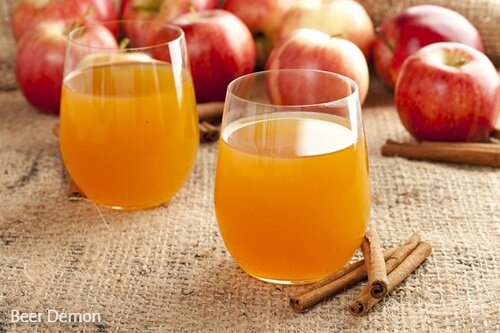
Cider is an apple drink with a strength of 1 to 8 degrees and a couple of thousand years old; it varies from dry to sweet in sugar content. Full of optimism, freshness and light bubbles. Reference cider is obtained from special varieties of apples, the names of which were taken as if from the Game of Thrones - Fox Cub, Black Kingston, Glory to the West, etc.
Why like cider?
Many people are surprised by the Moscow cider boom. It is not necessary to explain its reasons if you at least once, having suffered from hell, drank real cider - apple and so peppy. Well, those who are interested in rational arguments should know this: cider contains antioxidants useful to everyone, good for the stomach and generally tones the body.
Where did it come from?
Who first invented it is not clear. Almost all the peoples of Europe boast of legends about the discovery of an invigorating drink from apples. So Karl the Great, and James Cook, and the Celts, and the Britons, and many others go to the inventors. On whose side the truth is - it does not matter. The main thing is that the world has been drinking cider for about two thousand years and will drink while apple trees grow on the ground.
Where is cider made today?
Almost everywhere, but the most classic is in Western Europe. Apple trees do not act up like grapes and love freshness.
Therefore, the best cider is made in cool regions:
North of France (Normandy and Brittany): it is home to a reference cider, very fragrant and fresh.
The north of Spain (Asturias, Basque Country, Galicia, Navarra): the cider here is very soft and weak, and its species are huge. In production, as many as 200 varieties of apples are used.
Germany (Valley of the Rhine and Hesse): Germans call cider "apfelwein" or "abbelwoi" and make it strong, tart and with lively bubbles.
Great Britain (Western England, Kent, Suffolk, Norfolk): here drunk the most of cider in the world, in the west of the country it is sharper and stronger, and in the east - more transparent and thin.
Ireland: the strength of the local cider is most often not more than 4.5%, it is fiercely fragrant with fruits and generally resembles a "citro".
Belgium: flowers, apples, friendliness, and low fortress - this is what you need in the evening of a working day.
Baltic states (Lithuania, Latvia, Estonia): among the Baltic ciders that we met, there were a lot of really vivid and dashing specimens.
Russia: here there is variety, from a complete compote to a very pleasant cider made using European technologies. For example, we like dry St. Anton. It turns out, though not as subtle as that of the French, but bright, aromatic and smooth.
How to make cider
Simple enough, and this technology is hundreds, if not thousands of years old, and it is still irreplaceable. Many follow it, although there are exceptions too.
Stage I
At dawn, they devastate apple orchards, grind apples and squeeze juice out of them on the press. Everyone does it at a pace to prevent the fruits from oxidizing.
Stage II
The juice is sent to several stages of fermentation - first for 2-5 weeks in wooden barrels (now metal ones are also used), and then to other vats for a period of six months to a year. Throwing flavors, yeast, and sugar into juice barrels with the traditional method of making cider is prohibited. In many countries, it is also impossible to special carbonate cider, but this rule is increasingly being violated.
Sparkling in cider will appear naturally: yeast (it's own, living on these same apples) process apple sugar into alcohol, and carbon dioxide, these same bubbles, is released as a by-product.
N.B .: It is interesting that there is a hole in the cover of each oak barrel in which the cider is wandering - there, when the barrel is free of juice, the washer climbs in to properly clean it from the inside without any fairies and other chemicals. In Asturias, these washers receive a lot of money for their work, but the selection is cruel - they only take teetotalers who are brisk, thin and not tall enough to fit into the barrel freely.
Stage III
To even out the taste of cider, juices of several types of apples are mixed in different proportions. The ideal mixture is considered to be: 40% sweet apples, 40% bitter and 20% sour. At the same time, if they want to make cider more piquant - they take more juice of sour and bitter apples if tender - more juice of sweet apples.
The sugar content in the cider is regulated separately. To make dry cider, the sugar contained in the juice is completely fermented into alcohol, to make it semi-dry - the fermentation process is stopped shortly before the end, and this provides the residual 5-10 grams of sugar per liter. If semisweet cider is planned, the juice is allowed to ferment until about 15-30 grams of sugar per liter remains, if sweet, fermentation is stopped at the stage when more than 30 g / l of sugar remains.
By the way, cider is made not only from apples. Quite often, pears are used (then the name of the drink changes to “perry” or French “poire”) or quince. And apple cider can be flavored with the juice of berries or peaches.
How to drink
Cool the bottle to 8-10 degrees. Take any glass you like, from your favorite mug to a beer glass, an ordinary glass for water is also quite suitable. Want aesthetics, take a wine, a cider he will like. The bottle must be raised above the glass and poured with a thin straight stream, aiming at its wall. So there will be less foam, and even cider will be breathed in oxygen - and you will be pleased with a more intense taste.
Than seize
Cider is good without any food, but if you want to eat, sandwiches, salads with chicken or ham, as well as shrimp and low-fat white fish are great. Or you can turn to the classics: drink cider with pancakes (like Bretons), cheese (like Normans) or nuts and fish and chips (like the British).