What is longline fishing? An industrial fishing gear There are several types of fishing, but the main ones are: Surface longline Bottom longline
What is longline fishing? An industrial fishing gear
- The longline is a type of fishing that is mainly used to catch tunas and swordfish. This type of fishing consists of throwing a line with thousands of hooks into the sea. Although it sometimes causes accidental catches, it is selective and clean fishing directed towards specific species. That is why it is considered sustainable and respectful fishing with marine beings. Accidents occasionally occur when baits attract animals such as turtles or sharks, which are not desired.
- The longline is composed of a floating object in the shape of a bull, from which strokes are held. It is mainline that branches off with other lines of hooks that are connected to the mainline. The hooks hanging from the sides can be of different sizes depending on the type of animal you want to fish.
- Longline fishing is an artisanal method by which fishermen can get pieces at different depths. It consists of using what is known as the mother line, a branch that is left in the waters and from which several branches with hooks and baits come out in which the fish bite and are caught.
- This type of fishing is subdivided, in turn, into two slopes that differ in the depth at which they work: surface longline and bottom longline. These are explained in more detail below.
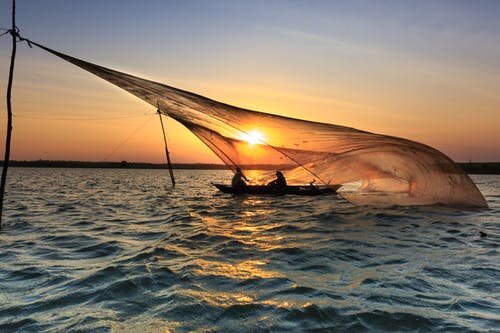
There are several types of fishing, but the main ones are:
- Surface longline
- The bottom longline
Surface longline
- Surface longline is a passive fishing gear used to catch large species such as swordfish or tunas. The main structure used is the same as explained above, there is a single line from which the hooks hang. In the case of surface longline, it floats adrift from the sea.
- This mode of fishing is currently considered the most dangerous type of fishing in terms of incidental catches of animals such as sea turtles. Within surface longline other types should be mentioned:
- The most common is the so-called mako shark: In this case, the mainline floats 10 or 20 buoys with radar tracking systems, and more than 100 smaller buoys. In this way, the mother line is segmented by sections from which the fishing lines are attached with hooks. The hooks are submerged to a depth of between 15 and 25 meters with a distance of at least 25 meters between them. In general terms, this type of fishing can reach a distance of 60 kilometers, with 2,000 hooks submerged ready for action.
- Another type is known as pebble: It is quite similar to the previous one but in this case the longline sinks between the surface and the bottom of the sea using zigzag or sawtooth weights.
- The most current type of surface fishing that is gaining positions concerning the previous two is the American roll: It is very similar to the mako shark but allows creating higher mechanization in the tasks that are developed. One form of this would be the use of light lures, either chemical or battery-powered, to attract fish.
- The surface longline is used for catches at surface height. Its use is usually limited to searching for tunas or swordfish and its extension can go from 40 kilometers long for the mother line to 100 for industrial fleets.
- The main branch is kept afloat through a system of buoys, letting the hooks fall in the different branches to get these species. Its effectiveness as a method is such that it has managed to become one of the most widespread systems today.
Bottom longline
- The bottom-set longline has basic aspects similar to surface longline. The big difference between the two is that the former reaches a greater level of depth than the latter. The ultimate goal of this type of fishing is to catch demersal animals, species such as hake, sea bream, or sablefish. Although surface longline is the most widely used, bottom longline is very useful for reaching more difficult depths, as it rests on the seabed. The setting takes place on the seabed itself, making it easier to catch species that do not usually frequent the surface of the sea.
- In the case of longline fishing in the Mediterranean Sea, the type of bottom is usually artisanal. Their fishing habits, such as taking advantage of when the birds are more active or the setting at dawn, as well as the operation and specific procedures that this modality has, increase the probability of capturing birds involuntarily.