On Thursdays, the Craft Depot editorial staff arranges a kind of open microphone, inviting discussions about craft culture. This time we were talking about a key person in any craft institution - the bartender. How often do you, lost in an extensive list of different styles, have met nothing but an indifferent look from behind the counter? Did you really want to return to this bar after this? Irina Gnutikova, who herself was on both sides of the counter, believes that the ability to open the tap does not yet make you the keeper of the bar, and people are damn tired of those who do not like their work.
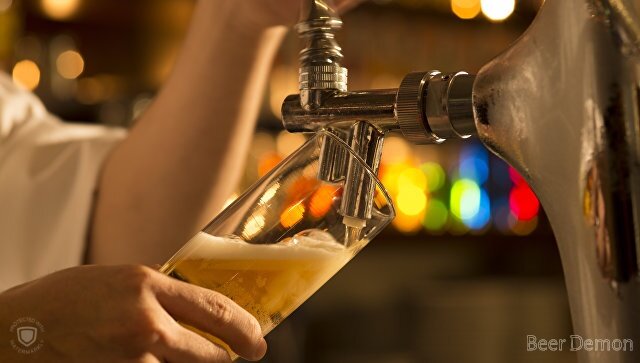
Due to the popularity of bar leisure in our time, the boundaries between the bartender and the "loading" have become very blurred. Most people far from the restaurant business believe that the bartender’s work is simple, even elementary, that you don’t need to have any brains or education in order to “pour a glass of wine”. But the saddest thing is that many people in the industry think the same way.
And after all of this, they also say something like: “Ahhh, so you only pour beer, without cocktails? Well then, generally lightness. ”
You can’t just come to the bar and start working, not knowing what you are pouring, not knowing the cash system, sales features of a particular institution and other “Pribluda”. If you just stood at the counter and, like a machine, execute guest commands, you are not a bartender. Having let the guest go to “free-swimming”, the bartender often harms him: choosing beer on the label without knowing what’s inside, choosing the wrong glass when choosing beer for the “cast-iron” amount, incorrect temperature and order of consumption (which results in a claim from the category of lack of taste beer), etc. All such flaws often lead to consequences: the guest’s refusal to return to the institution, and in especially magical cases, the bartender may fall out - all dissatisfaction returns to the address of the "bar." A kind of BarKarma, as I call it.
The bartender, who did not encounter violent conflict situations, like a motorcyclist, has never “kissed” the asphalt: it is unpleasant and better to avoid, but “baptized” to be calmer. The guest must be guided by adjusting his course as part of this particular party. It’s like when a spouse thinks that he is the head of the marriage, but we all know that he is the head and the spouse is the neck. Then the guest will be delighted and the parties will be repeated. Even guests who understand beer better than you need care and attention: he came to you, and not to another bar.
Stirring cocktails is an art, but picking up beer, clearly tracking the guest’s needs and mood is also an art. Now, until sadness, you can often meet staff who do not consider it necessary to listen and ask, they just wait until the order arrives. After the words “good evening”, you don’t have to drop your head back into the smartphone, most people are selfish - they like attention to their person. If a person does not ask questions, this does not mean that he does not have them. I do not urge you to behave like the employees of a well-known communication salon who has become a vivid negative stereotype, but to lose touch with a person is blasphemy, you are not an ordinary cashier. If you are not in the mood, you need to shove the blues at a known address or not go to work at all. Bartenders with character are valued separately, but here you also need to understand when this character is worth hiding with a smile, and it does not matter if you sell beer or cocktails.
A good bartender is composed primarily of upbringing and intelligence, as well as charisma, logic, and responsibility. Bartenders do not work with drinks, but with people who feel everything: their attitude to themselves and their attitude to work. They become attached to us, come again and again, because it is more pleasant for them to buy beer from a person, and not from a car. This applies to those who are not sitting at the counter (sometimes, in principle, we know such people), they are also pleased to exchange the latest news during the execution of the order, discuss yesterday's weather and the last hangover.
In times of colossal competition among drinking establishments, service is a factor that can tip the scales in your favor. The assortment is about the same everywhere, entourage and interior for every taste, prices absolutely for every category of people, and good service can be found far from everywhere, even in such a huge metropolis like Moscow, there are not many bartenders who can “read »Guests, to understand from the first word what they want to find in their glass.
In the craft industry, good service today is not considered to be exactly what it was considered before. No turned-out dress code for staff thrown white hand towels over his hand, obligatory tense smiles and memorized phrases from the series “Today I Will Be Your Bartender”. People are fed up with this, they want honesty and simplicity, they want to feel that the same person stands behind the counter as they are, with whom you can talk without officialdom, without choosing expressions. But to become a good bartender, to be a simple and open person is not enough. You are absolutely nothing without iron responsibility, logical thinking and attention to detail. The profession consists of a huge number of little things that you need to be able to control, and if it does not work out, then be able to quickly fix it. But, do not believe it, and all this is also not enough. You can possess all the necessary qualities, talents and features, but without one single thing, all this will be meaningless and to no avail. It is a love of one’s work. If you love her, you fulfill your duties with special enthusiasm and pickiness. Dirty dishes, stains on the counter, garbage, a mess and so on - open disrespect for their profession, and, as I said earlier, people feel everything.
People come to bartenders, not for beer.