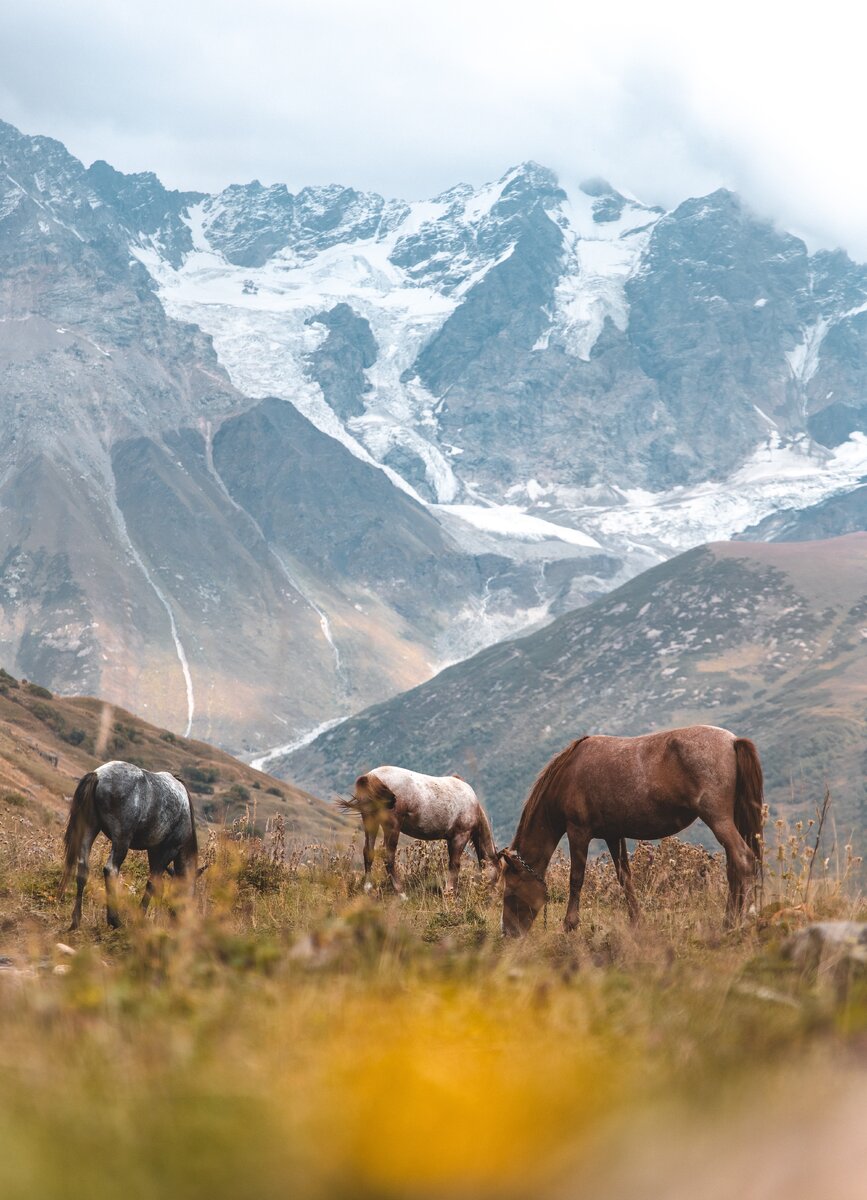
Wild horses are known to be the ancestors of today's domestic horses. However, to this day several species of these wild horses have survived, and we will tell you about them in this article.
They were divided into forest and steppe species. Usually, these animals were confused in herding herd (sometimes by several hundred individuals), but more often lived in smaller groups, each of which was headed by the strongest stallion-leader. "Tarpan" is translated from Turkic as "to rush to the fullest extent".
The second name of these animals is European wild horses. The main color of tarpans was mouse. The mane was short and was a junkie, the color of its tail was darker than the main one. Tarpan hooves were notable for their strength and durability, thick and dense woolen cover protected these animals from the severe cold of Eastern Europe. It is noteworthy that in winter the tarpan suit changed and acquired a sandy shade.
Externally, the tarpan looked like a small horse (a little higher than a pony). Growth in the withers was up to 136 centimeters.
Kamagra
Kamagra (another name is Camargue horses) live in areas near the Mediterranean Sea. These horses cannot boast of their beautiful appearance, as they have a roughly shaped head and a powerful, but stocky body. The color of these animals is mostly grey, the color of the tail and mane can be both darker and lighter than the general background.
The shade of the eyes is black or brown. These are nomadic animals, which often come out with the whole herd of herd on the Mediterranean coast, and that's why many tourists are sincerely glad to see them.
The local population living in the countryside sometimes uses Camargue horses as a draught force. Occasionally, they can be accustomed to the saddle. The bulk of the stock is now concentrated in a natural reserve under the control of the local authorities.
Heck's horse
This horse variety looks like a tarpan, at least in the shape of its face and body. The main suit is grey, with a shade of gray. The weight of the adult species is about 400 kg, and the height in the crest is about 140 centimeters.
Heck's horses were artificially raised by crossing wild domestic horses.
They were named after the leaders of this scientific program - the Heck brothers, who worked in the zoo in Berlin at the beginning of the twentieth century.
At the moment, there are mixtures of these animals and wild Polish horses in almost all major world zoos. In natural conditions, they live in a special protected area, located in three European countries - Germany, Spain, and Italy.
Polish horsemeat
It's a tightly knocked down animal with a characteristic mouse suit. These horses were brought out at the beginning of the twentieth century. Tarpans are the direct ancestors of these horses, and after their complete disappearance they became known as tarpan horses or "horses".
Initially, they were used as draught horses. Originally the habitat of these animals was the famous Bialowieza Pushcha, in its part, which is located on the territory of Poland. Hence the name - Polish horsemeat. Eventually, these horses moved to the territory of Belarus.
Mustangs
Despite its sound and beautiful name, it's actually just wild domestic horses that have been bred in the vast expanses of South and North America.
Since the Mustangs have long been the subject of intense Indian hunting, they are now on the verge of extinction.
Externally, they are very beautiful and strong animals with well-developed relief muscles and long wavy tail and mane. The color palette of these horses is very wide - from white to black. Animals that are colored in several flowers at once are not uncommon.
And other breeds.
Features of life of horses in the wild
Usually, wild horses get confused in vivo. Most often they consist of one chief stallion, several mares, and young horses. However, the most experienced female is the real leader who will define new pastures and control the order in the herd. She herself obeys only the leader, but all the others obey her.
Young males walk in the general herd up to three years, after which the leader kicks them out. The bachelors get confused into separate groups and live like this until each of them gathers his or her own herd or beats the others' herd.
Smells play an important role in the life of wild horses. For example, the leader always marks "his" mare so that the other horse does not cover them. In addition, the smells are a kind of "own-alien" system for: mare and their offspring, for the family-forming stallion and female, as well as for animals belonging to different breeding groups.