Laura Maria Katarina Bassi
She was born in 1711. About the date of her birth argue till now: in different sources a scatter in 10 days, from October 20 till October 31. She grew up in the family of a famous lawyer and from the age of 13 years, she received home education for 7 years. Gaetano Tacconi was not only a family doctor for the Bassi family but also a professor of medicine and philosophy at Bologna University. He was well acquainted with Cardinal Prospero Lambertini, who he brought with a group of philosophers in 1731 to the university to show the success of his student.
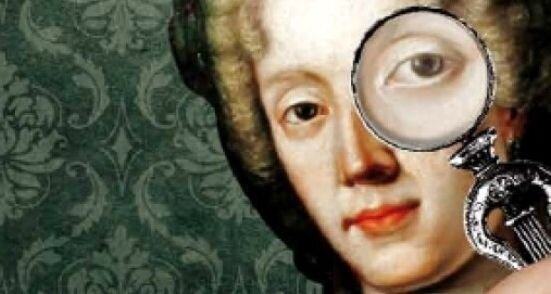
The educated and progressive cardinal was impressed and on March 20, 1732, the 21-year-old girl became. an honorary member of the Bologna Academy of Sciences. She was the first female academician. On April 17 of the same year, she was a new success. She publicly defended her doctorate, relying on Newton's work on optics and light in her dissertation. The success was so stunning that the official graduation ceremony on May 12th became a city holiday in Bologna, and Bassi received a selection of poems in her honor as a gift. And our heroine did not stop. On June 27, she defended another thesis on the properties of water, becoming an honorary professor of physics.
Curiously, she was not allowed to teach at the university, so so so far we have not had to talk about the department, but Laura found an elegant way out: she began giving lectures and conducting experimental classes with students at home. Her course was based on Newton's "Beginning", which she had taken a great interest in during her homeschooling.
Six years later, Bassi married Giovanni Giuseppe Veratti, a doctor and professor at the same university. And in 1740, there is a very important event, though not with her. Cardinal Lambertini, who became a close friend and interlocutor, became the head of the Roman Church. When Pope Benedict XIV came into force in 1745, he reorganized the academy of sciences, and gave it a "Group 25", which was called "Benedictines". Immodest, but they were the strongest scientists. The Pope also introduced Laura Bassi into this group. The rest of the academics did not want to put up with it. However, he did not want to give in to his father. As a result, a compromise was found: Laura Bassi became the 25th "Benedictine", but only men had voted when discussing some important issues.
Bassi lived for 66 years. Towards the end of her life, she conducted a series of experiments on the use of electricity in medicine, becoming one of the founders of electrophysiology. However, she never published this data. And a year before her death, she still managed to achieve what many women who were engaged in science were striving for. In 1776, she headed the Department of Experimental Physics at the University of Bologna. Her husband took the place of an assistant. That is why today we remember Laura as one of those women who paved the way for the beautiful floor to university and academic science.