Anyone who at some point tried to evaluate craft beer (perhaps at a tasting or at the request of friends) felt a certain disappointment because he could not describe the nature and details of the beer.
The ability to understand the taste and nuances of beer is a completely acquired skill that can be trained with conscious attempts. The ability to distinguish taste is different for everyone, and if you think that it is innate, you are mistaken.
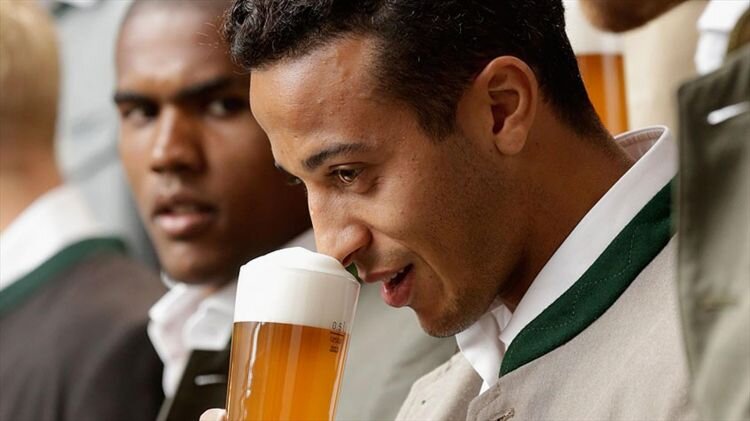
Your ability to discern tastes is more than just your tongue and nose, responsible for finding tastes and aromas. This is the work of the brain because it is he who processes the information coming from the senses. In the case of food and drinks, this is the work of the nose, receptors and oral cavity.
Think of your taste as muscles: you need to train them to become stronger. It's like going to the gym: without a specific program, even everyday training may not bring results. You need to leave the beer comfort zone of your favorite varieties and train your taste abilities with the help of these exercises, tricks, and tips.
And it’s not necessary to train the liver.
Drink slowly
Where slowly - always thoughtfully. You can just drink craft beer, or you can drink and think about what you drink, why you drink and what you feel. It is clear that the situation should have this in mind: in a noisy company on Friday night, attempts to give esthete and connoisseur will not succeed. Even if you are not familiar with sommelier techniques, all sorts of sophisticated techniques and other tricks, the first thing you should remember when trying to pump your receptors and brain is thoughtful and slow use.
Face to face
Pretty effective and simple technique. Take two different beers of the same style. Let it be an American IPA. Do not read labels, don’t recognize what hops and TTX in beer, don’t read Rate Beer and Untappd. Pour two beers of the same temperature into two identical glasses and start drinking them alternately in small sips: a sip of one, a sip of the other, then the first again.
Differences in taste and aroma will be evident and remembered.
Quit smoking
This is not a secret: smoking tobacco greatly limits the ability of the brain and receptors to perceive tastes. So it’s not worth combining conscious and cultural consumption of craft beer with tobacco - taste nuances will simply slip away from you. Another reason to quit smoking.
Blind tasting
Don't let your eyes trick your brain the next time you drink craft beer. Tie them with a tight bandage. This is one of the best ways to pump the ability to perceive and feel new in a familiar (and not only) product. Top-level - blindfold and ask someone to pour a few beers in different glasses and taste them. It’s not necessary to start such training sessions with crafting, for starters you can try something simple and understandable a la mass euro lager from different brands. This is a load on the brain! Remember to pat your forehead.
Professional tasters and expert advice at large breweries use the blind triangle technique. Its essence is that the same beer is poured into two glasses, and completely different in the third glass. The subject’s task is to determine which beer is “superfluous,” and at the same time to understand how it differs from another.
Hang in grocery stores and markets
No, not at the beer shelf. You can walk and smell every kind of spices, fruits and vegetables, sauces, snacks and groceries, and if possible taste it all - even what disgusts you. Try EVERYTHING.
Your food experience is your arsenal, and the larger it is, the more weapons you can pull out when time takes.
Wine master Gary Vaynerchuk shows how to pump your tasting skills:
Since many styles of beer have references to other alcoholic drinks, most likely you will have to spend time and effort trying wine, port, whiskey, bourbon, liqueurs and other drinks, one way or another connected with the taste palette of craft beer. And by the way, yes - no one canceled the tasting of mass beer - an excellent testing ground for defects, weak features, and dips in the taste of beer.
And, of course, it is worth trying all the beer ingredients in their original form: smell hops, chew hops (it is optional to swallow), the same with malt (you can even eat it, it’s delicious), hold yeast in your mouth, but a lot of them drink it.
Smells, memories, brain training (again)
Tasting and deciphering tastes requires concentration. Scientific fact: data entering the brain from nasal receptors are processed in those areas that are also responsible for memory and emotions! Experienced tasters actively use this, paying much attention to the memories caused by the aroma of beer. Try to remove something from your memory when you sniff and take a sip of IPA - it is possible that you suddenly remember the aroma of fruits and berries from the cottage or the smell of wildflowers.
No salty food
If you want to become a real beer sommelier, then eat less salty: salt dulls receptors.
Dr. Joel Furman, in his Eat for Health book, states:
“When we eat low-calorie foods, our sensitivity to salt and other tastes increases over time, and simple foods begin to taste better. As you get used to a diet that stimulates your salt receptors less, you can enjoy more subtle nuances in organic foods. ”
Drink all styles
Knowledge of beer begins with knowledge of styles. Every time you go to a bar or buy beer in a store, try different styles, different breweries. Feel free to learn more about the beer you drink. Read the label, learn the history of beer and a particular brewery. The taste and character of many styles of beer is explained by its place of birth, ranging from climate to the temper of the locals.
Beer glassware
Many people consider the variety of beer glassware a marketing ploy, but we are for science: form matters. Tasting the same style of beer? Take the same glasses. Blind tasting? Moreover, identical glasses are needed.
There is no question of tasting beer from a bottle.
And the main advice - be patient. This skill can take a long time - from several months to a lifetime. :) But in the pursuit of tastes, smells, professional instincts, and beer instincts, do not forget that beer was created to give rest, relaxation and joy! Do not suffer at tastings, you are not a judge of BJCP and this is not your job.
Drink slowly, love beer!