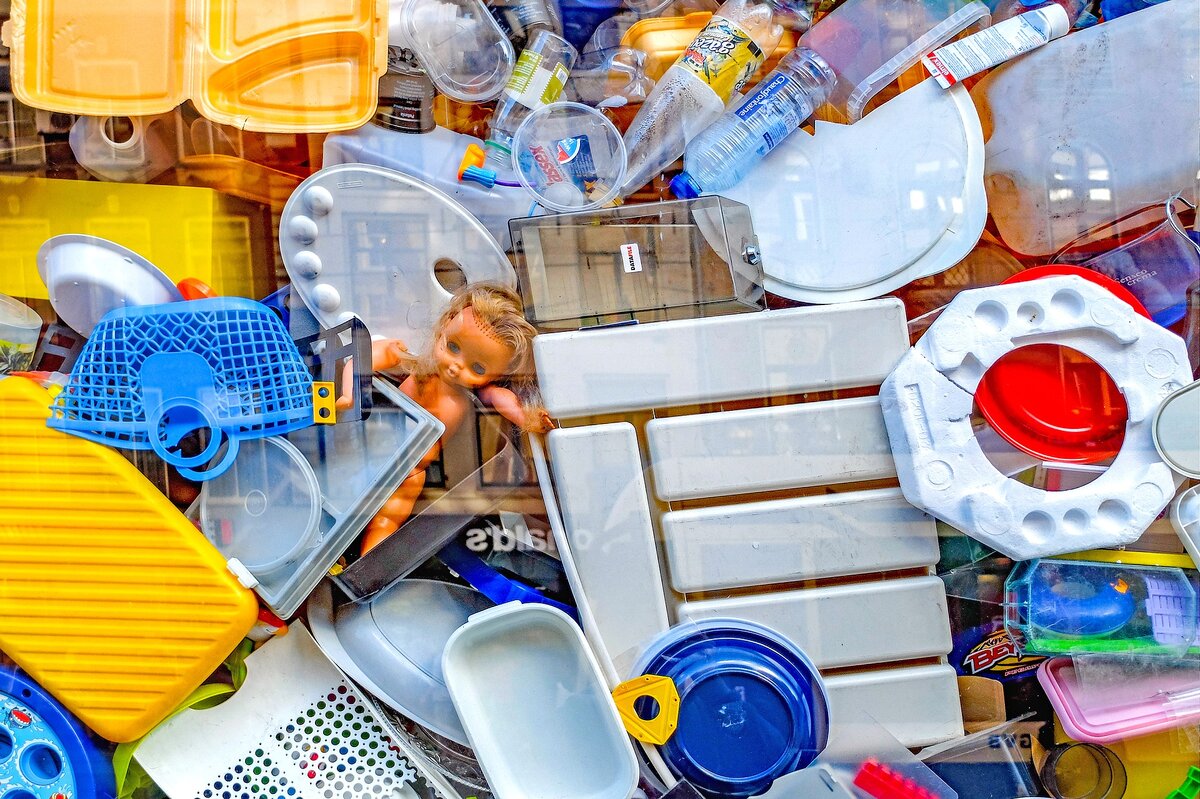
It's complicated to throw things that mattered to us, or that could still be used. It's complicated because, in the evolution of our species, we have been nomads for a very long time, very long lived in environments where the objects were rare and precious, useful for our survival, and where we did not throw anything . That's why our old brain brakes willingly, instinctively, when to throw. This was further aggravated when humans became sedentary and their new living conditions, in huts and houses, allowed them to keep everything: first, practical objects for survival; then the aesthetic objects, for pleasure; finally, playful objects, to amuse oneself ...
And then, third stage, everything is amplified and turned upside down today, in our ultra-materialistic and ultra-consumeristic era, which over-manufactures, far beyond our needs, objects that it incites us to buy, then throw away, then buy again, to throw again, etc. It can drive us crazy, between compulsive purchases and unhealthy accumulations.
In psychiatry, some of our patients suffer from syllogomania: they are unable to throw objects, especially in obsessive-compulsive disorder, OCD. These accumulator patients have trouble getting rid of everything: old magazines, old clothes, but also jars and empty bottles, etc. That is, not just objects loaded with personal memories, but anything that does not self-destruct! I even once met a patient who had the means, and was considering buying a castle, to have enough coins to keep everything and throw nothing!
Without reaching this point, we can find in some of us (of which I am a part) attenuated forms of this syllogomania: ah! the difficulty of throwing away all the drawings offered to us by our children, year after year, the trouble to get rid of old-fashioned clothes that we like, the collection of records that we no longer listen to, gifts we offered us with love, etc.
In general, we store it in a closet, until the day when reality catches up and forces us. For example, when we have to move, and then decide what goes in the boxes and what goes to the trash! Or when you have to travel, and choose to pack only what is essential. His shoes for example; when traveling, it can serve ...
Yes, when traveling often, we ask ourselves this question regularly: what do I really need, apart from my shoes? Because the goal is not only to remove the useless (everything can be useful) but to keep only the essential.
Alas, when you stay at home, there is a great temptation not to think, and to keep everything, thus remaining a prisoner of the past or the future.
From the past, because it is not easy to get rid of objects that tell our story, our life; before being a relief, material and psychological, to throw, it is first a tearing.
But not to throw also has to do with the future: which human brain, at the fateful moment, never had this thought: "It could be used one day ..." But our life, of course, takes place in the present, and the memories, just like forecasts, must enrich it without weighing it down.
Fortunately, there are plenty of solutions when it is difficult to get rid of the objects of the past: one is called the gift, for objects that can be used by others; the other is called dematerialization.
I do not speak digital dematerialization, but the psychological: we throw the objects, we keep the memories. And we remember that a memory will be all the stronger and alive in our mind that we have lived in full consciousness: by savoring instead of over-photographing, for example. And then, we think ecology: the memories have on the objects of many advantages: they are biodegradable, and embellish with the time ...