Kefir is one of the most popular sour-milk products, which accounts for more than 2/3 of their production. The word "kefir" is Turkish: "kef" means "health" in Turkish.
From the history of kefir, we can say that the homeland of this product is the North Caucasus, whose people have long rightly considered it a drink of health and vigor and called it "the gift of heaven. The way of making kefir was kept strictly confidential.
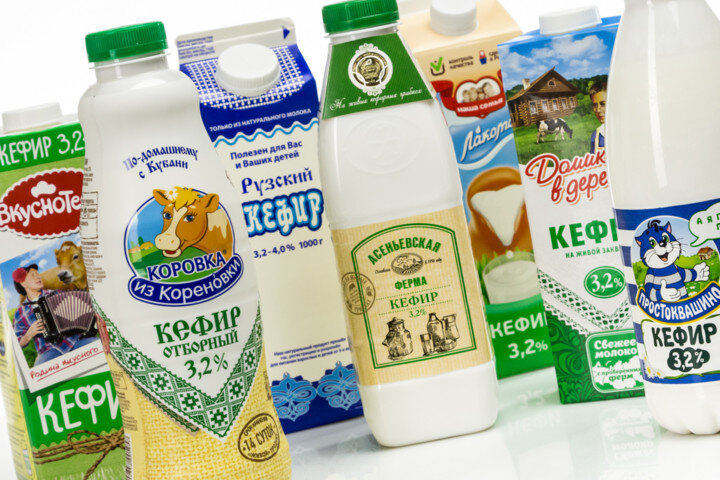
Kefir's homeland is the northern slope of the Caucasus Range. Long-lived highlanders (Ossetians and Karachais) living in those places considered kefir fungi a sacred gift of Allah himself. They valued this leaven so much that they never gave it to anybody and did not sell it to anybody (even to their fellow tribesmen) - mountaineers believed that Allah would deprive the kefir fungus of their magic power. The problem was solved in the following way: the owner of leaven allowed to steal it to the one who was thirsty, and then took the money, but not for the fungus, and for some other, mostly purely symbolic product. Even married girls received leaven in the dowry for a reason: they stole it from their parents, and the script for this "ritual theft" was developed to the smallest detail.
Back in the XIX century mountaineers prepared kefir in an amazing way: poured milk into a wineskin, added there kefir fungi, tied up, carried out beyond the threshold of the house and left in the sun in the middle of the nearest path. It was believed that kicking a lying wineskin means to express respect for the owners of the house, because the constant shaking contributes to a more intense fermentation. Nowadays mountaineers make kefir in special clay dishes, which are placed next to the warm oven.
Although Herodotus also mentioned some popular milk acid product from the Caucasus, the Karachai people have laid down their own beautiful legend, considering their land the homeland of kefir.
Since the middle of the XIX century Russia has received information that there is an unusual milk drink in the Caucasus, which has a pleasant taste, slightly drunk and, according to rumors, cures many diseases.
Russians who fought in the Caucasus and tried it, spoke with great enthusiasm about the drink.
Alexander Pushkin highly appreciated the taste and healing properties of the beverage, which does not look like milk vodka, or koumiss, well-known to Europeans, or Russian sourpuss. According to eyewitnesses, another great Russian poet and writer, Mikhail Lermontov, also loved the beautiful refreshing drink.
Kefir has long been considered the Soviet national beverage, which is the undisputed leader, in the CIS it is about 2/3 of all sour-milk products. This beverage has never been produced anywhere else but in the USSR.
Nobel Prize winner Ilya Mechnikov has spent his whole life studying the processes of aging of the human body. He was sure that the leading role in these processes belongs to rotten bacteria, millions of people inhabiting our intestines and their toxins poison our body. He gave Kefir the role of rescuer, successfully suppressing rotten processes, and thus prolonging our health and life. Therefore, kefir is called the "beverage of longevity"!
In Russia, the production of kefir began in the early 20th century. Production of kefir is an exclusive right of Russia. Apart from it, only Japan and Canada produce kefir under license.
Until the beginning of the XX century, kefir was not prepared in Central Russia - only occasionally imported from the Caucasus and sold at a very high price. In Moscow, yogurt fungus appeared only in 1908, and only thanks to a happy occasion. Irina Sakharova, a worker of the Moscow dairy factory, who came to the Caucasus for yogurt fungus, was kidnapped by a rich supplier of dairy products from Kislovodsk, Prince Baicharov. Not having achieved her hand, he was brought to trial and was able to pay off only ten pounds of yogurt fungus. Just a few weeks after the trial kefir was able to taste the patients of Botkinsk hospital.
It was in Russia that the technology of yogurt production was patented.
Kefir is a more powerful probiotic than yogurt
Not many people know that the benefits of kefir as a probiotic are much more powerful than yogurt. So yogurt contains about two strains of bacteria and does not contain yeast, and kefir about 30-40 and contains yeast! Kefir bacteria contain useful enzymes, phosphorus, folates, lactic acid, biotin, vitamin C, B vitamins. Kefir bacteria themselves are more useful than yoghurt bacteria. In addition, a glass of yogurt contains about 1 trillion bacteria and a glass of kefir contains about 5 trillion bacteria. And kefir bacteria remain in the intestines for a very long time - much longer than yogurt bacteria.
Kefir is very useful. It normalizes the intestines, improves metabolism, prevents the formation of cancer, normalizes blood sugar and cholesterol levels, and so on.
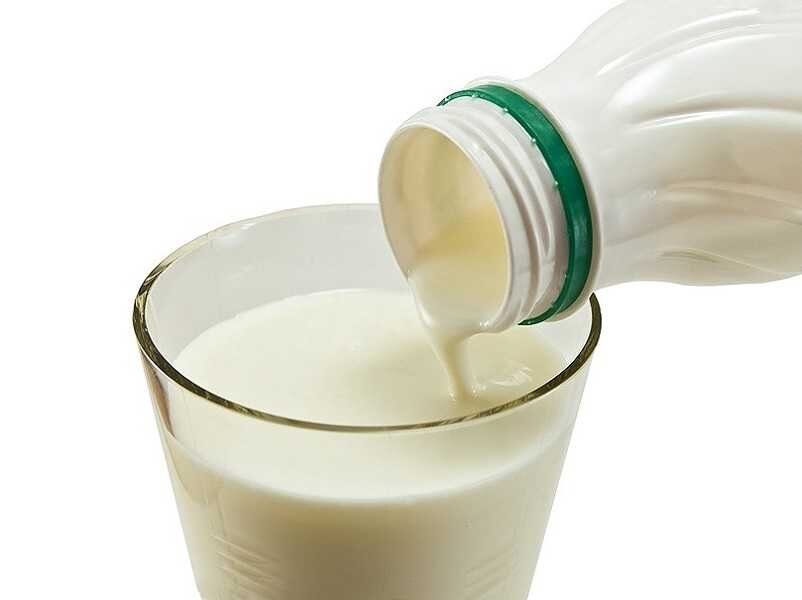
Kefir consumption in the morning
- Helps to improve appetite throughout the day.
- Makes the nervous system work.
- Eliminates bad breath after sleep.
- Charge the body with positive energy for the whole day.
Kefir consumption before bedtime
- Makes digestion work.
- Quenches hunger. This is especially true for those people who follow different diets and do not eat in the evening.
- It strengthens sleep.
- Helps to assimilate some of the necessary microelements at night.
In this case, regardless of the time of day kefir is desirable to drink on an empty stomach and a little chilled. Before going to bed, it is consumed at least one hour before bedtime.
Everyone should decide for themselves when it is more useful to drink kefir: in the morning or in the evening. But regardless of the time of consumption, this sour milk product will bring your body a lot of benefits.