Who hasn't eaten pasta once? I don't think you can find such a person anywhere. After all, under one name, "pasta" collected a huge range of dough products - it's ordinary noodles and horns, and long spaghetti, and sheets of pasta for lasagna, etc. With this product, there are already a huge number of recipes that can be quickly and easily prepared. But few people know how and when pasta appeared and where it comes from. In fact, the history of origin of pasta is fascinating not only because of the interesting facts, but also because of the myths and legends that surround them. Elgreloo.com will tell you the story of the origin of pasta.
History of the origin of pasta - where did the pasta come from?
Most people will say, of course, that pasta is a traditional dish of Italian cuisine and will be right about something. After all, it is Italian merchants who have spread pasta all over Europe for long voyages many thousands of kilometers away from home, filling the holds of their ships with pasta.
In Russia for the first time brought pasta is natives of Genoa, and it happened in the time of Peter the Great. A famous reformer and a fan of all European things often invited foreign masters, one of whom was an Italian shipbuilder and brought as a gift to the royal court a number of pasta. The dish was pleasant and quickly took root among the people. But the industrial production of pasta in our country began with a factory in the city of Odessa. It is noteworthy that it was discovered not by Russians and Italians, but by the French.
There is an opinion that pasta is a dish of Greek origin, because literally "pasta" from ancient Greek is translated as "food out of flour". But, apart from this fact, the existence of pasta in Ancient Greece is practically not confirmed by anything.
In the Roman Empire, during the reign of Emperor Tiberius, about 600 years AD, the first cookery books appeared. And in them there were recipes of dishes from the pasta, only slightly different from modern! However, this is already our era. And the history of pasta is much older.
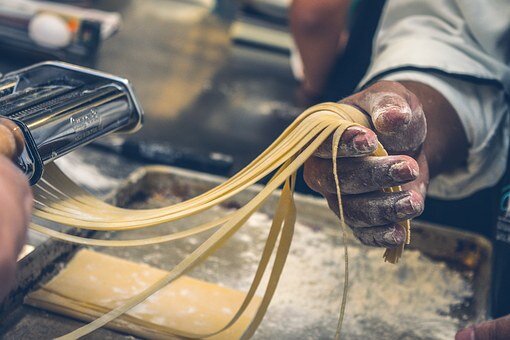
At excavation of ancient pyramids in Egypt it has been found a considerable quantity of the images of the people occupied with preparation of noodles. And the technology did not differ much from the current one - dough was rolled out, cut into pieces and dried. Were pasta imported from outside or were they invented on the spot - science is still unknown.
Still, the oldest references to pasta belong to the Chinese. During the excavations of ancient cities dating back to about 4000 B.C., the remains of dishes with petrified noodles were found! Also in China there are a lot of references to pasta in folklore - fairy tales, myths, legends. Believes and folk superstitions are connected with pasta. It turns out that China is home to all favorite dough products, but not Italy.
Interesting facts
Today, there are a lot of facts about pasta. We have prepared the most interesting ones for you.
- In Italy, pasta is called pasta;
- There are about 600 kinds of pasta all over the world;
- Italians use durum wheat for pasta preparation;
- In 1819, the first spaghetti drying machine was invented in Italy;
- Composer Rossini once wrote that he cried in his life only 2 times. The first time he heard Paganini play, and the second time he dropped a dish of pasta that he had cooked himself;
- The Dutch driver was sentenced to 8 weeks in prison for eating pasta while driving;
- In Italy, there is a genre of spaghetti western. About 600 films were made in this genre in the 60s.
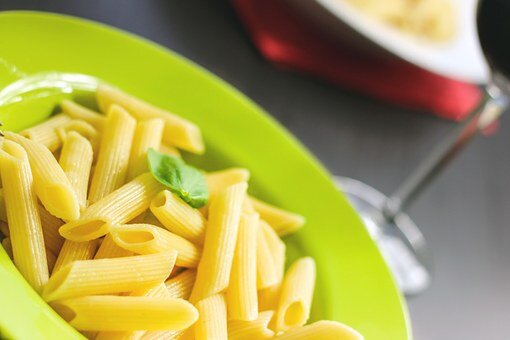
No matter what kind of pasta you consume: spaghetti, capellini (small diameter and round shape), fusilli (spirals), foam (straws), pipe rigatie (twisted semicircle) and many others, if they are durum wheat, along with your favorite dish you get a lot of useful substances. Pasta contains B vitamins, a source of youth - vitamin E, minerals and carbohydrates. The latter help to maintain a sense of satiety for a long time, and a person does not want all sorts of snacks.
Manufacturers' love for profit forces the most unscrupulous of them to deceive customers, pointing to incorrect information on the product label.
But products from soft varieties is easier to determine by the bright color and high brittleness (try to slightly bend in half).
In addition to controversial health benefits, they will stick together during cooking and become mushy.
If you want a normal meal, rather than a new recipe for porridge, it is better not to take them. Perhaps their only advantage will be the price.