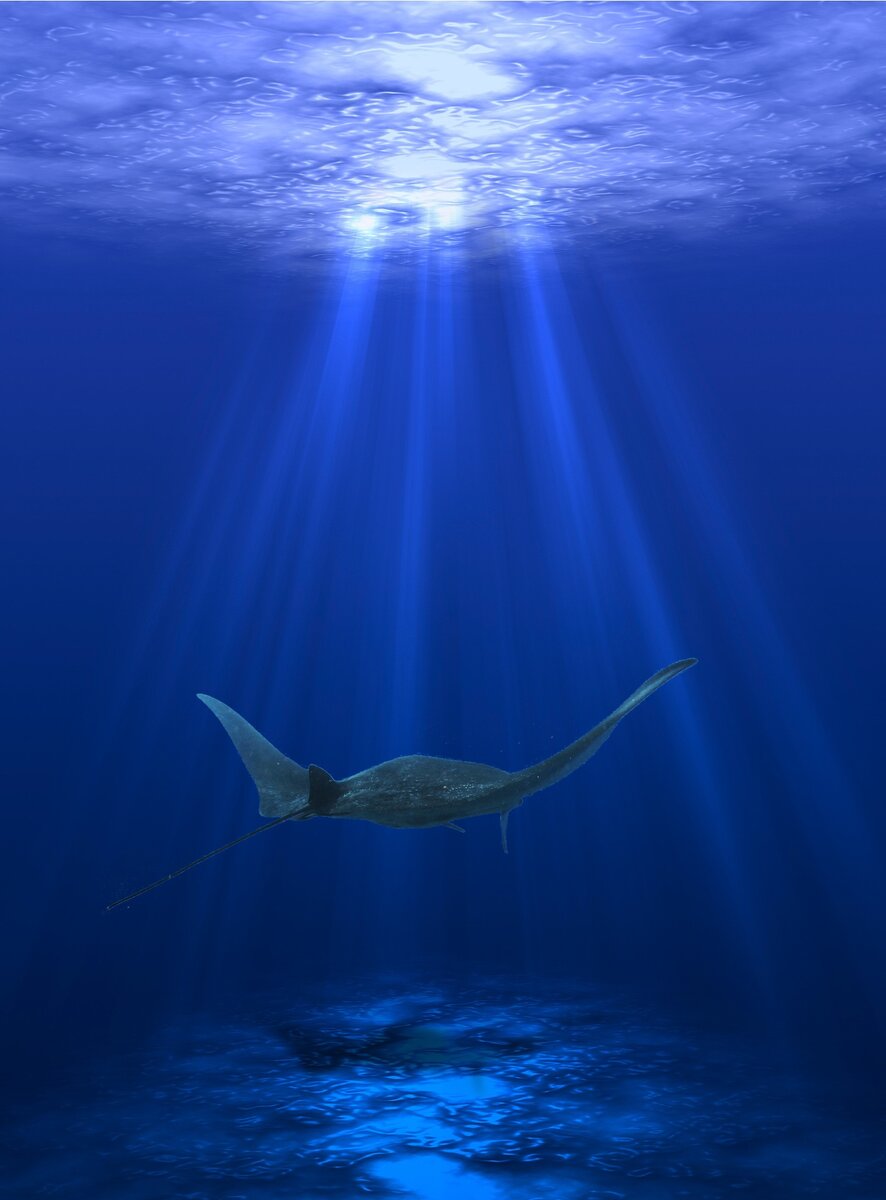
Underwater depths, like space, have always lured people. And there and there is still a lot of unexplored things. But how to penetrate the depths of the seas and oceans? The task has not been solved yet. Russia is planning to create a new type of underwater robot to study the depths of the World Ocean. It will be fully autonomous and equipped with manipulators. It is assumed that the robot will be able to work in the Arctic conditions, which can not be called extreme. And it is necessary to study them. It is already known that there are minerals on the Arctic shelf. Estimate their reserves, the possibility of extraction and just help the robot-manipulator. Though it is necessary to believe, it is not a unique problem from all those which should be solved by new working out of scientists-robotics.
They will be tested in three years
This was done at the Far Eastern University, Institutes of Marine Technology Problems, and Automatics and Management Processes of the Far Eastern Branch of the Russian Academy of Sciences. It is planned that the robot will be ready for testing in three years. But the main component of the entire information management complex has already been successfully tested this summer.
On four subsystems
The robot will be managed through four subsystems. The first subsystem controls the robot's approach to the object. The approach must be smooth. The second one is responsible for the stable operation of the vehicle even in complex underwater spaces - in the presence of strong underwater currents when the manipulator works in a dense environment. The third subsystem is responsible for identifying the location of research operations, planning the vector of motion. The fourth subsystem is responsible for controlling the working signals of the robot drives.
There are no such robots abroad
They also develop underwater robotic manipulators abroad. But so far all this is at the level of testing. There are no serial copies with manipulators. So our Russian robotic manipulator may be the first in the world.
The developments will also be useful for industrial manipulators
Far Eastern developments will also be useful for industrial manipulators and robotics, where robots equipped with multi-link robots are used.
To the depth of three people at a time
Well, there is no Arctic shelf in India, but there is a warm Indian Ocean, where people can be lowered. Well, of course, by creating the right conditions for this. Otherwise, the water at the depth of man will just crush. So in India develop the inhabited deep-water device calculated on stay in it at once three persons. It is also correct. What is there to miss in the depths of one ... Although you won't have to be bored. There, as well as at the top of the mass of everything unknown.
India wants to go up and down
By the way, work on their inhabited deep-sea vehicle in India began simultaneously with work on the spacecraft. The Indians plan to send their first national spacecraft, the name of which is Gaganyang, which means "Heavenly Ship", into space in 2022. Meanwhile, the deep-sea vehicle is unofficially called "Samudrayan", which means "Ship of the Sea". Similar to the spacecraft. It is expected that the dive of the underwater manned spacecraft will occur approximately the same time as the launch of the space vehicle. That is, by 2022, everyone will have started.
In 28 million dollars
The project to develop a deep-sea manned submersible costs Indian taxpayers two billion rupees, equivalent to $28 million. Interestingly enough, the cost of the Indian project is called to us. But the cost of our "unmanned" submersible is not available. I have not been able to find these numbers on the Internet. Maybe I wasn't looking well.
Crawling
The development of Indian scientists will move along the seafloor by caterpillar. Well, just like a tractor. Why? For the seabed, the very same is true for the Russian outback during the period of dissolution. There is only a tractor on caterpillars and will pass. Except that the tasks of the tractor and the deep-water submersible are different. One for life now, the other - for life in the future. It is envisaged that the machine will be able to work at a depth of up to 6 thousand meters. Astronauts, darkness, investigated submariners in the number of three persons can safely stay there up to 72 hours without ascent upwards.
And again minerals
And again, the development of Indian scientists, as well as Russian ones, is connected, among other things, with minerals. With their search and exploration in the Indian Ocean. Experts believe that there is nickel, manganese, copper, and cobalt in the Indian Ocean. I will not bore you with numbers. But believe me, there are enough reserves for industrial development.