A collection is a systematic collection of something, united by some specific attribute, having internal integrity and belonging to a specific owner — an individual, organization, or state. The collector is called a collector.
Windows Store - https://www.microsoft.com/en-us/store/p/family-collections/9p934v6d3jh8
iOS Store - https://itunes.apple.com/us/app/family-collections/id1240428547?mt=8
Android Store - https://play.google.com/store/apps/details?id=perun.org.familycollections
The basis of the Collectibles is the collection of the collection, that is, the systematic collection and study of any objects (usually homogeneous or united by a common theme). These can be works of art (books, paintings, music, movies, video games), historical, cultural and technical values and objects (coins, badges, stamps, models, cars) or objects of nature (insects, minerals, mollusk shells, flowers ). Collecting involves the identification, collection, study, systematization of materials, than it is fundamentally different from the simple gathering.
Collectors usually have collections of the same species, several different or interspecific thematic. Some types of collectibles involve large financial costs, some are not. Often, collecting collectors is faced with the task of finding very rare specimens that no one else has, or whose circulation is significantly limited. Often also the task of collecting all possible collectibles.
An application for collectors, designed to register and organize items of collections. With it, you can create any catalogs and types of collections. Store photo and video files about collectibles.
Program features:
- detailed description of the collection item
- photos and videos of the collection item
- copies of documents on the subject of the collection
- sending information to E-mail, Facebook, Twitter, VKontakte about the subject of the collection
- printing reports and photos divided into pages
The collection is collected with jewelry thoroughness and love. This is a real piece of pride that requires an appropriate tool to manage, sort and access. The application "Family Collections" will breathe new life into the way of presenting the objects: it will save the description, photos and video information. The user's collection will be presented in the form of a systematic catalog with a clear and simple interface.
By default, the program’s navigation bar at the bottom of the screen is in a minimized state and you will not see it. To see it, you need:
- Right-click anywhere on the screen (if you use the mouse).
- Swipe down from top to bottom (if you are using a touch device).
At the bottom of the screen is a panel of action buttons.:
- Add;
- Edit;
- Delete;
- Move;
- Search;
- Print;
- Send;
- Facebook;
- Twitter;
- VKontakte;
The collections in the program are grouped by subject and type. The first screen is a list of collections. Here you can create a new collection card or edit an existing one. Sort the list. Perform a search.
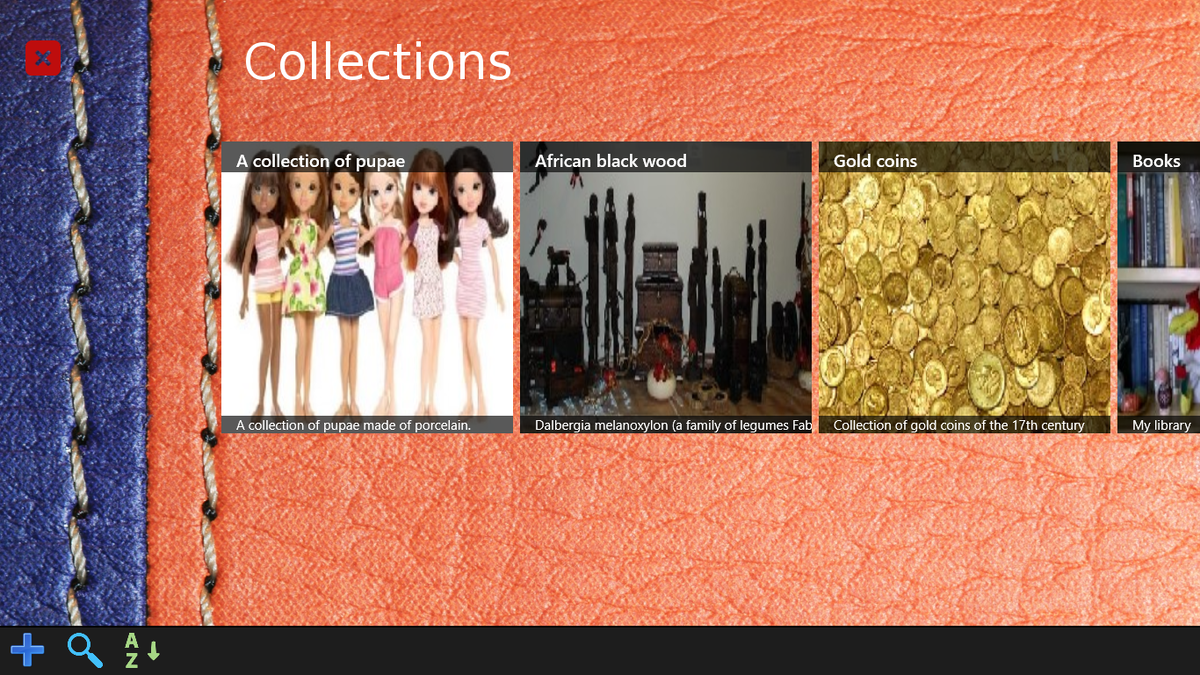
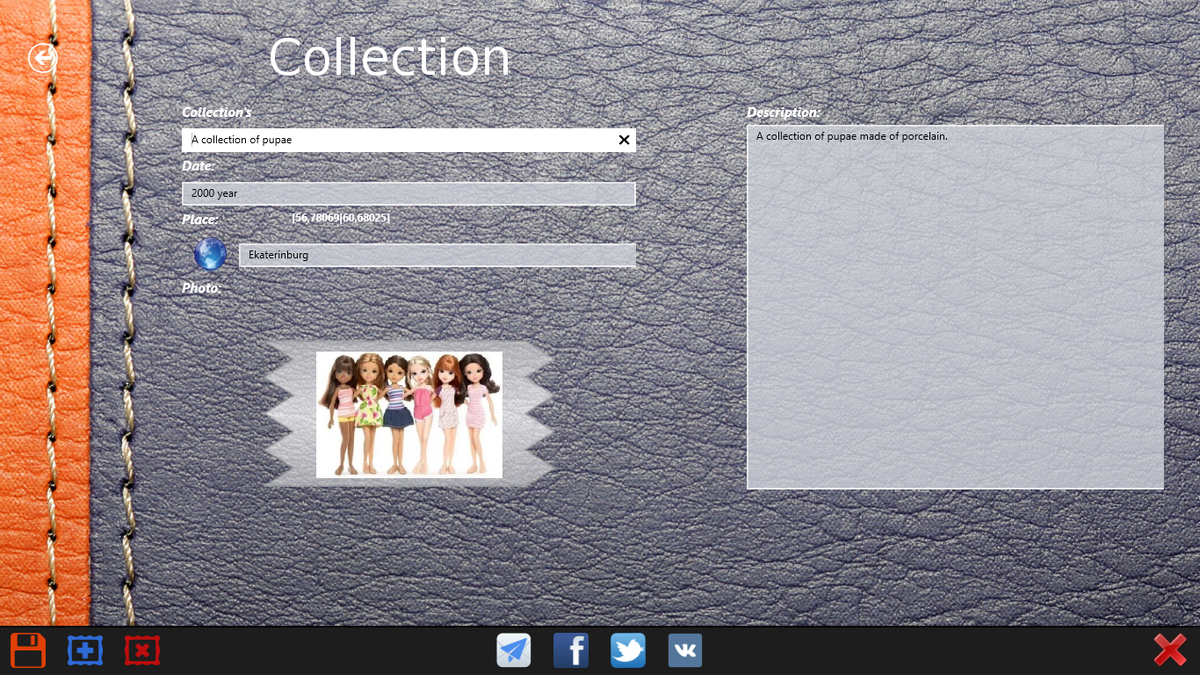
First of all, a list of collections is created in which collection data is stored. The following information is entered into the collection card: Collection name; Date of creation; Place of creation; Brief description of the collection.
The second screen shows a list of items belonging to the collection. Here you can create a new item card or edit an existing one. Sort the list. Perform a search. Move item to another collection.
The following information is entered into the item card: Name; The photo; Author: Date and Place of Creation (with geographic coordinates); A country; Price; Cost; Weight; The form; Material; Colour; Length; Width; Height; Diameter; Composition; Type of; Condition; Purpose; Description.
List of photos, videos, copies of documents, etc.
Description of the photograph, video, or copies of the document.
Screen viewing photos, videos or copies of the document.
A short list of collectibles:
- Mushrooming (plushkinizm) - collecting unnecessary items. In principle, this is not a hobby, but a diagnosis.
- soapstone - collecting soap and wrappers from it.
- nicophilia - collecting cigarette packs.
- Nordomanophilia (Nordomania) - collecting a variety of items, united by the theme of the North.
- numismatics - collecting coins.
- ophthalmophilia - collecting glasses, lenses, various optical devices and optical devices.
- Paleontology - a collection of the remains of ancient animals.
- Papyrophilia (Papyrology) - collecting ancient Egyptian papyrus.
- Paragenophilia (paragenic collecting) - collecting various objects, united by one theme.
- paremiology - collecting parables.
- peridromophilia - collecting tickets, cards and coupons.
- petrophilia - collecting minerals and stones.
- pyrofilia - collecting matches and lighters.
- plangonology - collecting dolls.
- presofilia - collecting iron.
- pressophilia - collecting magazines and newspapers, as well as books, united by one theme.
- promgrafofiliya - collecting labels, wrappers, packaging materials.
- Psigrafofiliya (Psigrafiya) - collecting silhouettes, cut out of paper.
- Renardofiliya (Renardofilstvo) - collecting materials related to the character of fairy tales - Sly Fox.
- recetarism - collecting recipes (not only dishes, but in general).
- Serpentaphilia - collecting snakes.
- sigilaty - collecting pictures on mail envelopes.
- signmanistika - collecting armbands, chevrons, emblems.
- Scratophilia - collecting old stocks, lottery tickets, bonds.
- speleophilately - collecting any materials related to the theme of the caves.
- Sovietika - collecting books, paintings and any other works of art related to the theme of the USSR.
- Stavrografofiliya - collecting crosses, their images and materials related to the theme of the cross.
- stereo - collecting "bulk" cards.
- stikofiliya - collecting stickers.
- Stylophilia - collecting pencils.
- Sphragistic - collecting stamps.
- tabuyropiliya - collecting obscene words and expressions.
- taxidermy phytosophilia - collecting stuffed animals, birds.
- tattoofilia - collecting tattoos and their images.
- Tegestology - collecting coasters for beer mugs - birdekel.
- Tegestofiliya - collecting different sorts of beer.
- phone card - collecting phone cards.
- timbrology - collecting stamps, the old name of philately.
- Tesseristika - collecting grocery cards and coupons for products.
- Tyrosemiophilia - collecting wraps from processed cheese.
- trainsspottingofophilia - collecting (visual fixing) locomotives of railways with the subsequent mark in the catalogs.
- thrash cash games - collecting works of applied graphics made in the form of banknotes.
- tuftology - collecting rare stamps of the first issues made in the republics of the former USSR.
- faleristics - collecting badges, signs, medals and orders.
- felinophilia - collecting various materials and objects, united by the theme of cats.
- fibulonophilia - button collecting.
- philately - collecting stamps.
- Philobutonics - collecting a variety of buttons, including military and uniforms.
- philography - collecting autographs.
- Philocarty - collecting cards.
- philotaymia (calendar) - collecting calendars.
- Philophony - collecting any sound recordings on any media.
- filumeniya - collecting matchboxes and matchbox labels, as well as matches themselves.
- phytophilia - collecting house plants and cacti.
- fishefilia - collecting canned fish labels.
- phonocardia - collecting music cards.
- fumofiliya - collecting smoking accessories.
- Footbalophilia - collecting a variety of items, united by the theme of football.
- hobbikartiya - collecting magnetic cards.
- shandalofiliya - collecting wax and paraffin candles and candlesticks.
- chessophilia - collecting everything related to chess.
- Shelonyophilia - collecting images of turtles.
- school science - collecting everything related to school: textbooks, manuals, diaries, notebooks, and so on.
- stamp research - collecting stamp prints.
- exonomy (exotic numismatics) - collecting numismatic objects that are not in essence a payment document.
- ex libris is a collection of ex libris.
- Entomological collection - collecting insects.
- erkafilia - collecting stickers used in mailings.
- Eroticophilia - collecting erotic images.
- etherebielophilia - collecting labels from wine bottles.
- Humorinophilia (humor) - collecting caricatures, toys for a raffle, magazines and books of a humorous nature.
- amberophilia - collecting various items from amber.
Tags: collection, auction, antiques, history, family, item, price, cost