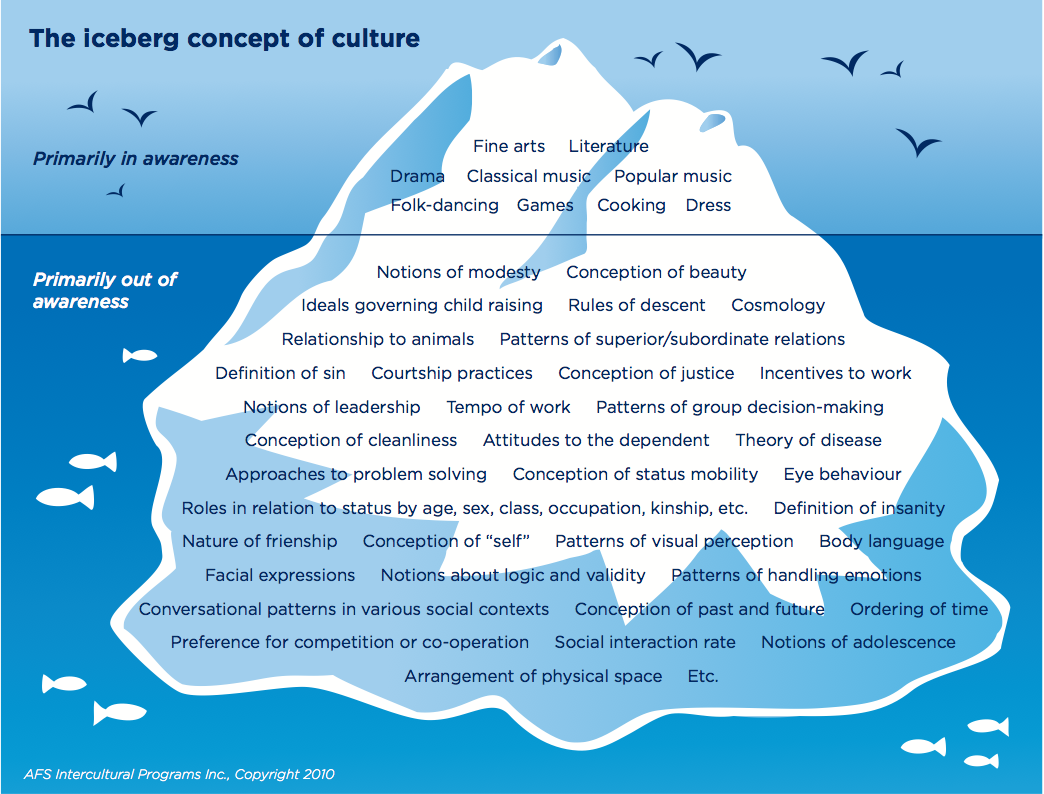
Being an exchange student means to interract with people from different countries and cultures. Culture is not only what we see, but also something that cannot be seen through the eyes, for example, views on raising children, importance of personal space, assumptions and so on. That is what theory of cultural iceberg about.
When we see an iceberg, only its tip gets in sight, and everything else remains hidden from the eyes. The same thing happens with people. Many people think that different aspects of culture are represented only by the “top”, which is easy to see. But in fact, everything is completely different.
The reality is that the invisible part of the iceberg is huge layers of culture, that is, complex ideas and deeply hidden preferences and priorities, known as benchmarks and values.
Traveling and meeting people from other cultures, we can only see what is obvious, and this is only 10%. It is a part of culture that can be seen, tried, breathed, heard and touched. This, above all, food, music, art, language, holidays and games. This all plays a huge role in helping us understand how cultures interact. But over time, everything changes, for example, recipes or games. Even the language is subject to change.
When we dive even deeper, we will be at the core of the iceberg. This is where the treasures defining the culture are stored. At the core of culture, we find ideas about child education, the definition of adulthood, the concept of self, the role of sex, age, social class, kinship and family ties, the pace of work and so on. These are the subconscious parts of the culture that people adhere to without engaging in conscious thinking. These are the values that define culture. In order to know them, you need to live in society for some time.