The Cathedral of Christ the Savior is the main cathedral in Russia, and is the headquarters of the Russian Orthodox Church (the equivalent of St. Peter's Basilica in Vatican City for the Roman Catholics). It's also a major landmark which attracts millions of tourists and pilgrims from all around the world; its silhouette and golden domes dominate the city’s skyline. The cathedral is an architectural chronicle of some of the most tragic pages and greatest victories in Russia’s history. In order to reveal its secrets and fascinating history we should go back to the 19th century.
In June 1812 Napoleonic troops invaded the Russian Empire. The French advanced quickly and on September 15, 1812, Napoleon entered Moscow setting up his residence in the Kremlin, it was hardly a victory, though. Russian commander-in-chief Prince M. Kutuzov made a very difficult decision to abandon Moscow, and thus he opted to preserve the army. The French were met by empty streets and houses abandoned by their inhabitants. It was here, in the ancient capital of Russia, where the moral decay of the French army set in; there was looting and pillaging. Making matters worse, the most devastating fire in Moscow’s history broke out.
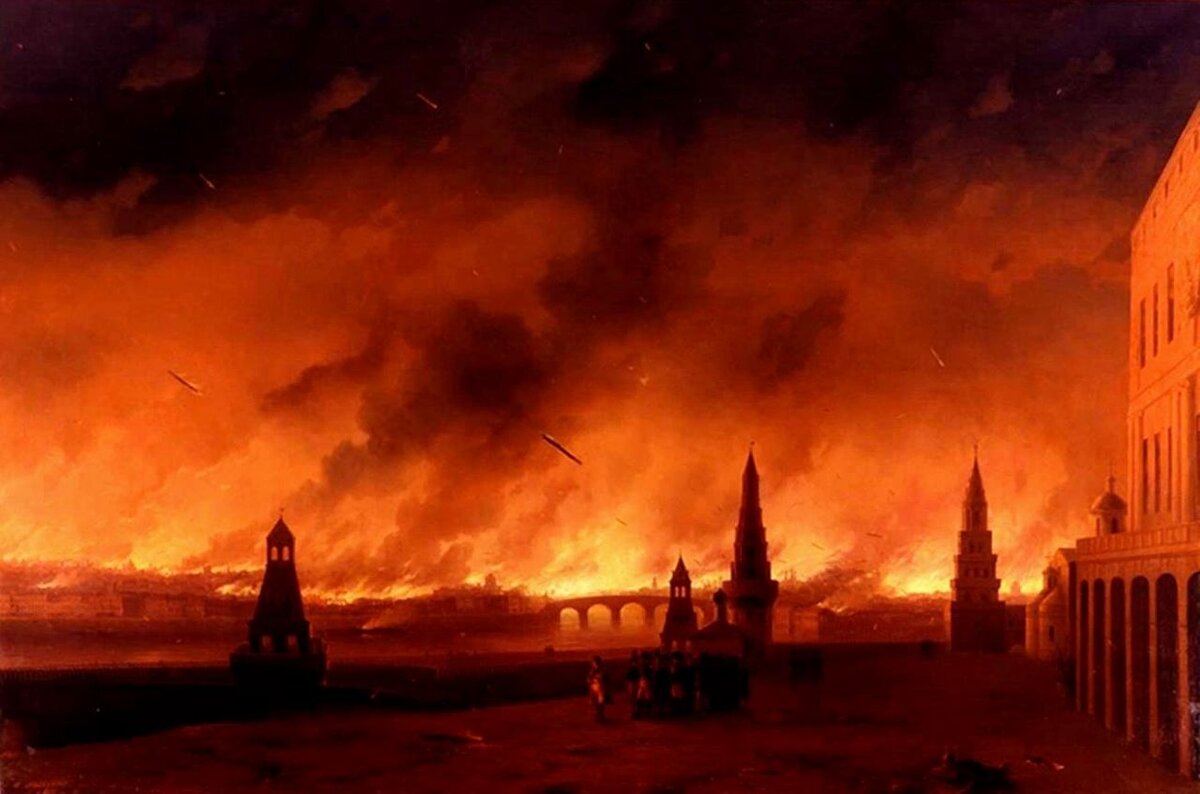
Almost 70% of the city was destroyed by fire as Moscow’s buildings were mostly wooden at the time. 35 days after their arrival the Napoleonic army was forced to retreat in the absence of housing, food, adequate clothing and supplies. Russian winter was coming.
The tactic chosen by the Russians was a success. The last soldiers of Napoleon were expelled from the country on December 25, 1812. A year and a half later Paris would be taken and Napoleon totally defeated which was regarded as the victory of the Russian people.
On the same day as the French army crossed the Russian border on their way back to France Emperor Alexander I ordered a cathedral in Moscow to be erected in honor of those who had died in the war against Napoleon. That would act as a monument to the selfless heroism and sacrifices of the Russian people, and a symbol of the nation’s gratitude to God for saving the country. Building a church as an expression of gratitude was a longtime tradition in Russia. The Cathedral of Christ the Savior became the greatest monument commemorating the victory over Napoleon in the Patriotic War of 1812.
A design competition was announced to determine the architect of the cathedral. Aleksandr Vitberg won the first round, his project was chosen by Emperor Alexander I. It was decided to erect the church on Sparrow Hills in the southwest of Moscow which the tsar poetically called ‘Moscow’s crown’.
Vitberg encountered several difficulties while carrying out the project. Furthermore, in November 1825 Alexander I died and Vitberg lost his royal patron. Russia’s new tsar, Nicholas I, ordered that work on the cathedral be stopped. In 1829 a second design competition was announced. Emperor Nicholas I wanted to find a more appropriate place for the Cathedral of Christ the Savior as it was impossible to construct the building according to Vitberg's design on the slope of Sparrow Hills.
Konstantin Ton, a young and relatively unknown architect, was selected to design the church; he proposed 3 new possible locations for the building. The site on the high bank of the Moskva River near the Kremlin was chosen by Emperor Nicholas I.
The cornerstone was laid on September 10, 1839, marking the 25th anniversary of Napoleon's defeat. The Alekseev Convent which stood on the site chosen for the construction had to be moved to a different location.
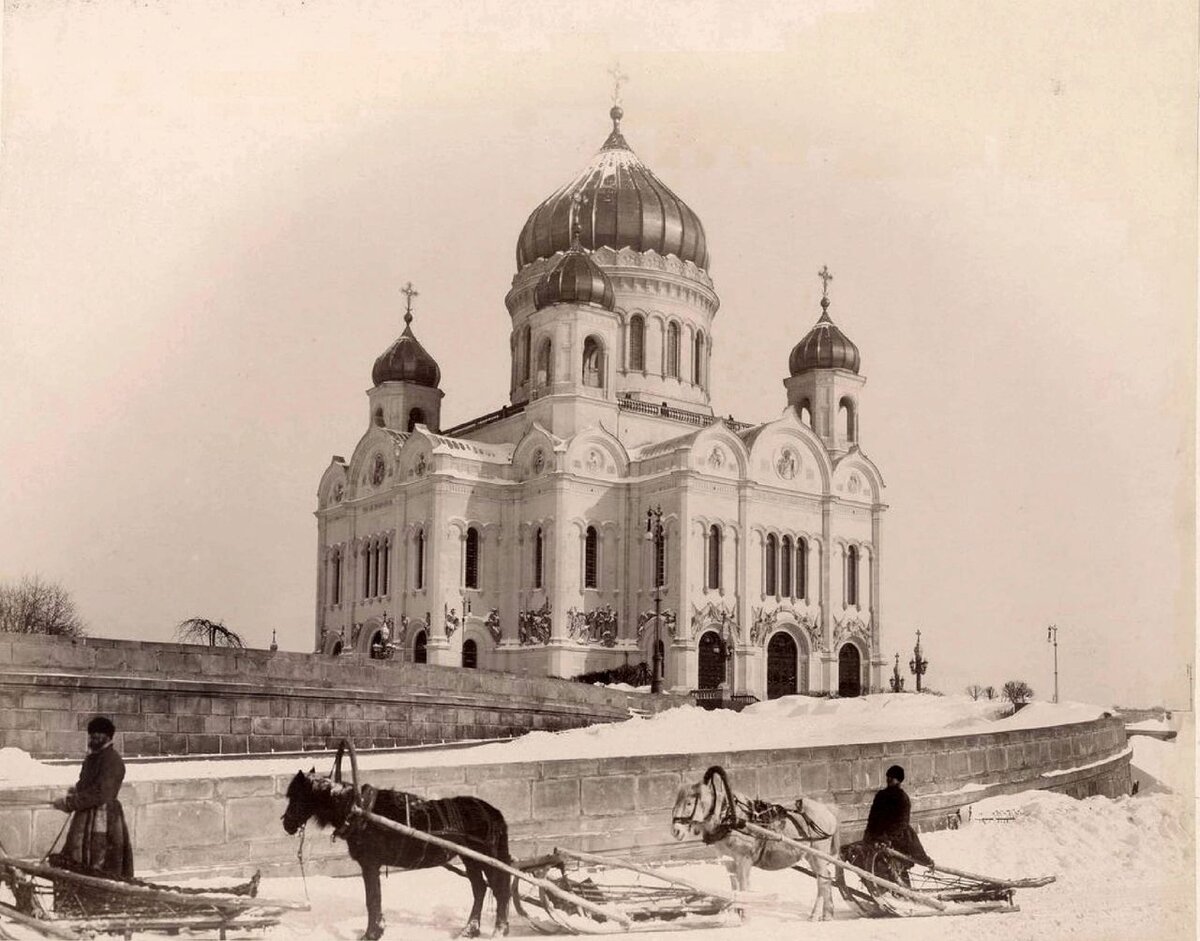
The Cathedral of Christ the Savior took almost half a century to build. It was completed in 1881 and consecrated on May 26, 1883, during the celebration of Emperor Alexander III's coronation.
Especially for the occasion P. Tchaikovsky wrote the 1812 Overture which was performed at the ceremony. A wonderful piece of classical music. Beware of the cannon!
The Cathedral of Christ the Savior quickly became one of the main centers of Moscow’s religious life, as well as cultural, social, and political; Russia’s most important celebrations took place there.
But what one sees today is a replica of the original cathedral. In 1917 the country changed drastically — Emperor Nicholas II abdicated, the Russian Empire collapsed and the Bolshevik party led by Vladimir Lenin took over. For a long time the Russian Orthodox Church would be oppressed by the regime. In February 1922 on the pretext of fighting the 1921-1922 famine the Bolsheviks issued a decree instructing all those objects made of gold, silver and precious stones be removed from churches all over the country; they were supposed to be sold to purchase food. The Cathedral of Christ the Savior was plundered during 3 days. More than 500 kg of silver and about 500 diamonds were confiscated. The true purpose of the measure was not philanthropic but political.
In the 1920s the Soviet government began the process of destroying churches and monasteries in the country. Moscow, like many other Russian cities, lost many of its valuable architectural monuments, including the Cathedral of Christ the Savior. In the summer of 1931 Stalin's government made a decision to dismantle the church. The golden domes became the first victims as the building was sacrilegiously decapitated.
All crosses and bells were taken down to be melted.
Some marble slabs were preserved and used later to erect or decorate other buildings in Moscow.
There were commemorative plaques inside the cathedral (about 170 in total) telling a complete history of the war against Napoleon in chronological order and describing 71 battles that took place on Russia's land in 1812, and 87 battles fought outside the Russian Empire in 1813-1814. Later some of them were used as stairs in the State Tretyakov Gallery.
As the dismantlement was taking too long it was decided to take much more radical measures. On December 5, 1931, the Cathedral of Christ the Savior was blown up.
The cathedral was still standing after the first explosion; a new set of explosives had to be used.
The cathedral's destruction was part of a project to erect the Palace of Soviets; a palace of congresses of the communist party that would become one of the tallest buildings in the world measuring 415 m in height. It was supposed to be crowned with the largest statue on the planet, a figure of Lenin. The Bolshevik leader was going to be 100 m tall (which are included in the total height of the palace) and weigh 6000 tons.
The palace was supposed to have 2 large auditoriums with a seating capacity of 12,000‑15,000 and 4,000‑5,000 people. Lenin's head was to host a library. The Palace of Soviets was to symbolize the world’s first socialist state. To the new authorities the church was one of the main symbols of the old faith, of a hostile world, one which they intended to replace with a new symbol: a monument that embodied the ideals of Lenin and Soviet Russia.
Construction of the palace had already begun when in June 1941 Nazi Germany invaded the Soviet Union and the Great Patriotic War started. Parts of the Palace of Soviets were dismantled and used to build bridges during the war. The ambitious construction project to erect one of the largest buildings in the world was suspended and after the war it was abandoned.
In 1960 after the death of Joseph Stalin an open-air swimming pool was opened on the same site where the cathedral once stood; it was called Moskva ('Moscow' or Москва in Russian). The pool quickly became a popular place for exercising and sunbathing: there was a diving platform, a sauna and a beach.
The water surface measured 130 m in diameter and 13,000 sq. m. in area which made the Moskva pool the largest one in the USSR and one of the biggest ones in the world.
The most amazing thing was that the water was heated and the pool was functioning all year round!
After the collapse of the USSR in 1991 the swimming pool was closed and dismantled. In 1994 a controversial decision was made to rebuild the Cathedral of Christ the Savior on the same site. On January 7, 1995, Russian Orthodox Christmas Day, the foundation stone was laid.
This time it took 5 years to build. The Cathedral of Christ the Savior 2.0 was consecrated on August 19, 2000, and is now the headquarters of the Russian Orthodox Church.
The new cathedral is not an exact replica of the previous one, although it has the same dimensions being one of the largest churches in the world; it has a 10,000-person capacity. The building is just as opulent and magnificent as it was. It houses a few important Christian relics which attract thousands of pilgrims. It also became a prominent landmark and a must-see for any visitor to Moscow.
I'm a licensed guide to provide tours of the Cathedral of Christ the Savior, and will gladly reveal more secrets and show the best photo spots.