Не знаю можно ли на Дзене публиковать на английском, но я попробую. Переводить на русский я тоже буду но позже. А пока держите оригинал моих работ. Я публикую без редакции грамматики, поэтому приму любые исправления в комментариях.
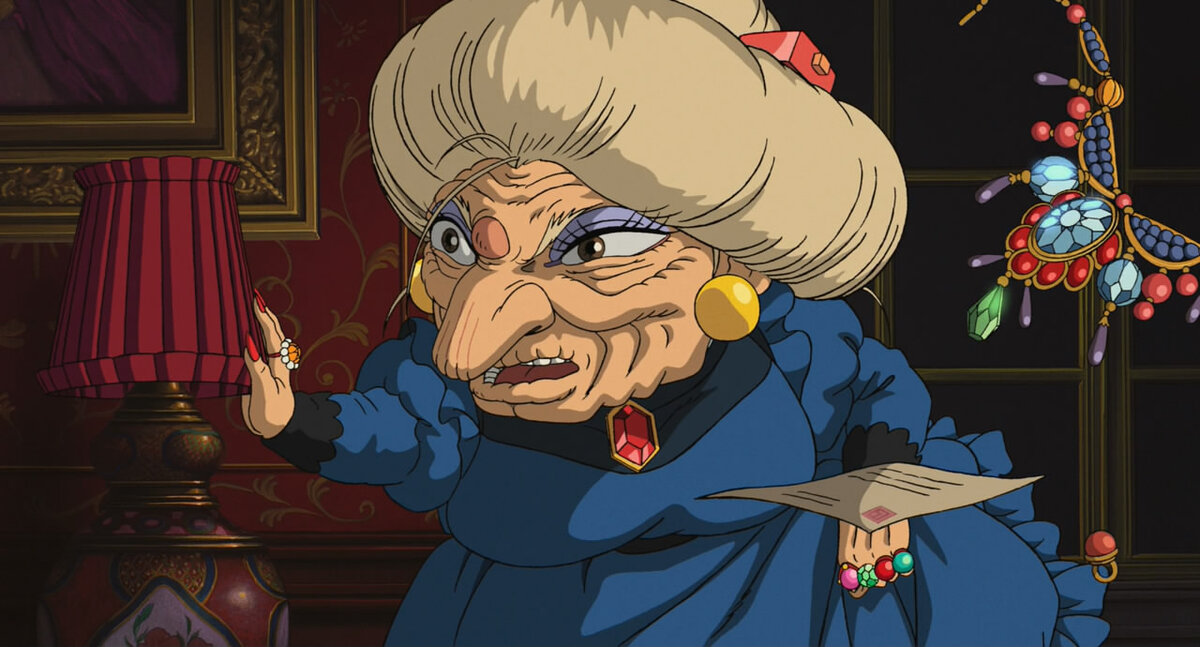
Юбаба - персонаж из Sen to Chihiro no kamikakushi. Женщина в возрасте, владеющая и управляющая баней. У нее есть сестра-близнец, Зениба, и малыш-сын, Бо.
Антогонист = злодей. Антогонист - это герой, который противопоставлен главному герою, чаще всего мешает его миссии или является его противником.
Юбаба не антогонист
Spirited Away (2001) is a well-known anime film by Hayao Miyazaki. This film is filled with meanings as it depicts environmental issues, capitalization, and the Westernization of Japan after WWII. In the anime through the magnificent world of spirits and gods, a little girl, Chihiro (Sen), has to grow up. Her path to adulthood and responsibility starts with applying for a job in spirit bathhouse, which is managed by an old lady called Yubaba. The plot difference from most teenagers’ stories is that this film does not show the first love and sweet things of childhood but reveals the actual burden of life. To disclose this part of life, Miyazaki puts working in the center of the story of her life, which stands at the core of the goal of her acts.
Firstly, I explore her values in life to understand her goals. To do this I analyze her relationship with workers. Along with it, I show why Yubaba’s relationship with the workers does not show her as an antagonist. In the same part, I show that her actions have high goals above materialistic values. In addition to that, in the last part, I show that her effect on the main character is positive. What I mean here is that Yubaba does not create hindrance to the girl but steps to her success.
Yubaba is just a person.
The spiritual world differs from the human one. For instance, in the spiritual world person cannot break the contract because one wants. Yubaba acts do not try to break the rules but use them to get profit in her bathhouse. However, she spends all this money on herself but to create the best services in her company and feed and coddle her son. Thus, Yubaba has similar to any person’s goals, since her actions are directed to manage the ‘company’ and bring up a child.
However, Yuba,ba is just a good manager, who keeps order. And sometimes her relationship with the workers is very strict, so someone can call her evil since she does not ever give anyone indulgences. For example, on a job-interview she checks if the person can sustain pressure because working implies coping with two kinds of pressure: stress and tiredness. (Japanese employment system also implies coping with shame appeared by the poor working of an individual in comparison with other employees). When the little girl starts working, Yubaba pushes the poor to do the hardest and most disgusting work. For example, cleaning the Stinking spirit, that never came in the bathhouse before. Moreover, when Stink God enters the bathhouse, she says ‘He doesn’t seem stink god’, she meets him herself without covering and staying still, when her other workers try to hide from the unbearable stench. She commands to help the visitor, when her hunch approved, and manages his cleaning further, saving River Spirit. So, Yubaba does not leave workers in a problematic situation. For instance, when No-face causes turmoil, she comes herself and gives him an audience, in the moment of No-face leaving the bathhouse, she throws a fireball at him, protecting her house and labor. In Yubaba’s understanding the work should be done, and the cycle of working day continues. For instance, she can create more workers for lower-skilled work, like soot. Nevertheless, her attitude to the workers and her job makes her a good manager, who controls all the situations in the company. Thus, her strict relationship with employees is a consequence of such management and does not make her evil.
Furthermore, Yubaba is a loving mother. Firstly, her son, Bo, is not in shortage of her guardianship and care. The walls of the boy’s room are made of soft material and he himself sleeps in a pile of pillows. So, Yubaba protects him from any possible injury. This could be seen from Bo’s words, where he says that it is dangerous to be outside because there are microbes. Moreover, since the son comes to Yubaba in the first place, Chihiro is able to get the job because Yubaba is distracted by her son, who seems the only one who can divert her attention from the business. Thus, the son is the main value of Yubaba’s life. Therefore, she has something except the materialistic goals, as achieving more profit in her bathhouse, she has her love for the child.
Yubaba helps Chihiro to find herself
Above I mentioned that Yubaba had two main values in her life: her child and her business. Even though Yubaba’s actions seemed inappropriate to the little girl, it is easy to see that sorceress of the bathhouse is acting right, since she just deals with Sen as a usual worker because of the last one signed the contract. And while living in the Spiritual world, Sen has to work hard, which helps her find out what is valuable for her and how to achieve it. However, to get this knowledge and skills she had to pass through the challenges, giving as her as an employee of Yubaba.
Firstly, the little girl, that is afraid of everything, shaking before making the step further, closer to her goal, develops self-confidence. Yubaba challenges Chihiro's confidence in willing for the job. So, the girl gets what she wants by staying certain. Secondly, she becomes physically stronger. In the scene of cleaning the Stink spirit, she has to stay on her legs, despite disgusting flavor, and go through the knee-deep mud. At the end of this activity, the truth reveals an outer shell can cover something great. After this, she gets her first award from the spiritual word in face of Yubaba. In the end, she knows, that if one has a goal (s)he should move towards it and not give up, even if there are enormous challenges. So, to save her friend she goes on an extremely dangerous path: she gets to Yubaba, the highest place in the Bathhouse by climbing a pile and stairs attached to the wall; and then travels to Yubaba’s sister without hesitation.
Why Yubaba?
To sum up, Yubaba which is called the antagonist of Spirited away is not. Firstly, she is not a type of valiant antagonist. Firstly, even though the witch is powerful and terrifying, she is not valiant, since all her actions are explained by spiritual world rules and her values. Moreover, she is actually not against the protagonist. and does not stay in the way of Chichiro's goal but helps the girl grow up and find her name and spirit. However, there are still open questions. For instance, why did Miyazaki choose woman as bathhouse manager? The problem of female managers lays in the patriarchal culture of japan, where even today women occupy less percentage of senior seats. Why he chooses the main place of working a bathhouse for a little girl? This question plays on the historical use of bathhouses in Japan, where yuna helped men visitors to wash as one job, and the other was going on the higher floor for the additional prize, providing sexual services.
Bibliography
Crawcour, Sydney. "The Japanese employment system." Journal of Japanese Studies 4, no. 2 (1978): 225-45.
Hayao, Miyazaki, interview by Animage. Miyazaki on Sen to Chihiro no KamikakushiEdited by Team Ghiblink, translated by Ryoko Toyama. (May 2001).
Spirited Away. Directed by Miyazaki Hayao. 2001.
Public. Ghibli Wiki: Yubaba. n.d. https://ghibli.fandom.com/wiki/Yubaba#cite_ref-0 (accessed 11 22, 2019).