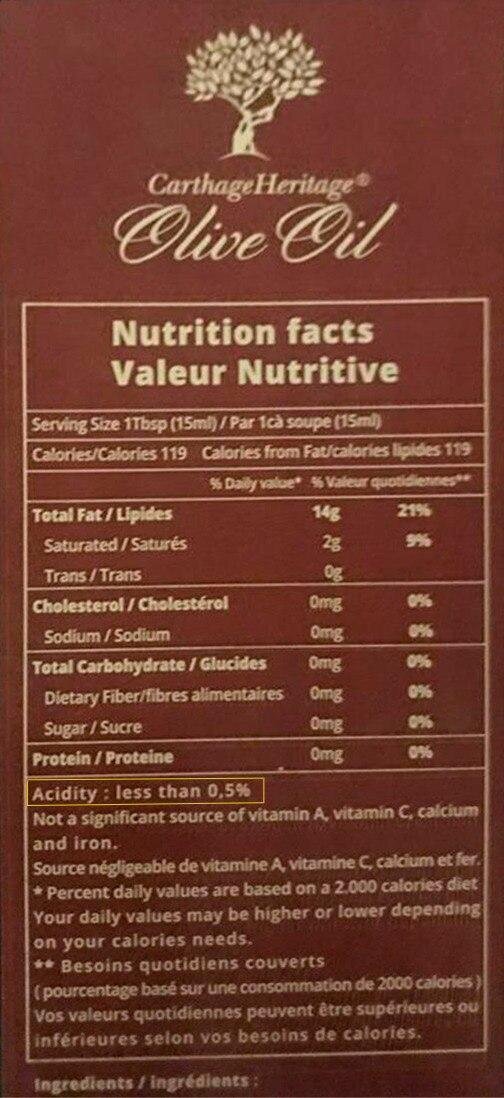
The quality of olive oil largely depends on the level of acidity. The acid number characterizes the content of free fatty acids in the oil. The acid number and peroxide number are the products of aging oils. These indicators are not constant. They change (increase) from the duration and temperature of storage, transportation, from the contact of oil with air (for example, when opening a bottle of oil). The indicators that are indicated on the label (for example, on Greek oil) are those that were determined at the time of filling the oil in bottles.
In Russia, they adhere to the standards according to which the maximum allowed are:
- for Extra Virgin (unrefined) oil:
* acid number – no more than 4.0 mg KOH/g.
* peroxide number – no more than 10 mmol/kg.
- for refined oil:
* acid number – no more than 0.6 mg KOH/g.
* peroxide number – no more than 10 mmol/kg.
In countries that adhere to Codex Stan 33-81 standards (including Spain, Italy, and Greece), the peroxide number can be no more than 20 mmol/kg.
Each manufacturer guarantees that if the olive oil is stored correctly and the terms of sale are met, the acid and peroxide values will not exceed the maximum allowed values.
Subscribe to my channel so you don't miss anything. And also put likes and write comments.