Уважаемые коллеги, доброго времени суток! Представляем вам чешское научное издание Preslia. Журнал имеет первый квартиль, выходит четыре раза в год, издается в Ceska Botanicka Spolecnost/Czech Botanical Society, его SJR за 2019 г. равен 1,489, пятилетний импакт-фактор - 4,357, печатный ISSN - 0032-7786, предметные области - Растениеводство, Экология. Вот так выглядит его обложка:
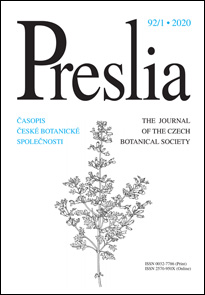
Редактором является Петр Пышек, контактные данные - pysek@ibot.cas.cz, kaplan@ibot.cas.cz

Это рецензируемый научный журнал, который был основан в 1914 г. и назван в честь братьев Яна Сватоплука Пресла (1791-1849) и Карела Борживоя Пресла (1794-1852), выдающихся чешских ботаников. К публикации на английском языке принимаются оригинальные научные статьи по систематике растений, морфологии, фитогеографии, экологии и растениеводству с географическим акцентом на Центральную Европу.
Пример статьи, название - Conservation targets from the perspective of a palaeoecological reconstruction: the case study of Dářko peat bog in the Czech Republic. Заголовок (Abstract) - We analysed a continuous and well-dated record of pollen, non-pollen palynomorphs, geochemistry and plant macroremains from the best preserved peat bog in the Bohemian-Moravian Highlands (Czech Republic). Dářko peat bog is an isolated site of a pine bog woodland dominated by the central-European endemic Pinus uncinata subsp. uliginosa. It is protected as a National Nature Reserve and a Site of Community Importance.We describe major patterns and interesting details of the development of this site since the Late Glacial and provide a historical context for some natural phenomena of high conservation value. Until the High Middle Ages, macroclimate and autogenic succession appear to have been the main drivers of both the local and regional development of vegetation. The pine-dominated Late Glacial vegetation with cold-loving taxa survived until the first millennia of the Holocene. The first Late Glacial and Holocene record of Isoëtes lacustris outside its present range in this country indicates the presence of a cold oligotrophic waterbody in this period. Corylus, Picea and mixed oak forest taxa started to expand already around 10,500 cal. BP. Indicators of a warm oceanic climate appeared around 7700 cal. BP and the AP:NAP ratio increased gradually up to its Holocene maximum close to 99%. Around 6800 cal. BP, the minerotrophic wetland developed into an ombrotrophic bog. Picea, Fagus and Abies started to dominate the pollen assemblage around 5500 cal. BP. Between AD 1100 and 1350, an abrupt change in the vegetation started, which coincided with the High Medieval colonization of the region. The pronounced peak of Pb in the geochemical record between AD 1200 and 1650 reflects extensive metallurgical activities in a wider area. Valuable pine bog woodland appeared only around AD 1500, when pine expanded. This late expansion, also recorded elsewhere, may have been triggered by human activities, which challenges the present non-intervention management of this habitat. The present marginal occurrence of fen species in the bog lagg may be considered a relict of Late Glacial and Early Holocene minerotrophic fen vegetation, the preservation of which requires active management. This study shows how palaeoecological knowledge helps explain present patterns in the composition of a valuable protected site. This knowledge may be used in prioritising conservation and in communicating the nature conservation goals to the public. Keywords: Bohemian-Moravian Highlands, conservation priorities, Holocene, human impact, landscape history, Late Glacial, mire, palaeoecology, rare species, relict, vegetation