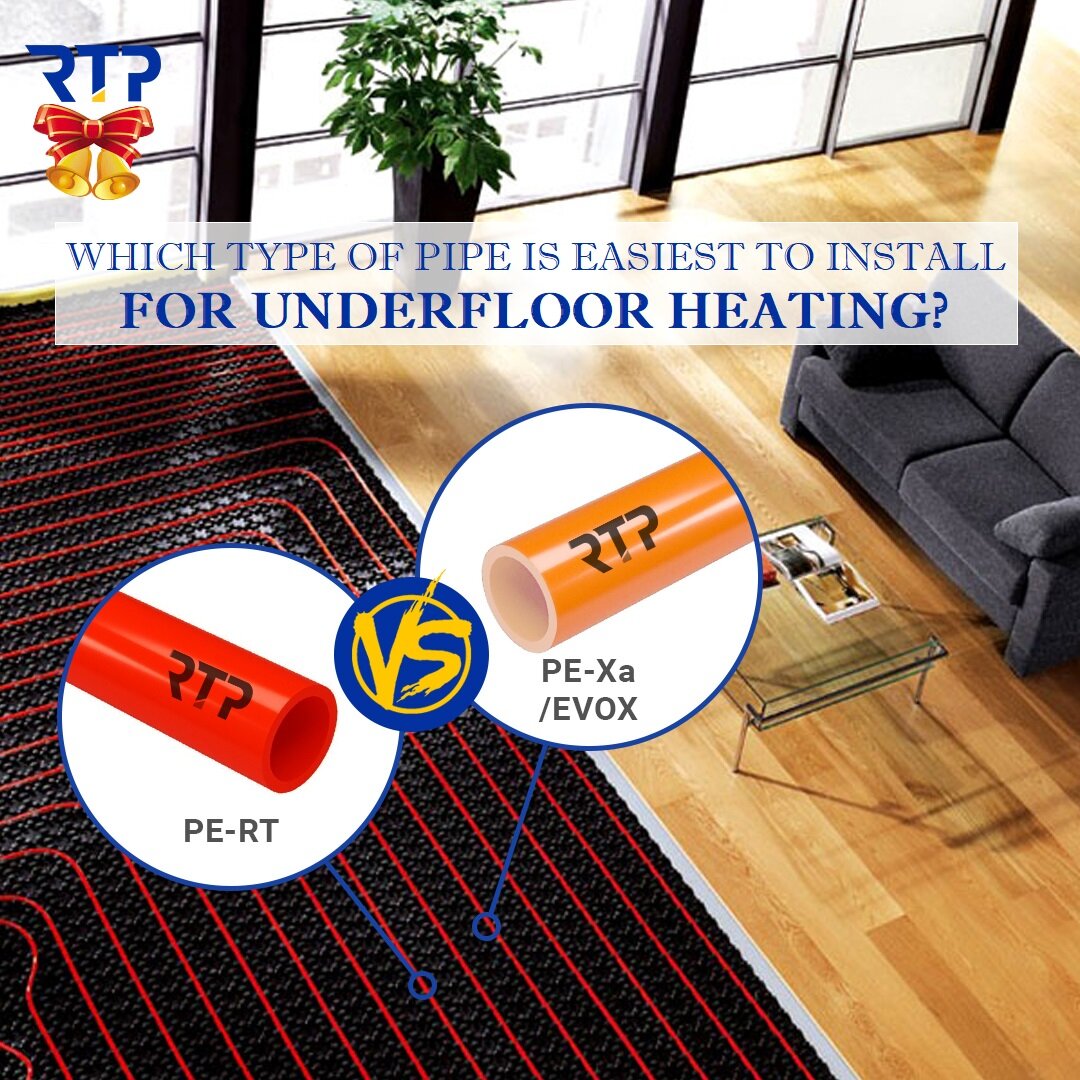
RTP produces two types of floor heating tubes:
- Type 1: PERT PIPE, Class II, with diameters of 16 and 20 mm, with a wall thickness of 2 mm, and in red and gray colors.
- Type 2: Pixa tubes with an EVO layer of oxygen, with diameters of 16 and 20 mm, with a wall thickness of 2 mm, and is also available in orange.
The global trend for hydronic system design is based on significantly lower temperatures than those used in the early applications with iron and steel pipe. These lower temperatures enable modern heat sources like condensing boilers, heat pumps and solar collectors to achieve high efficiency. They also support more widespread use of polymer-based tubing versus metal tubing. Although copper, stainless steel, and even black iron will retain specific “niches” in future systems, polymer-based tubing options already dominate the European hydronics market, and are very likely to continue gaining share in global market.
crosslinked polyethylene tubing (PEXa), it was generally viewed as a product limited to use in radiant floor heating systems. Today, PEXa tubing is largely recognized as a universal piping material, with a wide variety of applications in both hydronics and potable water distribution.
PEX used in most closed loop hydronic systems is known as “barrier PEX.” It has a thin layer of a compound called EVOH (ethylene vinyl alcohol), which greatly reduces the rate at which oxygen molecules can diffuse through the pipe wall. This reduces the potential for oxygen based corrosion of ferrous metal components, such as cast-iron circulators or steel expansion tanks.
PE-RT stands for polyethylene raised temperature. Used for over 20 years in Europe, PE-RT is certified to European and Russian standards, only one key difference between PE-RT and PEXa, is that PE-RT is a thermoplastic, whereas PEXa is a thermoset polymer. A thermoplastic can be heated and melted, whereas a thermoset polymer cannot. This allows PE-RT to be joined to compatible polyethylene fittings using socket fusion. The outside surface of the tube, and inside surface of the fitting are simultaneously heated using a special tool, PE-RT assumes a semi-molten state. After a specified heating time, the tubing and fitting are simultaneously pulled off the heating tool and pushed together to form a very strong and permanent bond.
Also there are other several points of difference:
- PERT cannot meet the same temperature / pressure ratings as PEXa.
- PEXa pipes are distinguished with it's high degree of crosslinking which provides toughness and longevity. But PE-RT is simply an over-stabilized high density polyethylene.
- Kink repair is possiblefor PEXa pipes due to the excellent thermal memory. Coils straighten with no effort, alowing for much easier installation. Minimizing need for straight runs of tubing that are dificult to transport, but for PE-RT kink repair is not possible. less Flexible.
- Proven performance of using PEXa pipes for many many years in Europe, North America, and other world countries.