In modern materials science and industrial applications, fumed silica is a vital inorganic nanomaterial. Valued for its high specific surface area, excellent dispersibility, and superior surface activity, it is extensively utilized across sectors including coatings, rubber, plastics, cosmetics, and electronic packaging. With technological advancement, the demand for functionalized modification of fumed silica has grown significantly. In particular, the precise regulation of its hydrophobicity has become a critical factor in enhancing the overall performance of materials. Among these advancements, hydrophobic fumed silica obtained through treatment with different modifiers has garnered widespread attention due to its superior moisture resistance, weatherability, and stability.
Technicians at Hubei Huifu Nanomaterial Co., Ltd. conducted a systematic evaluation of the hydrophobic properties of three types of hydrophobic fumed silica, each processed via different modification techniques: HB-132 (treated with hexamethyldisilazane, HMDS), HB-139 (treated with polydimethylsiloxane, PDMS), and HB-151 (treated with dimethyldichlorosilane, DDS). The evaluation was carried out using the contact angle measurement method.
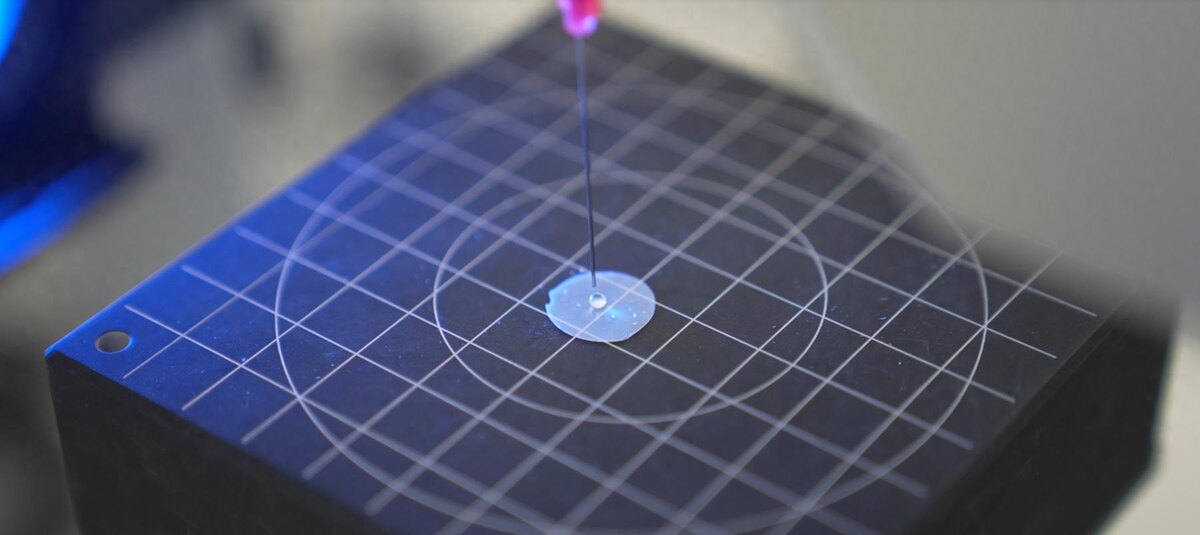
The technicians employed a tablet compression method to prepare samples, quantitatively pressing each type of fumed silica into uniform thin discs. Subsequently, a droplet was deposited onto the sample surface using a contact angle goniometer. The experimental results indicated the following order: HB-139 (126.5°) > HB-132 (122.3°) > HB-151 (120.7°).
A larger contact angle signifies stronger surface hydrophobicity. Therefore, among the three products, HB-139 exhibited the strongest hydrophobicity, with a contact angle exceeding 126°. This places it within the range of highly hydrophobic materials, approaching superhydrophobic levels (generally, a contact angle >150° is defined as superhydrophobic, while >120° is considered strongly hydrophobic). HB-132 followed, with a contact angle of approximately 122.3°, which still falls within the strongly hydrophobic category, though slightly lower than HB-139. HB-151 demonstrated relatively lower hydrophobicity, with a contact angle of about 120.7°. While it still possesses good hydrophobic properties, it is slightly weaker compared to the other two.
The core reason for this disparity in hydrophobicity lies in the fundamental differences in the modification effects of the various agents on the surface of the fumed silica. Firstly, the modifier used for HB-139 features a longer alkyl chain or higher reactivity, enabling it to more completely substitute the hydroxyl groups on the silica surface. This forms a dense hydrophobic layer that significantly lowers surface energy, making it difficult for liquid droplets to spread across the surface. Secondly, the modifier for HB-132 possesses slightly lower reactivity or a shorter molecular chain, resulting in a slightly lower substitution rate of surface hydroxyl groups compared to HB-139. This leads to insufficient compactness in the hydrophobic layer, causing a subsequent drop in the contact angle. Lastly, the modifier used for HB-151 may suffer from issues such as low reaction efficiency and weak hydrophobic activity in its functional groups. It can only partially cover the surface hydroxyl groups, and the residual hydroxyl groups retain a certain degree of hydrophilicity, ultimately resulting in the lowest contact angle.
From laboratory contact angle data to practical application in industrial scenarios, the hydrophobicity of a material directly influences the final performance of the product. In fields such as sealants, coatings, and lithium battery separators, performance variations in hydrophobic fumed silica can lead to significant differences in product water resistance, dispersibility, and service life. This experiment not only clarified the hydrophobicity ranking of the three materials through quantitative data but also revealed the root causes of the performance differences from the perspective of modification mechanisms. This provides a scientific basis for downstream enterprises in material selection. Looking ahead, as modification technologies continue to evolve, the hydrophobic performance of fumed silica will be further optimized. This will inject stronger momentum into the development of high-end manufacturing and drive nanomaterials to transition from merely "usable" to truly "excellent" across a broader range of applications.