Unraveling the Mystique: Why the Dragon is the Paramount Symbol in Chinese Mythology and Culture 🐉✨
In the realm of global mythologies, few creatures command as much awe and profound respect as the dragon. But why, one might ask, does this grand, awe-inspiring creature hold such an uniquely supremely elevated standing in the very heart of Chinese culture and its ancient sagas?
From the earliest jade carvings of Neolithic cultures, some five millennia ago, to the vibrant New Year celebrations of today, the dragon has remained an utterly essential design element, intertwining its winding shape through the very fabric of Chinese civilization. This, in a sense, is a story spanning millennia.
Unlike their often ill-intentioned mythical creatures from the West, these mythical entities are, by and large, benevolent beings, indeed closely tied to the vital liquid that sustains existence and the natural cycles of the world. Chinese dragons are often depicted as lords of rain and water bodies, governing the rivers, lakes, and oceans, and often determining the agricultural fortunes of an entire region. Their power, you see, directly impacted daily life.
The dragon’s imperial association is, perhaps, one of its most striking roles. It was believed that the emperor, as the ‘Son of Heaven,’ was the terrestrial representation of the dragon, ruling with its celestial sagacity and might. This association, it seems, cemented the dragon’s status as the supreme symbol of imperial legitimacy and power, with no other emblem daring to rival its significance.
Dragons are also profoundly honored as symbols of wisdom, prosperity, and good fortune, quite often guarding invaluable riches, both material and of the spirit. They are not merely beasts of power; they are, in a sense, kindly guardians of valuable things, bestowing blessings upon those deemed worthy. Their presence, therefore, usually indicated good omens and auspicious beginnings.
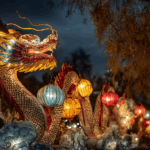
The customary portrayal of a Chinese dragon is a breathtaking blend of various creatures: the head of a camel, the horns of a deer, the eyes of a rabbit, the ears of a cow, the neck of a snake, the belly of a clam, the scales of a carp, the claws of an eagle, and the paws of a tiger. This complex combination, arguably, suggests a creature of immense and harmonized strength, capable of encompassing all aspects of the natural world.
This deep connection and blending of the dragon with guidance and authority, the generosity of the natural world, and understanding of the unseen world elevated it beyond simply a creature of fantasy. It became, in essence, the very quintessential spirit of the country, a safeguarding entity embodying its loftiest hopes and most profound apprehensions. Its multifaceted nature meant it touched every facet of existence.
Even in our modern era, the dragon’s influential representation continues to thrive, gracing everything from stunning building achievements to popular culture and even country’s symbols. Its presence, undoubtedly, remains a lively proof to a heritage that profoundly honors equilibrium, might, and constant revitalization.
The Chinese dragon, therefore, isn’t merely a being from ancient stories; it’s a resounding presence of a civilization’s heart, an eternal emblem that continues to instill profound wonder and ignite creative thought across the globe. What other ancient symbols, I wonder, possess such lasting life force?
For more captivating explorations into the world of myths and legends, do join our community on Telegram: https://t.me/Miphiuy