Digital money has revolutionized the financial industry by providing fast and efficient ways to transfer money globally. However, the growing popularity of cryptocurrencies and the development of central bank digital currencies (CBDCs) have raised concerns about their environmental impact. In this article, we will explore the energy consumption of cryptocurrencies and CBDCs, and examine the environmental implications of these technologies.

Cryptocurrency Mining and Energy Consumption
Cryptocurrencies, such as Bitcoin and Ethereum, rely on a decentralized system that is maintained by a network of computers around the world. These computers are responsible for verifying transactions and adding them to the blockchain ledger, which is a public and permanent record of all transactions on the network. This process is called mining, and it requires a significant amount of computing power, which in turn requires a lot of energy.
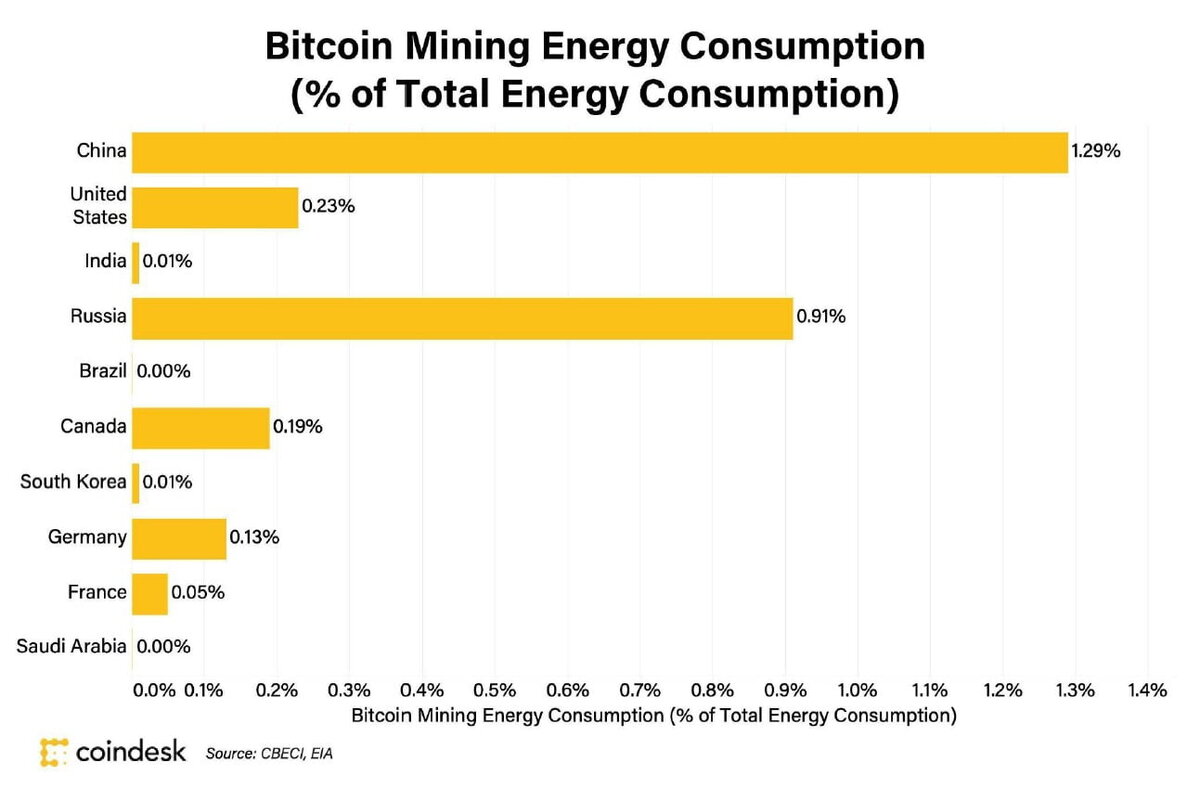
According to the Cambridge Bitcoin Electricity Consumption Index, Bitcoin mining consumes more energy than the entire country of Argentina, and its carbon footprint is equivalent to that of New Zealand. Similarly, Ethereum's energy consumption is estimated to be equivalent to that of the entire country of Qatar. This high energy consumption is due to the mining process, which involves solving complex mathematical problems to validate transactions.
Central Bank Digital Currencies and Energy Consumption
CBDCs are digital currencies issued by central banks, and they have been developed as an alternative to traditional cash. Unlike cryptocurrencies, CBDCs are centralized and regulated by the central bank, which means they do not require mining to verify transactions. However, they still require energy to operate and maintain the digital infrastructure.
The energy consumption of CBDCs will depend on the technology used to implement them. For example, a CBDC that uses a proof-of-work system, similar to Bitcoin, would consume a significant amount of energy. On the other hand, a CBDC that uses a more energy-efficient consensus algorithm, such as proof-of-stake, would consume less energy.
Environmental Implications
The high energy consumption of cryptocurrencies has raised concerns about their environmental impact, particularly their contribution to greenhouse gas emissions. In addition, the mining process for cryptocurrencies consumes vast amounts of electricity, which often comes from non-renewable sources, such as coal-fired power plants.
The environmental impact of CBDCs will depend on the energy sources used to power the digital infrastructure. If CBDCs are powered by renewable energy sources, such as solar or wind power, their environmental impact could be reduced. However, if CBDCs rely on non-renewable energy sources, their environmental impact could be similar to that of cryptocurrencies.
Reducing the Environmental Impact of Digital Money
There are several ways to reduce the environmental impact of digital money. One approach is to increase the efficiency of the mining process for cryptocurrencies by using more energy-efficient hardware or optimizing the mining algorithms. Another approach is to switch to more energy-efficient consensus algorithms, such as proof-of-stake, which require less energy than proof-of-work.
Another approach is to transition to renewable energy sources to power the digital infrastructure for cryptocurrencies and CBDCs. Many mining operations for cryptocurrencies are located in regions with abundant renewable energy, such as hydropower in Scandinavia. By utilizing renewable energy, the environmental impact of cryptocurrencies could be significantly reduced.
Conclusion
The environmental impact of digital money, particularly cryptocurrencies and CBDCs, is a growing concern as the popularity of these technologies continues to increase. The high energy consumption of cryptocurrencies and the potential energy consumption of CBDCs could contribute to greenhouse gas emissions and have other environmental consequences. However, there are solutions to reduce the environmental impact of digital money, such as increasing the efficiency of the mining process and transitioning to renewable energy sources. By considering these solutions, we can develop a more sustainable and environmentally responsible digital money system.