On a dark moonless night, the illumination can be thousands of times lower than in the daytime. But while we sleep in our beds, most living beings begin the active phase of the day. How do they manage to navigate in complete darkness?
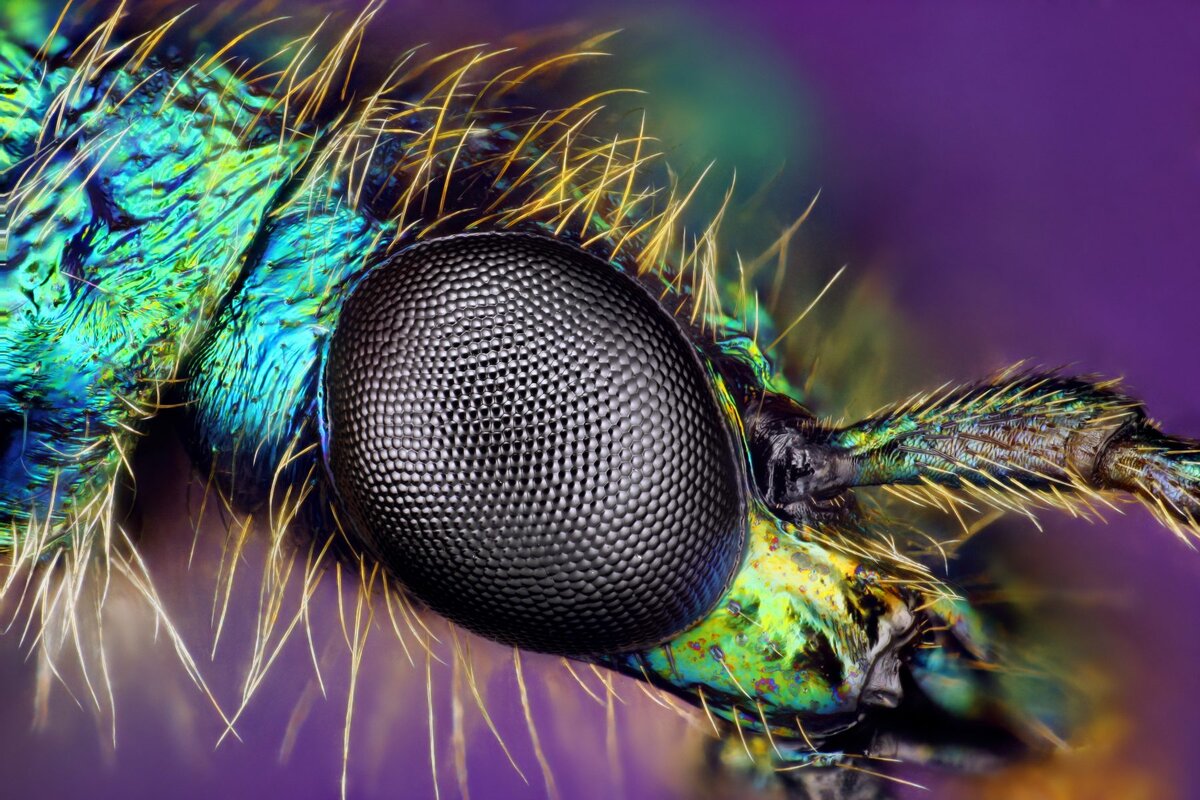
As an example, let's take nocturnal insects — the size of their visual organs often does not exceed a match head, but they perfectly navigate the terrain in dim light, deftly avoid obstacles and detect even weak movements around.
Imagine that you find yourself at night in a tropical forest, under the crowns of which the light of the moon and stars does not penetrate. It will seem to you that there is not a single light source around at all. But this will be true only for our imperfect visual apparatus — in fact, the space around will be filled with single photons. For the human eye, their number will clearly not be enough to get at least a dim picture of the surrounding world.
However, the visual organs of nocturnal insects and animals are much more sensitive. For example, the visual organs of the nocturnal tropical bee of the species Megalopta genalis absorb only a few photons, but this is enough to navigate in a tangled and dense tropical forest even when the light levels are at extremely low values. A similar behavior is also distinguished by the nocturnal European butterfly of the species Deilephia elpenor from the hawk moth family. This would not have been possible without certain tricks on the part of the insect.
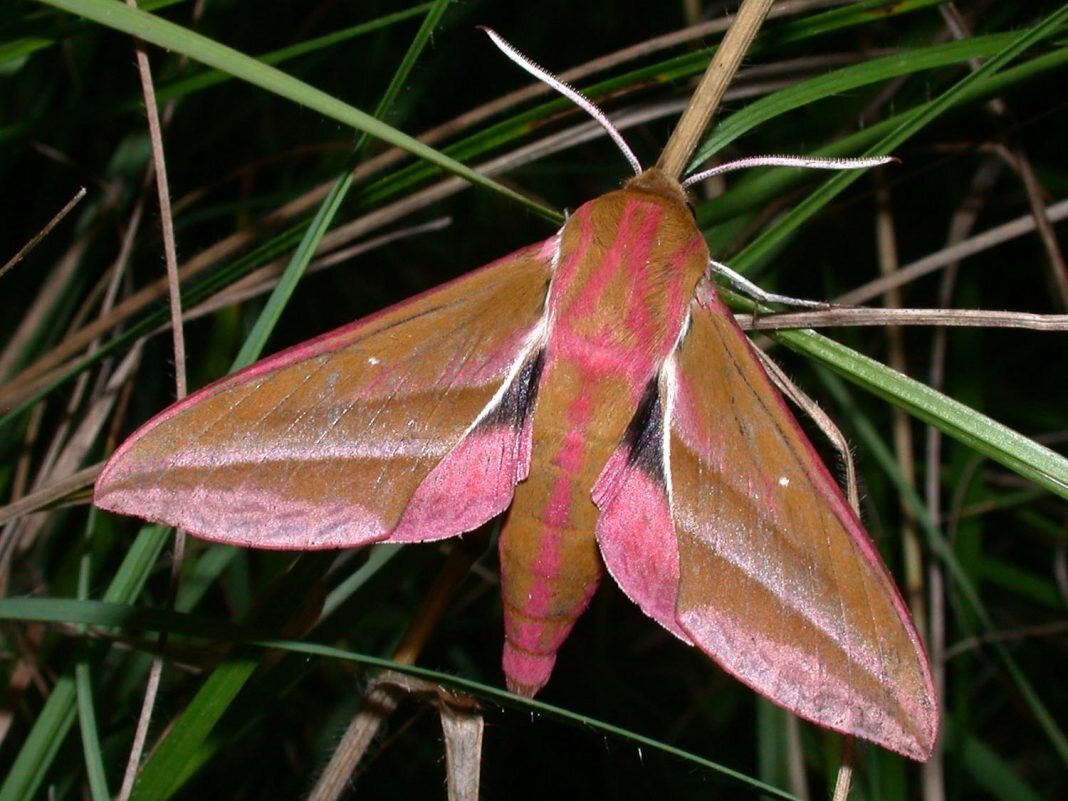
Using the example of the hawk moth, scientists studied the work of the visual centers of the insect's brain and found out that thanks to a certain work of neurons, the butterfly is able to put single photons into a single picture, which it caught at different points in space and time. As more and more photons are captured, the picture of the world in the head of Deilephia elphenor becomes brighter — this can be compared to a long shutter speed of a camera when photographing.
True, it will not be possible to achieve high-definition images, but the insect can form an idea of the surrounding world and even see it in color!
This ability, which is called "neural summation", is also possessed by other nocturnal insects. Of course, the final image will be far from ideal — for example, fast-moving objects will not be recorded, but such a way of visualizing the world shows how complex and inventive the visual center of even small creatures is.