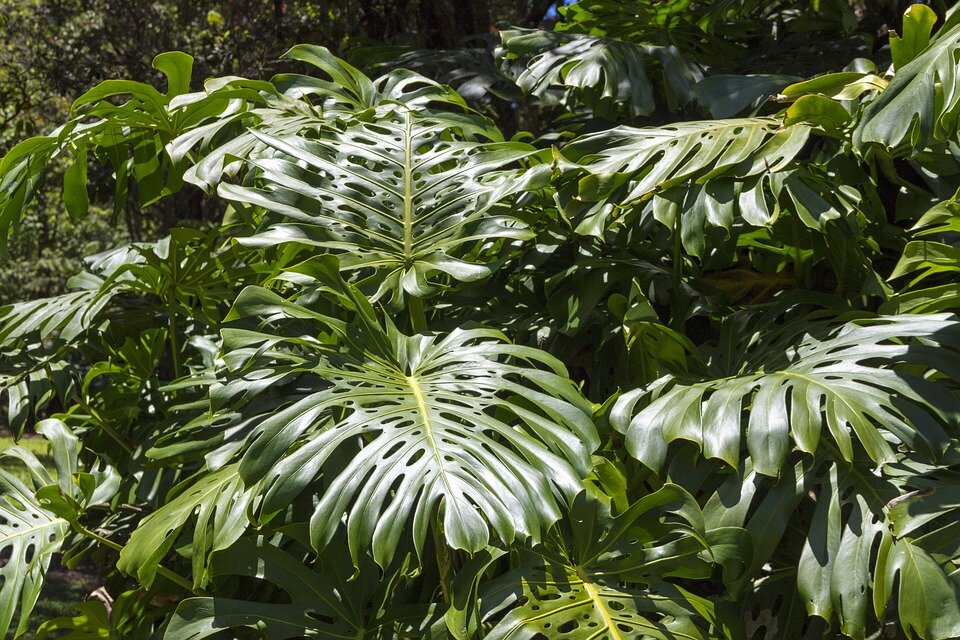
Xilin is a kind of vine flower, it does not bloom. The cultivation of Xilin carp is not technically demanding, but it also needs to be kept in mind.
Xilin’s introduction
Xilin is a vine plant of the genus Xilinx, which has a unique and varied leaf shape. The air roots are dense and dense, and the posture is very sturdy. It is very shade-tolerant and placed indoors. It seems to have the feeling of entering the tropical rain forest. A large leafy plant that is very popular.
The most widely cultivated varieties are two varieties: one is Ruby Xilin, its leaves are scorpion-shaped, dark green, with purple-red luster, 20-30 cm long and 10-18 cm wide; new shoots are red, petioles are purple The leaf sheath of the young leaves is stout and the red stems are thick and strong, and there are aerial roots on the nodes. The other is Emerald Hibiscus, which has a similar morphology to the former, but the stems and petioles, young shoots and leaf tips are all green. The plants of this genus are also cultivated, such as Qinye Xilin, palm leaf Hibiscus, frog leaf Xilin, and velvet Xilin, all of which have high ornamental value.
The morphological characteristics of Xilin
The stems are fine, self-supporting or climbing, the heart shape of the leaves to the ovate heart shape, and the leaf margin varies greatly depending on the species and variety. Its leaf shape is very varied, and the air roots are dense and dense, and the posture is awkward.
There are two kinds of cultivation most widely: one is Ruby Xilin, its leaves are scorpion-shaped, dark green, with purple-red luster, 20-30 cm long and 10-18 cm wide; new shoots are red, petioles are purple, tender The leaf sheath of the leaves is stout and the red stems are thick and strong, and there are aerial roots on the nodes. The other is Emerald Hibiscus, which has a similar morphology to the former, but the stems and petioles, young shoots and leaf tips are all green.
Xilin’s ecological habits
Xilin is native to the tropical rain forests of the Americas. It prefers high temperature, high humidity, and shaded environment. It has low requirements for light, and it can grow well in darker areas and spring and autumn sunshine.
It is not resistant to cold, and the winter temperature in winter should be above 10 °C. It is like to grow in slightly acidic soil with good fertility.
Hilin is strong and healthy, and it is not difficult to maintain good temperature and humidity.
Potted plants can be used with 2 parts of humus soil and sawdust or horse manure. According to its habit of aerial roots and vines, it is often cultivated in the form of totem poles. The practice of cultivating this form is to first select a wooden stick of about 1 meter, wrap it around with brown skin or small moss, and tie it with lead wire, then plant it into a suitable pot as a column. Planting 3-4 seedlings around the column, with a little binding, often spray water on the column to make it root into the brown skin, and grow up along the column. After the seedling grows, it should be tied in time and according to your own requirements. The preference is added to the scheduling and scheduling so that the stems are distributed reasonably and beautifully.
This flower grows fastest at a temperature of 25-32 ° C and a suitable humidity of 80% or more. Therefore, it is necessary to water the soil from June to September to keep the soil moist and spray water 1-2 times a day to increase the humidity. However, it is better to avoid sun exposure during this time, and it is better to give bright scattered light properly.
During the growth period, the cake fertilizer or fertilizer can be applied according to its growth, or about 10 days or half a month. In winter, reduce the watering, keep the soil slightly moist, but the water should not be too cold. If you can wipe off the dust on the leaves with lukewarm water, the leaves will be brighter and greener.
In indoors or on the balcony, due to the low humidity of the air, it is possible to make a large sand table under conditions, so that the sand is kept moist, and the potted hibiscus is buried in the sand, which can improve the defect of small air humidity, which is more conducive to It grows.
Hi-high temperature, high humidity, and shaded environment, the lighting requirements are not high, the indoor darker and spring and autumn sunshine can grow well. It is not resistant to cold, and the winter temperature in winter should be above 10 °C. It is like to grow in slightly acidic soil with good fertility. Hilin is strong and healthy, and it is not difficult to maintain good temperature and humidity.
The use of Xilin
Ornamental value
Its leaf shape is very varied, the air roots are dense and dense, the posture is whirling, and it is very shade-tolerant. It is placed indoors, which makes people feel like entering the rainforest. It is a large-scale foliage plant that is very popular nowadays and has a high ornamental value.