History of the origin
The heyday of eclecticism came in 1830-1890. European architects were pioneers, who in search of inspiration began to mix details from different classical currents. They tried to create something unusual and fashionable on the basis of the usual and well-known. The development was helped by active ties between the continents: from subordinate colonies, Europeans brought home exotic things and decorated their homes and apartments. In North America, eclecticism also took root reliably. Today his ideological follower is fusion.
Styles of eclecticism and fusion in interior design - what is the difference?
These two directions are very similar, because both are a mix. But there are differences. Chronologically, eclecticism declared itself earlier - in the 19th century - and preferred to combine thematically close stylistics (baroque and classical, modern and empire). Many people perceive Fusion as a continuation of eclecticism in the 20th-21st century, but this direction provides work with more contrasting themes: English classics, high-tech, minimalism, ethnics, country music.
Eclectic design in modern, broad, understanding and fusion usually act as synonyms.
General characteristic
Today the design is called eclectic and cannot be attributed to any specific style. Does this mean that any chaotic set of objects and finishes can be considered fashionable? No. Eclecticism is one of the most complex interior genres precisely because it requires a balance between smart combination and tastelessness.
What a mixed environment isn't exactly is a collection of random things. The skill is to choose the right elements that complement each other without losing their individuality. It is possible to combine traditional classics, baroque, ethnics, art nouveau, high-tech. The question is how to do it.
To create modern eclecticism in interiors, designers use no more than three stylistics.
In a role of uniting beginning the uniform colour scale, a structure or the architectural decision acts. If there will be more directions - it is easy to roll down in a mess.
In a role of base it is better to take neutral subjects: Scandinavian, minimalism, neo-classics.
They are good at striving for a free, bright space. This basis is easier to saturate with bright objects and fill with dynamics. The traditional version of the base is classic, which can be combined with baroque, gothic, rococo, colonial and ethnic elements.
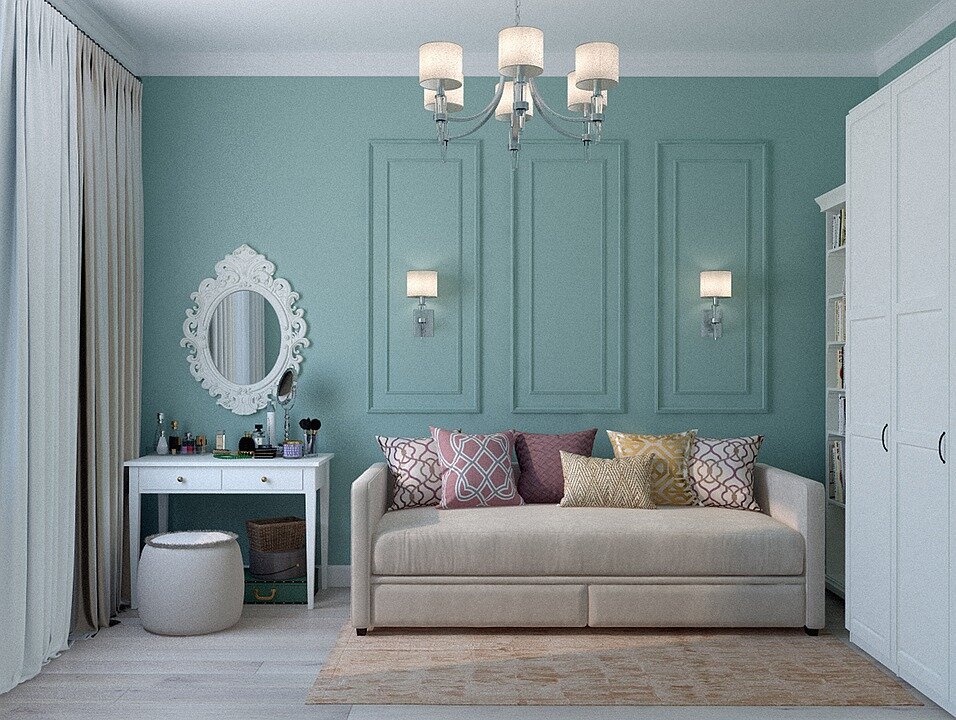
Light, calm tones (white, beige, grey) as a background for colorful accents - a means to avoid color anarchy.
In terms of combinations of the two, one can safely violate the stereotypes, more about the palette a little bit lower.
One of the signs of eclecticism style in design is contrasts.
You can, of course, mix similar topics, but the effect of contrasting combinations is much more interesting. For example, an excellent pair will make a fancy antique table and a modern chair with motley upholstery. If the silhouette is similar (for example, two chairs) can be played on the difference in their style.
Another recognizable feature - the saturation of objects and decor.
This environment is always filled with a lot of textile accessories (pillows, curtains, napkins), the walls are hung with paintings, photos, mirrors. Unusual textures and ornaments dominate.
Features of eclecticism in the interior
There are specific techniques for creating a design in a mixed image.
Furniture selection
Vintage things are welcome: restored chairs, dressing tables, showcases. A profitable contrasting addition to them will be sofas and armchairs of modern silhouettes and colors. Furniture made of different materials (wood, glass, metal) and historical epochs will look harmonious if the selection is guided by the unity of colors, ornaments or decorative elements.
Scale
Design of the house in eclecticism style implies the verified work with the sizes. To give the environment an interesting depth, you need to place large objects in the background, and smaller ones in the foreground.
Color range
Color is one of the main methods to logically unite the disparate environment. The palette depends on individual preferences, you can use almost any color - pastel and bright. It is better not to combine more than five colors, so as not to drown in the diversity of colors.
Background surfaces (walls, ceiling, floor) should not compete with objects for the attention of the beholder. Their task is to beautifully emphasize and shade. Therefore for a background, it is necessary to choose neutral, unobtrusive shades.
Basic colours Additional colours
- white
- blue
- beige
- pink, bordeaux
- light gray, smoky
- gray
- pale blue
- light indigo
- creamy
-brown
- ivory tinge
- green olive
Eclectic interior stylistics are successful experiments with form and colour. If the neutral background seems too simple, you can always add expressiveness: throw a bright carpet on the floor, hang a lot of paintings on the wall, decorate the windows with colored curtains. All these details are easily replaceable.
One wall in the room can be decorated in contrast. And the textiles in shades of the same color will neatly bring together the interior composition.
To be continued in the next part...