Forgetting
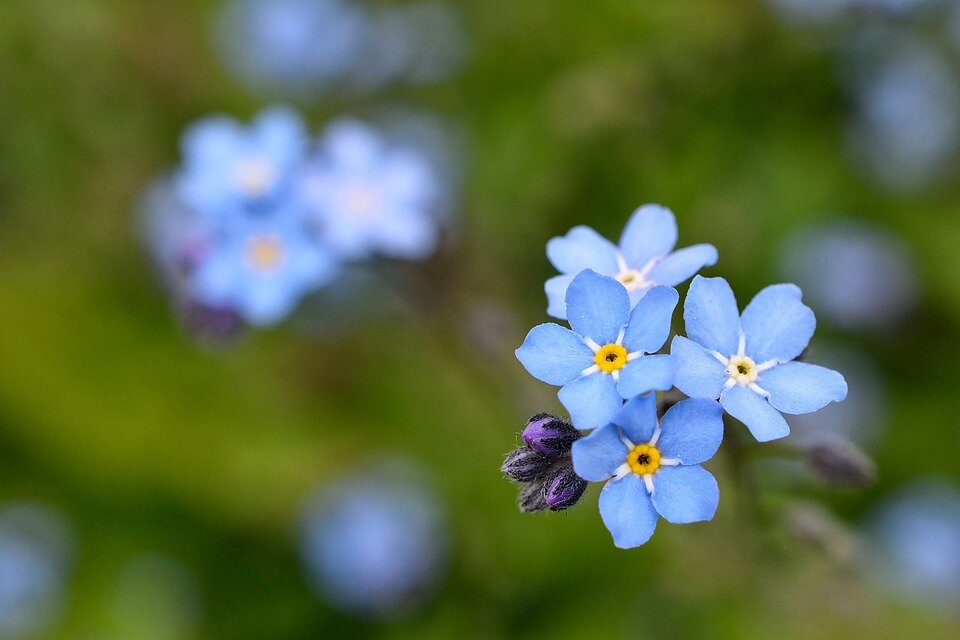
Small, naturally blue, pink or white spring flower, forget-me-not, is a perennial plant of the Boraginaceae family. The one that is sometimes called "Don't forget me" grows in temperate regions, especially in Europe. There are 50 different species, including the most famous Myosotis alpestris.
Scientific name: Myosotis
Family: Boraginaceae
Varieties: Myosotis alpestris, Myosotis sylvatica, Myosotis rehsteineri
Flower color: white flowers, blue flowers, pink flowers
Landing: landing in January, landing in February, landing in March, landing in September, landing in October, landing in November, landing in December
Exposure: Sun, Partial Shadow
Soil type: rich, well-drained
Usage: In a pot, Edge, Rocaille
Flowering: Flowering in March, Flowering in April, Flowering in May, Flowering in June
Leaves: Resilient
Watering: Moderate
Durability: every two years
Height: 70-150 cm
A forget-me-not, multicolored ground cover
Crewed in a multi-year, annual or biennial period, it pulls flower carpets from April to June without forgetting. For flowers, there is a wide choice! Myosotis sylvatica shows blue flowers, while the Snowsylva variety has white flowers. Rose lovers will appreciate Myosotis Sylva 'Rosylva'. In the seeds, you can find mixtures with the unforgettable Alps, which offer a few flowers for multicolored flowering beams.
Planting a forget-me-not
She likes his head in the sun and his legs cold. He enjoys a sunny or shady situation in the hottest regions. This grass appreciates loose soil, fresh but dried up. A forget-me-notch is planted in the autumn or spring, except during frosty periods.
Steps to instill a forget-me-not:
- Soak cups in the water bowl
- Dig a hole twice as wide and as deep as the root
- Lay the drainage layer at the bottom (clay balls or gravel)
- Mix some compost with your garden soil. If your soil is heavy, add some sand
- Place the embankment on the drainage layer so that it reaches ground level
- Fill the gaps with a mixture of earth
- Tamp and water
- Sow forgetting.
- Sowing takes place in May-June in pots or August-September in the open air.
- Fill the buckets with a special seedbed
- The water is this.
- Sow seeds and cover with a thin layer of potting soil
- Water spatter
- Keep the substrate moist, not absorbing it until it rises
- Once the bucket is filled with small leaves, you can put it in the ground
- In the open, when the plants are slightly developed, keep only the most beautiful ones, which are 20 cm away.
Maintain forgetfulness
A little maintenance is required for this rather herbaceous plant. She likes to have fresh soil, so regular watering is, therefore, de rigueur. Suffice it to say that the substrate is wet and there is no need to soak the soil. From time to time, when watering, do not hesitate to add a little liquid fertilizer to your water. For years to come, simply fold the bundle after flowering. Yearbooks should be torn off.
Multiplication of forget-me-not
Forget-Me-Not is a plant that pollinates itself! If you want to offer them or place them in a certain place, you will need to restore the seeds. After flowering, small pods of seeds appear. You can take them and dry them out before offering them. If not, once the pod dries, cut it and shake it over the planting space.
Impatiens
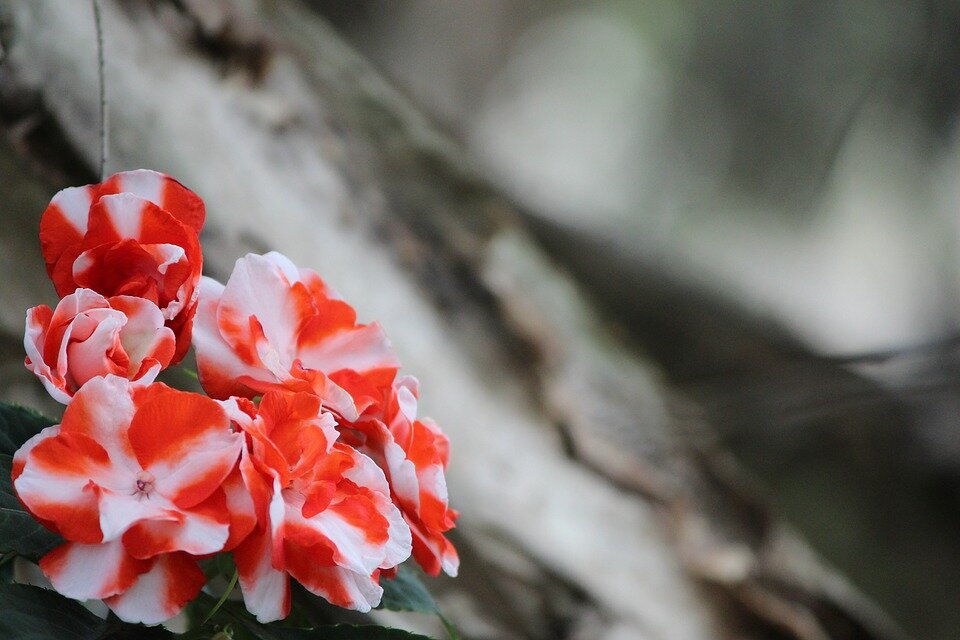
How to keep impatient, plants that bloom from June to October? We are committed to ensuring they have the best exposure and good watering, whether indoors, in the seed drill or solid wood.
Impatience is also called impatient, restless, or even balmy. Their stems are fleshy and full of juice. From June to October, asymmetrical and flat flowers appear. Impatiens are also grown on indoor plants, verandas or terraces, summer flowerbeds or balconies.
Where to plant impatience?
It needs soft soil and rich in humus, and the contribution to the soil remains cool. In these conditions, they can be enjoyed even in full sunlight, especially for the impatient in New Guinea (impatiens hawkeri). Keep the soil moist for continued flowering.
What impact and service for the beautiful impatient?
Keep them out of the draughts and only come out onto deck after the cold. Order them a draught-free spot. Most of the inpatient species prefer a shady place or soft light, even though the impatient in New Guinea has a soft, direct sun. Be careful, though, "shady" does not mean "in the dark. On the terrace, you have the right to give preference to the south and west if you place the plant against a wall to hide it from the wind and shade.
The temperature difference should be reduced and the temperature should be cool even in summer. Some varieties, however, are simpler than others. On average, expect 18°C to 24°C in summer and 13°C to 14°C in winter. Pinch any etiolated plants. Remove the faded flowers and apply natural fertilizer every week.
Water impatient
Count two waterings per week in summer, more if the plant is in the sun. Make sure that the soil remains moist, but not excessively wet. Stems are destroyed if the plant does not have enough water. But be careful, too much water causes it to rot. To find a happy environment, do not confuse "heatstroke" with "lack of water". In warm weather, wait until the evening to water and see your plant's thirst. If you notice that your impatient leaves get softened or fade every day, find a darker corner. Water-saving in winter.
Working with unwanted and impatient diseases
The symptoms of a clear attack by ticks are the gradual disappearance of leaves and lead or silver glare. In the worst case, the leaves dry out or fall off in the summer with the browning of the plant. Look under the magnifying glass under the leaves, the ticks are small red animals. To get rid of it, water or shower the impatient. Otherwise, treat with a product based on oil or natural pyrethrins.
For aphids, you will notice deformed young shoots or leaf curls unless you see them at work. Cut and burn affected young shoots or use a natural insecticide (pyrethrin, oil). If you are thinking of ladybugs, make sure that the aphid population is sufficient, that there are no ladybugs in action and that the plants have not been treated for at least 3 weeks.
Finally, watch out for slugs in wet weather and do not allow water to stagnate because rotting is very dangerous.
In Impatience, pleasure in the shade. Therefore, it is necessary to use them and give them preference in shady places. We can choose other flowers, such as onion flowers, which are also grown in pots, for sunny places in the garden.