Find out how many stars in the universe: observations in the sky, the effect of brightness on detection, the number of stars in the Milky Way galaxy, the number of stars for the entire universe.
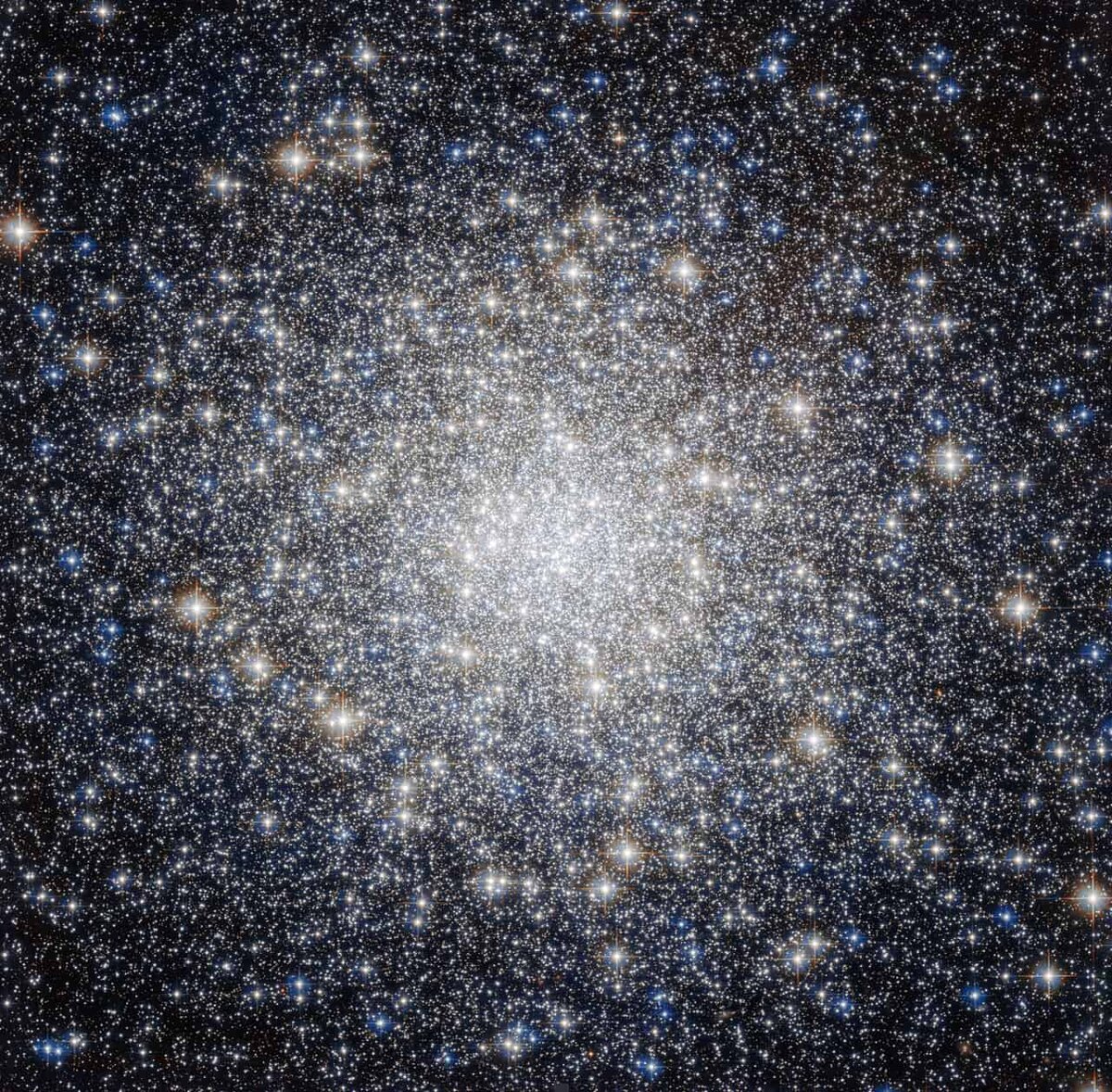
Looking at the bright lights in the sky, it is very difficult to resist counting. How many stars are there in the sky? Even without the use of technology in the night sky you can see a few thousand stars. And how many of them are there in the Universe? Before we announce this figure, let's find out how many stars are available with various tools.
100% vision will allow you to see the stars of the 6th magnitude. But for completeness of a picture, it is necessary to visit both hemispheres as from everyone the review on new objects opens up. In addition, you need to fit in a few months, as part of the sky is hidden by the sun. So, under ideal conditions and in the absence of a bright moon, you could enjoy 9000 stars.
Take a good pair of binoculars with you and increase the number to 200,000 by adding 9th magnitude objects. The small telescope opens a glance at the 13th size — 15 million stars.
But how many stars exist in the vast expanse of the infinite universe?
We live in the Milky Way galaxy, a spiral type with a diameter of 120000 light-years. The sun is 27,000 light-years away from the center (Orion sleeve). The galaxy holds up to 400 billion stars.
They could be giants (Betelgeuse and Rigel), mediums (the Sun) or red dwarfs (most). If you looked through the telescope, you might have noticed fuzzy spots. These are other galaxies in which stars are also located.
There are spiral galaxies filled with trillions of stars and even bigger giants with 100 trillion stars. So how many are there?
The Universe has 170 billion galaxies. If we multiply the number of stars in our galaxies by the sum of the galaxies, we get 1024 stars — a reptilian.
But there can be more. The observed universe covers 46 billion years in all directions. This is the space that has been open to our eyes since the Big Bang. That is why the figure is the minimum number of stars in the sky. In the “full-fledged” Universe there can be many more stars, especially if we take into account the variant with infinite space.
The possibility of space travel and the fate of the Earth
The only place in the Universe where, by human standards, there is life is our planet Earth, but we must not forget that there are millions of galaxies in the Universe that have their own solar systems. Therefore, for sure, we are not alone.
Modern technology does not yet allow us to directly observe the planets outside our solar system. There is an opinion that on many planets there are conditions for a life not only alive but also reasonable beings. For example, in our solar system, such planets are Mars or the satellite of Jupiter Europe. But there is also an opposite point of view on which life has arisen as a result of a complex chain of events, and the Earth in this sense is a unique phenomenon.
While we cannot make travel to space, but we can search for signals from extraterrestrial civilizations and send messages to space. The first attempt was made in 1974 with the Arcing radio telescope in Argentina. However, the place where the message was sent is a constellation of several thousand stars and is 25 thousand light-years away, so if the answer comes from there, it will not happen before 50,000 years from now!
Although human life is linked to the earth's surface, the energy of the sun, the air and the water without which it is unthinkable, it certainly does not mean that there are no other forms of life. But what do aliens look like then? Probably not as we imagine them.
The topic of the fate of the earth in space is very complex and controversial. There are many dangers everywhere. For example, in 10 billion years our Sun will grow to such an extent that it will absorb the Earth. Many meteorites and comets fly everywhere in space, some of which can destroy the Earth. And black holes are a particular danger, which, according to some reports, are some kind of portals through which you can make fantastic travel in time and space. The fate of the Earth in space is therefore very complex, and there is talk of the possibility of space travel. This is all the more reasoned by the rapid development of science and technology.