Take reality into account
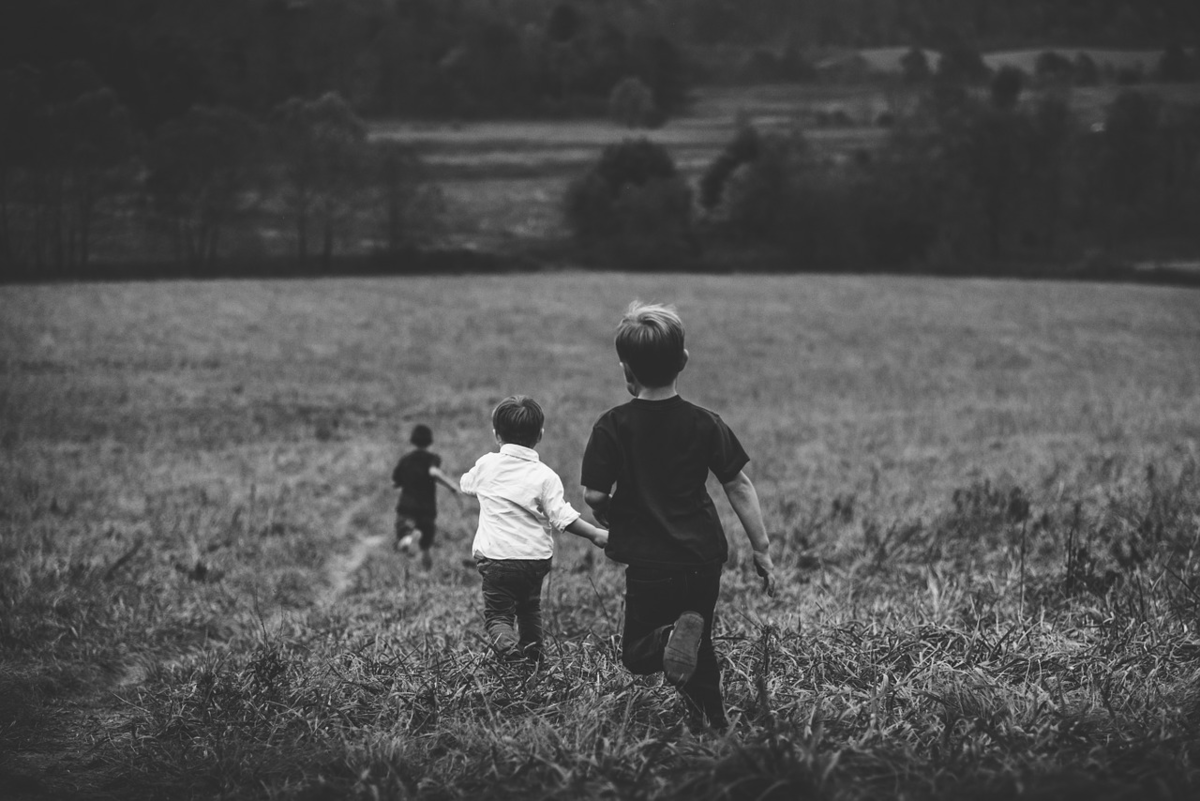
A century ago, the child had no recognized status. In many ways, apprentices of the age of eighty led an adult life. After all, the only way to make a statement was to join the circle of adults, and as early as possible. Now it is almost the opposite: young people are considered a privileged social group. The status of an adult is either depreciating or becoming unattainable. The road of adult life passes through the acceptance (far from our wishes) of reality and leads to a horizon beyond which death. And many would prefer to avoid this path for as long as possible. After all, to give up dreams, carelessness and simple joys of childhood is not a very attractive program. When does this transition take place, which we usually realize after the fact? Later and later, it seems, after thirty and sometimes even closer to fifty. However, it all depends on the circumstances. "I began to consider myself an adult very early, at the age of seven, and I have long since ceased to be one," admits neuropsychologist Boris Cyrulnik. He lost his relatives (and himself was saved by a miracle) in 1942. Much later, when he married and became a father, he realized that life is a huge game and there is nothing more important than to play in this mortal world.
The onset of adulthood - an event of personal history, which each has its own. We often feel that we have grown up when an important event happens - the birth of a child or the death of a loved one. Contrary to popular belief, women are more likely than men to accept their adult status. "When I first saw my boy in the cradle, I told myself that I would never be able to relax for a minute without making sure he had everything he needed," recalls 36-year-old Olga. The baby waits for the world to grant any wish, so the adult knows that he has to give his child his attention, time, money, and even his life ... Sometimes, however, the feeling of maturity is deceptive. "Over the years, I have come to realize that I considered myself an adult much earlier than I had learned to behave as an adult," says Jean-Louis Servan-Schreiber, a journalist and founder of Psychologies, "If I am not nostalgic about my childhood, it is because I was an addict at the time and today I love my independence and freedom of action too much. I felt that I was reaching maturity when I stopped being afraid of my shortcomings, of someone else's opinion, and I stopped being afraid of telling the truth, of being afraid of the traps of life, and of dying, too. And I learned that the ideal adult - the one who finally managed - was the one to know and accept himself. And this guarantees us that we will never be adults until the end..."
Is not it perfect?
Sometimes it is believed that the purpose of psychoanalysis is to make adults who have not yet fully grown up, because Freud wanted to free us from the painful captivity of childhood. The writer, Oscar Wilde, said this very well: "Little children love their parents, then they judge them; sometimes they forgive them. A teenager is the one who judges; an adult is the one who forgives. This does not mean that we should or can be adults all the time. A whole, "solid" adult exists only in the child's imagination. This illusion now passes with children earlier and earlier, as well as the desire to grow up. Face-to-face with life, we quickly realize that it is equally impossible to refuse to be an adult or to become an adult.
And this is only for the better. Isn't it personal development to be able to combine responsibility and carelessness, seriousness and play, openness to others and the necessary distance when you really know yourself? "Ahead of the adult from personal perspectives - only an old man or nothingness, says Andre Cont - Sponsville. But he doesn't care too much. He has something much more urgent. More important. There's something real that's going on all the time. There is the reality that remains. Being an adult also means being able to drop armor, open yourself up, and be real. And this is not easy to give not only to each of us, but also to our society, said film director Pavel Lungin: "I have not yet matured and hope to remain a child for the rest of my life. But our society is growing up. The previous 10 years it was a child, and we built a relationship with the authorities on the principle: "Dad, punish me, I am bad! Dad, praise me, give me candy! ". Now we are teenagers. The main questions of a teenager are: "Dad, do you respect me?! Why are you lying to me?". And there is no program - what program can a teenager have? Now we have to move on to growing up.
A "real adult" set
What if many people refuse to consider themselves adults because they think this condition is as beautiful as it is unattainable? These are the qualities that we would more or less consciously like to see in a real adult:
- Take responsibility, but get rid of guilt.
- Control your emotions and control yourself.
- Have your own opinion about people and things.
- Be able to choose and be responsible for the consequences.
- Be sincere and tell the truth.
- Be able to say no.
- Accept the fact that it is impossible for everyone to like it.
- Give more than receive.
- To be free at last, but to know that you are alone.
- Take care of others.
- Ensure your emotional and financial autonomy.
- Know who I am.
- Find meaning in your life.
- Admit your mistakes.
- Know that I have to die and accept it.
- It is courageous to face life's tragedies.
- To preserve my dignity.
Don't worry! None of us is able to embody all these seventeen virtues. When there is at least half of them, it is not bad.
Thank you for reading